



Disk of 2024
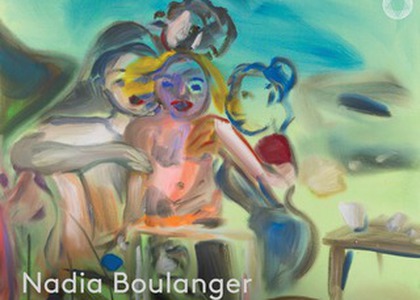
Nadia Boulanger – Orașul mort - The dead city (a world premiere recording) – The opera, a world, 8th of February, 2026
The dead city is the only work composed by Nadia Boulanger. The score has been completed in 1913, when she was 26 years old. She benefited from the Raoul Pugno's help(her mentor, a appreciated musician in the era), so we also have an co-author. It has 4 acts on a libretto by Gabriel D'Annunzio who adapted his own dramatic text of the same title. Opera-Comique in Paris was supposed to premiere this lyrical piece back in 1914, there was really intense work, but the performance was canceled because of the outbreak of the 1st World War. Then, during the interwar period, the performance wasn't stage due to the decadent subject matter. A winding love story, with an libretto that leaves us, perhaps intentionally, with multiple interpretations. There are four interconnected characters who have attributes of the Greek mythological characters( such as Antigone or Cassandra), the drama presenting the obsessions that psychologically torment them, leading to a murder.
Stylistically, the Dead city represents a synthesis of Parisian music from the first decade of the 20th century, particularly the late Romanticism and Impressionism. The writing styles is Arioso, helping the characters expressing their obsession and despair, giving the impression of individual narratives, although the relationships are very strong. This is an unconventional style for Nadia Boulanger, who was known as a conservative rather than a modernist.
The time passed, the work was forgotten, the general piece was lost, and at some point the piano reduction was discovered. In 2005, the world premiere took place at Sienna festival with an orchestration by Mauro Bonifacio for a large ensemble. However, the first recording of this title took place in 2024, as part of a series of performances at the NYU Skirball for the Performing Arts in New York. It was a co-production of the Athens Opera and the Catapult Opera Company, founded by the conductor Neal Goren. The album was released by Pentanone, at the beginning of the year, on the 9th of January and is included in the 2026 Albums of the Year 2026.
The music material is different, a new orchestration of the original reduction, created particularly for this Greek-American production presented in both countries. After talking with people who knew Nadia Boulanger, Neal Goren concluded that she would have laughed a chamber orchestration, so the American composers Joseph Stillwell and Stephen Cwik wrote for the Talea instrumental ensemble, and composer David Conte, a former student of Nadia Boulanger, who supervised the work. Neal Goren eliminated the choir and a secondary character, considering that they did not play an important role in the unfolding of the drama. The Talea instrumental group-consisting of a string quintet, a wind quintet and a pianist-who were placed on the stage so that the sound would be rich, as if it were a much larger ensemble.
I think it is important to be connected with what's happening in international music, which is why we included this album in our auditions, and the cast is a high-quality one. It reunited 4 American soloists who have a predilection for modern and contemporary repertoire. The soprano Melissa Harvey- Hébé, the mezzo-soprano Laurie Rubin-Anne, the tenor Joshua Dennis as -Léonard and the baritone Jorell Williams-Alexandre. They are good, beautiful voices, which offered a valuable interpretation in French, raising the level of tis eclectic score through their contribution. A note about Laurie Rubin: she has been blind since birth and she never learned Braille for the score, so she learns her parts only by ear, the character she played was actually a blind woman.


