


Disk of 2024
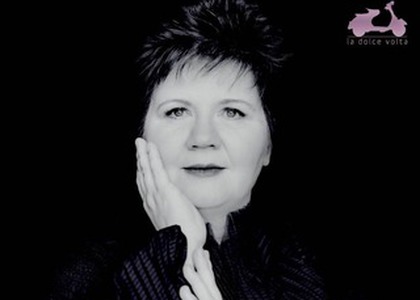
Pianist Dana Ciocârlie - the album “Ciocârlia” (“The Lark”)- Music Box, February 9th, 2026
An album that opens with the theme of the famous Romanian folk tune Ciocârlia ("The Lark") in a piano transcription by Frederic Harranger, signed by the Romanian pianist based in France, Dana Ciocârlie. The album was released by La Dolce Volta on January 16th and presented in its Romanian premiere on February 9th, 2026, on Radio România Muzical.
We also had the opportunity to speak with Dana Ciocârlie, who shared details that give new context to listening to this album, which brings together emblematic works from the Romanian repertoire or pieces directly connected to traditional Romanian music.
First of all, why did you choose an album that bears the name of a bird so emblematic for Romanian music - and one that is also very close to your own surname?
I can say I was lucky to have the same name as our most famous piece of Romanian folklore. It felt like a sign of life, a sign from the cosmos - something meant to be. Why not make the most of it? And beyond that, the lark is such a beautiful symbol for us, but also in European literature. Many poets - Schiller, Shelley - wrote odes to the lark, seen as a symbol of the soul and of aspiration toward infinity. It's a small bird that sings while flying, rising like an arrow toward the sun, one of the few birds that sings in full flight. And it's also a bird of the morning… only beautiful symbols. I also had another stroke of luck: my father's family is very literary. My uncle, Livius Ciocârlie, is a writer, and his daughter Corina is also a writer, journalist, and essayist. So we wanted to create something one hundred percent "Ciocârlie." In fact, she wrote the booklet.
I listened to this album while also visiting an exhibition in Bucharest, organized by the Muzeul Național de Artă al României - an exhibition centered on the Romanian ie. It was, of course, conceived around the famous painting by Henri Matisse, but it created a very beautiful journey, from paintings dating back to around 1850 to contemporary artworks that all highlight this "Romanian blouse," this ie which is, in fact, a symbol of Romanian identity. The exhibition itself is designed as a kind of overview of what "Romanianness" has meant from the 19th century up to the present day. And, seeing this exhibition, I found myself thinking that your album, in a way, does the same thing - it offers its own survey of what is eternally Romanian and, at the same time, of European value. Did I get that right? Was that the generating idea?
You put it very well - that is exactly it. I don't think anyone has seen so clearly until now that I tried to move from, let's say, the concrete and picturesque - such as the three pieces by Paul Constantinescu, which are almost folklore mot-à-mot - toward something like a more spiritual level, symbolized by Lipatti's Nocturne on a Moldavian theme, Carillon nocturne, and the improvisations after Violeta Dinescu. In other words, the idea was to move from the particular to the universal, revealing multiple facets of the Romanian soul. Exactly what Lucian Blaga meant when he said, "Eternity was born in the village."
In fact, I am a great admirer of both the philosophy and the poetry of Lucian Blaga. Perhaps, unconsciously, I tried to draw inspiration from this motto of his and to show what is eternal in the Romanian soul.
And what is eternal?
A certain melancholy. A dreamy, deeply philosophical way of being. You see it from the very beginning, in Miorița. For me, Miorița is the simplest path into the Romanian soul: a shepherd who has his whole life ahead of him learns that his destiny is sealed and accepts it, transforming tragedy into a kind of cosmic nirvana. His life and death become a work of art through the way he imagines that cosmic wedding. The Romanian soul is pastoral, bucolic, tied to nature in an organic way. Ours is not a civilization of cities, but of nature and its rhythms. The bells heard throughout the album mark the moments of the day and of life itself - a reflection of a nature that is constantly renewed. This tenderness, this wisdom, feel profoundly Romanian to me. And wisdom can also be joyful - our dances, celebrations, and festive pieces are all part of our identity.
Of course, some of the pieces on the record make it obvious - even from their titles - why they belong on an album called Ciocârlia ("The Lark") , since they refer either to dances or to very concrete landmarks such as the Romanian Rhapsody by George Enescu. But we also find the Pavane here. Listening to your interpretation, I wondered whether you included Enescu's Pavane as a kind of expression of the Romanian doina told à la française, so to speak.
Yes, that's exactly right. In fact, the Pavane, the Carillon, and also Voices of the Steppe (from Enescu's Pièces impromptues, Op. 18) are all doinas in essence. The Pavane dates from the time when he was still strongly influenced by his studies with Gabriel Fauré. They have an almost Impressionist atmosphere, yet to me you can clearly hear a pan flute, a shepherd's pipe - precisely that shepherd we were speaking about - set in a landscape that feels like a heavenly clearing. To me, it's an utterly magical piece. And if we look at Enescu's piano repertoire, the Pavane is, in a way, the first piece with a distinctly Romanian scent. Before that, he had written the Suite in Old Style, which is rather Baroque, with fugue and prelude. Even the other movements of the Second Suite - a masterpiece, such as the Toccata, Sarabande, or Bourrée - are still more French and symphonic in spirit. But the Pavane already points toward the Third Suite and the Sonata in Romanian Folk Character, planting in his piano writing this imagined Moldavian folklore. In Voices of the Steppe and Carillon nocturne there are clear doina influences as well, though treated differently: in Voices of the Steppe they are handled heterophonically and polyphonically, while in Carillon nocturne the doina is hidden beneath the bells, yet still present at its core.
Indeed, to me the doina is the most direct expression of Romanian lyricism - just as the word dor is untranslatable.
Another discovery on this album, I would even call it a repertorial one, is the set of Romanian carols collected by Béla Bartók, which we actually hear quite rarely. I must admit I listened to them for the first time on your record. Could you tell us how you came to choose these particular works from Bartók's rather extensive Romanian-related output, since everyone usually stops at the Romanian Folk Dances and nothing more?
There were several reasons. First of all, more than twenty years ago I had already recorded a disc called Romania for a label that has unfortunately disappeared completely. I doubt any trace of that recording still exists. That album included Bartók's six dances, so I didn't want to repeat the same thing. And besides, those dances have been recorded so often. They are indeed very beautiful, but there are other works that deserve to be discovered - especially since Bartók was a great lover of Romanian music, that is beyond doubt. When I was a teenager in Maramureș, in Baia Mare, I myself sang some of the carols he collected, and they are still sung today. It felt important, from the perspective of cultural continuity, to show this.
Secondly, he treats them in a very personal way. In fact, it resembles his treatment of the six dances: the melody is always repeated once or twice, but with different harmonizations and rhythms, which I find very interesting. What he does, for example, in O, ce veste minunată, the way he reshapes the rhythm - you feel as though it has become something entirely new. That is his originality. As for the two large Romanian dances, which I believe are performed even less often, they should really be called rhapsodies. In my opinion, they are close to the two rhapsodies for violin and orchestra in their symphonic scope and in the way the piano is treated like an orchestra. I wanted to show that Bartók had such profound respect for Romanian music that he didn't stop at small pieces - he actually created two large-scale rhapsodies for piano.
I read in an international review that the disc also highlights the diversity of repertoire connected to Romania's historical regions. Did you intend to include something representative from each province, or did that simply emerge as you selected the works?
In fact, both. I wanted to show a kind of diversity, almost like a stained-glass window, and to suggest that in Romania the richness of folklore is so vast that, between Transylvania and Dobrogea, for instance, if you listen closely, you might feel as if you are in two different countries. I really wanted to reveal this richness, and perhaps unconsciously, while searching for it, I found gems that are almost never performed - such as the Nocturne on a Moldavian theme by Dinu Lipatti. As far as I know, there had only been one other recording, by Viniciu Moroianu, within the complete edition of Lipatti's piano works. Here in Western Europe, nobody knew it, and it seemed important to me that Lipatti be present, because very few people realize that he was also a composer. Not in Romania, of course - but elsewhere in Europe, this is hardly known. By searching, I discovered it.
I also felt it was important to include a contemporary figure. That is why I chose Violeta Dinescu, who, incidentally, was my theory teacher when I was very young before she moved to Germany. She consciously claims this lineage with both folk music and Enescu's legacy. She explained to me very clearly how Carillon nocturne is constructed. Her piece is essentially a framework: there are several notated sounds over which the performer must improvise. There is a short introduction, then the five bell tones, and the idea is to create an effect in which the bells come from far away, draw nearer, almost overwhelm you, pass through you, and then fade again. In a way, she works with the effect produced in real time, as if you were inside a bell - and how that experience transforms you inwardly.
Exactly. Her works are that contemporary touch showing Romanianness transformed into the present day.
The disc was released on January 16th, yet it has already received very positive international reviews. Could you tell us more about that?
I know it was chosen as "Disc of the Week" by the German magazine Rondo immediately, in the very first week after release. An important French publication, Le Nouvel Observateur, which is one of the few general-interest magazines to maintain a regular music column by pianist Philippe Cassard, also reviewed Ciocârlia. And in two days' time it will be featured as "Disc of the Day" on En Pistes! at France Musique. Soon, a portrait will appear in Figaro Magazine as well.
Let's talk a little about how the recording itself was made. How long did it take, and when did it happen?
It didn't happen recently. Quite unusually, the recording dates back about a year and a half, in Soissons - a town that was once the capital of France in the early Middle Ages, in the time of Clovis I. Today it's a small town north of Paris, but it has an incredible hall called the City of Music and Dance, a very modern thousand-seat venue with a Steinway & Sons piano that is constantly maintained by Régie Pianos, a firm I know very well and collaborate with often. It took three days - actually not even that, just two and a half. I think I was very well prepared.
Some of the pieces, such as the Pavane or those by Paul Constantinescu, I had been playing since I was fourteen. I benefited from the artistic direction - and at the same time the sound engineering - of François Eckert. We have recorded eighteen discs together. We had previously recorded the complete Schumann works live, as well as three chamber-music albums and an earlier solo disc called Bubbles. He is also a professor of artistic direction at the Conservatoire National Supérieur de Musique et de Danse de Paris.
Why was the release delayed? Because in the meantime I began recording, also live as we did with Schumann, the complete Mozart concertos by Wolfgang Amadeus Mozart. A first double album with four concertos came out in Germany a year ago. La Dolce Volta, my French label, wanted a consistent interval between releases so that the communication wouldn't become blurred - they felt there should be a year between them.
Ciocârlia (The Lark)- an album released on January 16th and presented today in its premiere on Radio România Muzical - carries multiple meanings. It is an album about what is eternal in being Romanian, but also about what it means to be Romanian in contemporary Europe: preserving one's identity while speaking in the shared language of a culture that defines this part of the world. It offers a beautifully constructed selection of repertoire and an interpretation in which we feel the emotion, the longing, and the wisdom of a life spent in France and, in a way, always in Romania.
You have been away from Romania for more than thirty years, I believe.
Unfortunately, yes.
And yet now, at full artistic maturity, your thoughts return here. Why does that happen?
My name is Ciocârlie. (laughs) Wherever I may be in the world, I feel as though I carry a kind of seal, an inner tattoo that shows I come from this country. And I am proud of it. I believe that all of us in the diaspora must show how valuable and how beautiful this country is, even if we no longer live there because life decided otherwise. I married here, had a child here - that is why I remained in France - but I return quite often. This March and May I will come to perform at the Ateneul Român. It seems to me that this bond must be preserved into deep old age. It is a source of life itself - the land, as well as the people, are here on this Romanian soil.
And one final thought. All of us - those here and those in the diaspora - who still believe in a beautiful Romania think about it. What would this ideal Romania of 2026 look like, and how can we reach it?
I would say, without hesitation, that culture and tradition can lead us toward that ideal. As Fyodor Dostoevsky said, "Beauty will save the world." The beauty of an exhibition like the one you described, the beauty of our architectural, pictorial, sculptural, and musical heritage, as well as our cinema - because Romanian film today is a very strong ambassador. So, by showing our values, both past and contemporary, we distinguish ourselves within the world and among our neighbors. We must keep alive this flame of Romanian arts and culture.


