



Disk of 2024
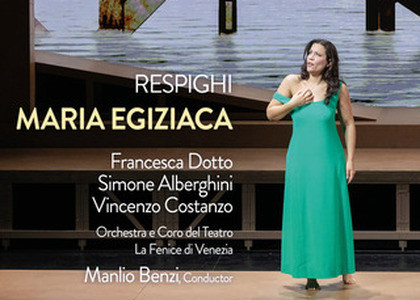
Ottorino Respighi – Maria Egipteanca (Saint Mary of Egypt)– Opera, a World, March 8th, 2026
Ottorino Respighi - Maria Egipteanca (Saint Mary of Egypt)- Opera, a World, March 8th, 2026
Ottorino Respighi - Maria Egipteanca (Saint Mary of Egypt) with: Francesca Dotto, Simone Alberghini, Vincenzo Costanzo, Michele Galbiati, Luigi Morassi, Ilaria Vanacore, William Corrò; Roberta Paroletti - harpsichord; the Chorus (prepared by Alfonso Caiani) and Orchestra of Teatro "La Fenice" in Venice, conducted by Manlio Benzi. (Performance recorded in 2024 in Venice)
Premiere album, released on January 30th, 2026.
Ottorino Respighi is best known for the three symphonic poems that musically portray emblematic places in Rome, but the Italian composer's catalogue also includes a number of operas that are staged only very rarely. Among these lyrical scores stands out Maria Egipteanca, a work that Respighi described as a "mystery in three episodes," a direct reference to the medieval lyric genre-dramatic representations of sacred stories. We are listening to a recording released by Naxos on January 30th, included in the project Records of the Year 2026. It is both a musical and discographic event, considering how rarely this work is programmed. The recording comes from the performance that took place on March 10th, 2024, at Teatro Malibran in Venice. The production featured an exceptional staging by the renowned artist Pier Luigi Pizzi-simple yet highly suggestive, modern in its means of expression and rich in symbolism, fully serving the message of the score. Turning to the score itself, Maria Egipteanca (Saint Mary of Egypt) was composed between 1929 and 1931 to a libretto by Claudio Guastalla, based on the hagiographic collection Lives of the Holy Fathers by Domenico Cavalca. Conceived in a single act, the work contains three scenes connected by two symphonic interludes. Stylistically it incorporates musical elements inspired by medieval Gregorian chant, as well as Renaissance, Baroque, and even Impressionist influences. Respighi and Guastalla envisioned a triptych similar to those in medieval iconography and even provided suggestions for a possible Gothic-style stage design.
In the cast we will hear, the title role-Saint Mary of Egypt-is performed by soprano Francesca Dotto, who delivers an extraordinary vocal portrayal. A worldly temptress in the first scene, a woman awakening to the awareness of her sin in the second, and an elderly penitent in the final episode-this is therefore a particularly complex role. With her lirico-spinto voice, Dotto dominates the cast, successfully embodying each stage in Mary's life. At the same time, through her passionate interpretation she creates a unifying thread: after all, it is the same woman throughout, only her understanding of life changes.
Baritone Simone Alberghini performs the Pilgrim and the Abbot Zosima. His rough voice suits the moralizing and accusatory character of the first figure, although the vibrato is somewhat too pronounced.
Tenor Vincenzo Costanzo, appearing as the Sailor and later as the Leper, has relatively brief appearances but ones that place him strongly in the spotlight and make a significant impact. His voice is beautiful, typically Italian, and well suited to the verismo repertoire.
Two other tenors appear in secondary roles: Michele Galbiati (First Companion) and Luigi Morassi (Second Companion, also A Poor Man).
Soprano Ilaria Vanacore proves to be versatile, conveying with nuance both the role of the blind woman and the voice of the angel.
Bass-baritone William Corrò completes the cast as a voice from the sea.
The performing ensembles are those of Teatro La Fenice in Venice: the expressive "choir of angels," prepared by Alfonso Caiani, and the theater's orchestra. Roberta Paroletti performs on harpsichord. The musical direction is by conductor Manlio Benzi, who delivers a very fine interpretative version of this work.


