



Disk of 2024
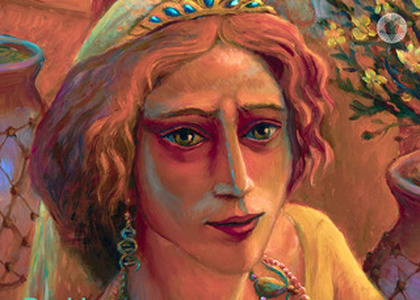
Thomas de Hartmann - Esther - Opera, a world, April 19th, 2026
Thomas de Hartmann - Esther with: Corinne Winters, Yuriy Yurchuk, Andrew Foster-Williams, Bernard Richter, Olga Bezsmertna, Edwin Crossley-Mercer, Paul Appleby. The Grange Festival Chorus (prepared by William Vann), Bournemouth Symphony Orchestra, conductor Kirill Karabits.
Premiere album, released on April 24th, 2026
Here is also a preview now, as the next album, also presented as a radio premiere, will have its official release on April 24th; therefore, it cannot yet be listened to in full on any other platform. I am referring to the opera Esther by Thomas de Hartmann, a recording made last year for the Pentatone label, an album included in our project Discs of the Year 2026.
A large-scale project dedicated to de Hartmann was initiated in 2006, with the aim of bringing back into attention the creation and personality of this composer. Concerts, recordings, studies and musicological articles have been produced.
Thomas de Hartmann was born in 1884 in the Ukrainian locality of Horujivka. Also appreciated as a performer, a very good pianist, de Hartmann became famous in the Tsarist Empire at the beginning of the last century thanks to his ballets. His music, initially romantic in style, was later influenced by the impressionist current, once he arrived in France via Germany. A strong influence on him was exerted by the one he considered his spiritual mentor - Gheorghi Ivanovici Ghiurdjiev, a Greek-Armenian settled in France, with interests ranging from philosophy to musical composition; a mystic, he had initiated a movement with religious traits. By the end of the 1940s, de Hartmann was a well-known name both in France and Belgium. In the following decade he settled in America, the last stage of his activity being characterized by modernism within a complex eclecticism, also including jazz sonorities, while revealing his passion for the music of a wide variety of cultures. Encompassing all genres, his output totals 90 opus numbers. Thomas de Hartmann passed away in 1956, in Princeton.
Considered by the author a musical tragedy, although the ending is happy, the opera Esther, Op. 76, was composed during the Second World War, being completed in 1946, with the orchestration revised until 1951. Its inspiration was Racine's play. Thomas de Hartmann lived in a suburb of Paris and, fleeing from the Nazis who occupied French territories, he moved into a house with outbuildings, where in a chicken coop he found a luxury edition of Jean Racine's plays, in an 18th-century leather-bound volume. Esther, based on the story of the Persian queen of Jewish origin from the Old Testament book of the same name, was the first and seemed extremely relevant at that time. He extracted the essence, about one third of the entire play, composing a three-act opera in French, in the style of lyrical creations of the period - with strong similarities to an oratorio; the story is narrated through monologues sustained by the main characters (though there are also standard arias), and the collective character - the chorus - comments on the actions. The vocal writing also includes parlando or recitando passages, as noted by de Hartmann. The large orchestra also includes piano, celesta, guitar and organ. The mixed sonority results from the use of different languages, combining dissonant, modern writing typical of the 20th century with romantic lyricism, as well as oriental and Jewish music, with modal harmonies and pentatonic scales. Thomas de Hartmann promoted his work through instrumental numbers - especially the four dances (Scythian, Hellenic, Assyrian and Persian) at the opening of the final act - without seeing his opera staged. In 1976, his wife organized a concert in America which was recorded and released on disc, the opera being translated into English, and the chorus and orchestra being student ensembles. Therefore, what we will listen to in the following minutes represents the first recording of the original score, in French, performed entirely by top musicians. The Ukrainian conductor Kirill Karabits considered that the best way to promote this opera, with a view to its inclusion in the repertoire of lyric theatres, was to record it under the best possible conditions before staging it. A successful endeavor, as you will hear shortly.
In the cast: the lirico-spinto soprano Corinne Winters gives a nuanced portrayal of Esther, Queen of Persia, a true vocal challenge; a role conceived by the composer for a dramatic soprano due to its extremely demanding tessitura, which includes numerous extended passages written in the upper register. With nobility in his voice, baritone Yuriy Yurchuk is the King. Mordecai, the Queen's cousin, is rendered with appropriate sobriety by bass-baritone Andrew Foster-Williams. With particularly elegant phrasing, tenor Bernard Richter is the vizier Haman. Soprano Olga Bezsmertna is the sensitive Élise, the Queen's confidante. The beautiful voice of bass-baritone Edwin Crossley-Mercer stands out in the role of Hydaspes, the King's attendant, and he also has a brief appearance as the officer Asaph. The most lyrical male voice belongs to the refined tenor Paul Appleby - the cantor. Versatile, The Grange Festival Chorus (prepared by William Vann) moves through different states and emotions of the Jewish people - from mourning to despair and, finally, to apotheosis. The Bournemouth Symphony Orchestra provides solid support for the entire cast, becoming a main character in the interlude that concludes the second act and, as you will hear in the opening of the final act, the four dances mentioned earlier: the Scythian dance - a frenetic gallop, followed by the pastoral Hellenic dance, then the Assyrian dance with a splendid flute solo, and finally the exotic Persian dance, which surprises us with eclectic sonorities in which we recognize Thomas de Hartmann's style (here featuring violin and piano solos). A production led by conductor Kirill Karabits - the orchestra's music director, an architect of sound constructions.


