



Disk of 2026
Leonardo Vinci – Artaserse – Opera, a world, May 31st, 2026
Leonardo Vinci - Artaserse - Opera, a world, May 31st, 2026
Leonardo Vinci - Artaserse featuring: Key'mon Murrah, Emily Fons, Eric Ferring, Kangmin Justin Kim, Ryan Belongie, Elijah McCormack; The Haymarket Opera Company Chorus and Orchestra, conducted by Craig Trompeter.
Premiere album, released on March 13th, 2026
Returning to new record releases, I recently received an album that has caught my attention - the Artaserse opera by Leonardo Vinci; a record released by Chicago Cedille Records on March 13th, with the album being included in the Records of the Year 2026 project, an album which we will be listening to for the first time.
Leonardo Vinci - an important representative of the Napolitan school of opera, lived from 1690 to 1790. During his short life he composed 40 operas, his last one being Artaserse, which also represents the definitive work of his creation. Vinci's death seems to have been caused by poisoning at the hands of a jealous husband after an affair he had.
Artaserse, dramma per musica, a score with a particularly demanding vocal writing and splendid phrases richly ornamented, is an opera in 3 acts that includes 28 arias, a duet, and a single chorus at the end, while 4 recitatives are accompanied by an orchestra. The Opera was thought out so that it can also be interpreted by a distribution consisting of men only (therefore there are countertenors in female roles as well), since it was set to be performed in Rome, 1730; A decree by Pope Sixtus V forbade women from appearing on the stages of the Eternal City which was part of the Papal States. The libretto belongs to Pietro Metastasio, Vinci being one of the first people to use it, but the text was then adopted for circa 90 other works, including some composed by Hasse, Gluck or Johann Christian Bach. The story is based on the life of Artaxerxes I, son of king Xerxes I of Persia, who lived in the 5th century B.C. The first modern-day revival of the opera Artaserse took place in 2012, in France, with countertenor Valer Barna-Săbăduș being part of the cast; the first recording of this opera also dates from that time, but in a transposed key, so that it can be accessible to present-day countertenors.
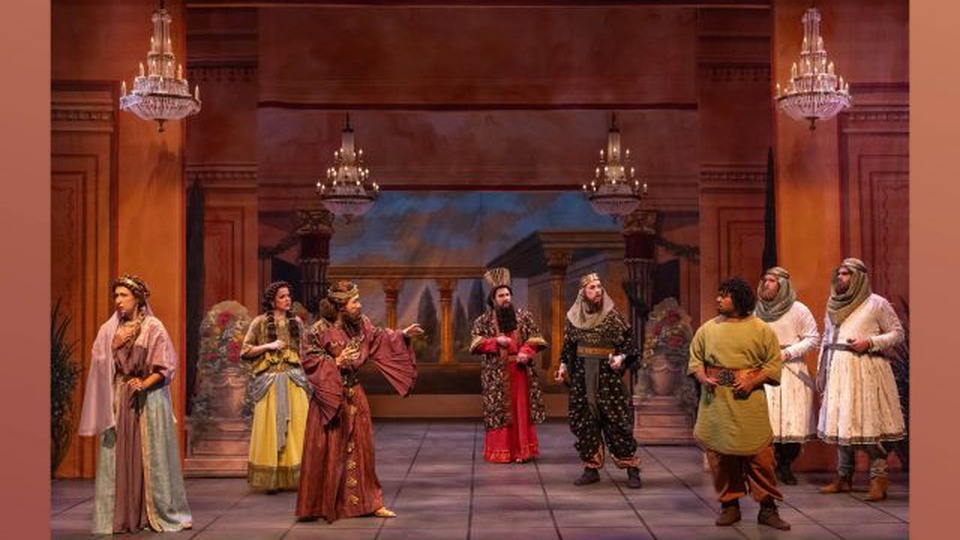
Conductor Craig Trompeter, artistic director of The Haymarket Opera Company in Chicago chose Artaserse to be included in the company's repertoire; the result was a production that was staged last year with the recording being done in the same period of time - the second recording of this opera's discography. The distribution is not exclusively formed of men, even though that was the intention. On the other hand, the key remained the same as the original one but tuned to 392 Hz. I have chosen the complete version of the album for you (only a few recitatives have been removed), the record label also releasing an edition containing highlights. So, prepare yourselves for approximately three and a half hours of music, presented in a high-quality recording.
The cast is exclusively American, with a few impressive, sensational voices (specifically those performing the roles of Artaserse and, above all, Arbace). Countertenor Kangmin Justin Kim plays Artaserse - Prince and later King of Persia; with a high, soprano-like voice, just like the score demands, with a bright timbre and sparkling agility. Another sopranist, countertenor Key'mon Murrah plays Arbace, friend of Artaserse; a voice of unreal beauty, defined by elegant phrasing and brilliant coloratura. These are two voices that give an entirely new meaning to what the countertenor timbre stands for. It was typical for the 18th century that heroic roles were written for castrati. The third countertenor of this cast is the alto Ryan Belongie - Megabise, general of the Persian army - friend of Artabano who is in love with Semira; he delivers a solid interpretation of his score. The lowest voice of the entire cast belongs to the tenor Eric Ferring - Artabano, chief of the royal guard and father of Arbace and Semira. Possessing a harsher timbre suited in this context, Ferring provides a counterweight to the cast that is dominated by feminine vocal qualities and delivers a breathtaking lyricism in aria Figlio, se più non vivi. Coloratura mezzo-soprano Emily Fons - who plays Mandane, sister of Artaserse and in love with Arbace. She takes one of the highest-pitched vocal parts, her character originally conceived to be performed by a countertenor in drag. Likewise, Vinci conceived Semira's role to be performed in drag as well. In this production we also have a transgender soprano, Elijah McCormack that plays Semira, the Prince's beloved. Of course, this is the most crystalline voice in the entire cast, with an ethereal timbre that leaves you breathless when you hear it, the most expressive aria being Non è ver che sia contento.
The ensembles belong to the Haymarket Opera Company in Chicago; the choir appears only in the triumphant end, and the orchestra - full of authentic period instruments or replicas - provides the necessary support for the solo cast during the entirety of the grand score, maintaining an excellent balance between the sonic layers.
At the rostrum was Craig Trompeter - a conductor, as well as an instrumentalist by training (he played the viola da gamba), so he has a deep understanding of the Baroque performance style and is committed to rendering it as faithfully as possible. At the same time, he is keen on bringing in the public's attention works of great value that we know far too little about.
Translated by Maria Alexandra Pletea,
University of Bucharest, Faculty of Foreign Languages and Literatures, MTTLC, year I
Corrected by Silvia Petrescu


