



Disk of 2026
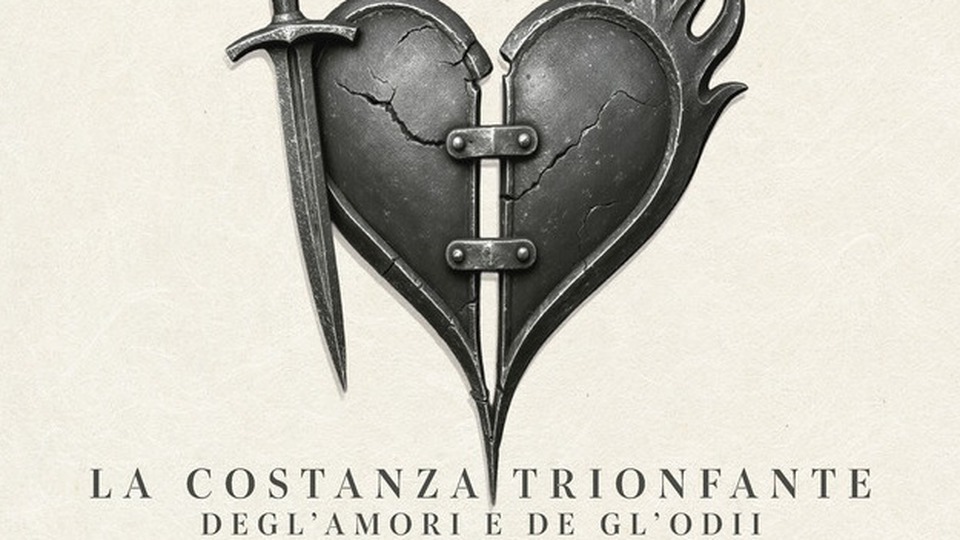
Antonio Vivaldi – “La costanza trionfante degl’amori e de gl’odii” – Opera, a World, July 12th, 2026
Antonio Vivaldi - "La costanza trionfante degl'amori e de gl'odii" - Opera, a World, July 12, 2026
Featuring: Ann Hallenberg, Romina Basso. The Swiss Radio Choir, "I Barocchisti" Ensemble, conductor Diego Fasolis.
What should we listen to on a summer evening? The electrifying music of Vivaldi.
We're listening now to an album which is established in an exceptional recording event - although it was recorded in the autumn of 2011, surprisingly, after 15 years, on June 19th, 2026, the Da Vinci Publishing label released the disc which contains selections from the opera La costanza trionfante degl'amori e de gl'odii RV 706-A - Constancy Triumphant Over Love and Hate. Of course, an album which we included in the Discs of the Year 2026 project.
In 1715, Vivaldi composed this opera after it was staged during the Venice Carnival from 1716. The work, written in 3 acts, has a libretto by Antonio Marchi. The score became a hit of that time, being picked up by lyrical theaters from Italy but also at Hamburg (as well as many other German cities) or Prague. A tremendous success in Central Europe, due to the brilliant music of Vivaldi.
Even though the performance was put on stage many times and there were revisions of his works (especially in the libretto), no version stayed intact, in fact, no complete manuscript exists.
The musicologists of the 21st century wanted to reconstruct this opera which distinguishes itself through the incredibly difficult writing for voices, these being treated in an instrumental manner, leading to melodies which require performers with a perfect technique and with a high virtuosity, capable to accurately perform the extremely difficult agility passages and melodic leaps. A brilliant opera, with a charming orchestration, full of nerve, which keeps us focused from beginning to end. It turned out that the opera had 35 numbers in total, and the musicologists, among whom stands out an essential role, Frédéric Delaméa (expert in Vivaldi's creation), managed to discover 21 numbers, all being arias. Most of them were identified not only by a tag related to the title of the opera, but also by the dates when they had been written (in relation to the original or later versions) and care was taken to ensure that the musical material had not been reused by Vivaldi in other works that are already known and have already been recorded. For some parts reconstruction was also chosen, although discreetly, basically a musical reconstruction of some arias, especially because no duet or chorale number has been found. There are two chorale sections: a chorale number was picked up from the opera Arsilda regina di Ponto because it fits in the context (dramaturgical and musical) and the one from the end of the score - Viva l'amore, viva la pace - rewritten by musicologists, using the text from the libretto. In the same manner, a symphony from that period, stylistically compatible, was chosen as overture. What we are going to listen to in a minute represents the first recording of this opera, in this incomplete but coherent version and the first attempt to reconstruct this score without intervening too much, so that the lost recitatives, for example, stay absent.
The cast includes only two soloists who share with each other the arias of all characters. They are two outstanding voices, both mezzo-sopranos, but with different timbral colors that harmonize perfectly: Ann Hallenberg - with her bright, crystalline voice, and Romina Basso - with a fleshy, dark voice. Both excel in the brilliantly executed coloratura passages and delight us equally throughout the score. Two ensembles, excellent as well: The Swiss Radio Choir and the "I Barocchisti" Ensemble. At the rostrum, conductor Diego Fasolis, the founder of the ensemble, the guarantor of an artistic product of great value, the musician being one of the most important figures among the exponents of interpretation informed from a historical perspective.
The subject of the opera La costanza trionfante degl'amori e de gl'odii RV 706-A - Constancy Triumphant Over Love and Hate: Artabano, Persian king, defeats the Armenian king, Tigrane, and kidnaps Queen Doriclea, whom he falls in love with. After a series of adventures, battles, intrigues and love dramas, the story has a happy ending. The royal couple reunites, and the tyrant is forgiven. Other characters contribute to the development of the musical drama: Princess Eumena - in love with Olderico, the prince of Armenia, and Princess Getilde - who loves Farnace, Tigrane's favorite.
Translated by Bianca Maria Costescu,
University of Bucharest, Faculty of Foreign Languages and Literatures, MTTLC, year I
Corrected by Silvia Petrescu


