



Disk of 2026
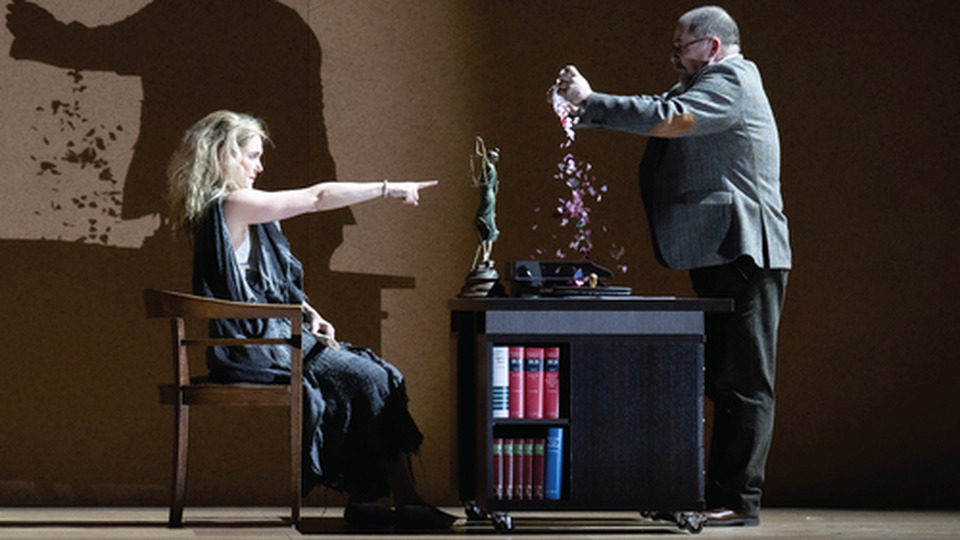
Richard Strauss - Intermezzo - Opera, a World, July 19th, 2026
Richard Strauss - Intermezzo, featuring: Philipp Jekal, Maria Bengtsson, Thomas Blondelle, Anna Schoeck, Tobias Kehrer, Elliott Woodruff, Nadine Secunde, Lilit Davtyan, Joel Allison, Clemens Bieber, Simon Pauly, and Markus Brück. Orchestra of the Deutsche Oper Berlin, conducted by Sir Donald Runnicles.
Premiere album, released on June 12th, 2026
For this edition, we have chosen to listen to an intriguing opera with a rather limited discography: Intermezzo, Op. 72, by Richard Strauss.
A comic opera in two acts, in which scenes alternate with symphonic interludes, a structure the composer claimed opened a new direction in lyric theater. The score was composed in 1924, with Strauss himself also writing the libretto. Viewed by the composer as a "bourgeois comedy," the opera is autobiographical, depicting a genuine crisis in his own marriage, brought on by convoluted circumstances and jealousy. At the world premiere in Dresden, the staging was highly authentic, with the set recreating the interior of the Strauss family home in Garmisch. His wife, Pauline, only learned of her husband's endeavor at the premiere itself; she was congratulated by the soloist singing her role - the character was named Christine - who praised Strauss's "gift" to Pauline. As one might expect, Mrs. Strauss was not amused.
We will be presenting, for the first time on our airwaves, the album released by Naxos on June 12th, which is featured as part of Radio România Muzical's "Discs of the Year 2026" project.
The recording is a composite of several performances that took place in April and May 2024 at the Berlin State Opera; this approach - capturing multiple performances and then selecting the best version for release - is sometimes employed. The result is an excellent recording, a credit to everyone involved, from the musicians to the sound engineers.
It is a delight to witness a cast where every soloist is perfectly suited to their respective role. Swedish soprano Maria Bengtsson anchors the entire production. Her character, Christine, serves as the opera's central figure, with all other characters gravitating around her. Her voice, consistent across all registers and supported by a superb technique, allowed her to navigate the score's most demanding peaks with brilliance. She also displayed a rich emotional palette, moving with admirable ease through a whirlwind of states: from fury to melancholy, from screams to laughter, and from spoken dialogue to musical phrasing. Strauss portrayed his own wife by composing passages of fierce intensity. For his own alter ego, Strauss chose the name Robert Storch (Storch being the German word for "stork"); the role is performed with great aplomb by German baritone Philipp Jekal, who possesses a fine, resonant voice and impeccable diction. He portrays a character perhaps harsher than the one envisioned in the libretto - quick to pick a fight with his wife rather than maintaining his composure during their confrontations - though this may well have been a directorial choice. The child Elliott Woodruff plays Franzl, their son; a fine American-German actor with excellent vocal projection. German soprano Anna Schoeck plays Anna, the family's maid; she handles an extensive vocal part brilliantly, with her passages of vocal agility providing an engaging counterpoint to the writing for the role of Christine. Belgian tenor Thomas Blondelle portrays Baron Lummer (Lummer in German means "tenderloin") - he is excellent in this role as a young opportunist who exploits Christine's vulnerability, crafting a character who can be ironic or even comic, as the situation demands.
German tenor Clemens Bieber delivers a refined character performance as the conductor Stroh (Stroh means "straw" in German); perhaps Strauss was alluding, metaphorically, to a "flash in the pan" - or literally, a "fire of straw" - in relation to the unfolding situation, as a mere similarity in names triggers a crisis in the Storch household, all stemming from a letter that reaches the wrong recipient. It is likely that these surnames were chosen with a comic intent. German baritone Markus Brück (the Notary) and American soprano Nadine Secunde (his wife) form a delightful comic duo. Other notable, well-executed performances come from Canadian bass-baritone Joel Allison (the Commission Agent), German baritone Simon Pauly (the Lawyer), German bass Tobias Kehrer (the Singer, who also doubles as the Cook), and Armenian soprano Lilit Davtyan (the Singer), as well as the maids, Marie and Therese.
The Berlin State Opera Orchestra delights us with its opulent sound. There are 12 interludes in which the orchestra takes center stage, yet it proves to be an ideal partner for the voices; the soloists are never in competition with the ensemble, a balance all the more important given the work's blend of spoken dialogue and moments of intense lyricism. The orchestra itself acts as a character - consider, for instance, the symphonic poem Till Eulenspiegel, also composed by Richard Strauss - thereby participating in the unfolding of the action and revealing various facets: the comic, the ironic, the pictorial... I would highlight just two examples: the brilliant depiction of the scene on the ski and sled slope, featuring instrumental writing that is both dizzying and remarkably authentic, as well as the sublime Viennese waltz.
Musical direction is in the hands of Sir Donald Runnicles; the Scottish conductor also serves as the music director of the Berlin Opera, a position he has held since 2009, until the end of the current season. It is a masterful way to conclude a fruitful collaboration, with this recording offering us the chance to admire an opera that is rarely staged.
Translated by Alia-Iarina Popa,
University of Bucharest, Faculty of Foreign Languages and Literatures, MTTLC, year I
Corrected by Silvia Petrescu


