


> Interviews
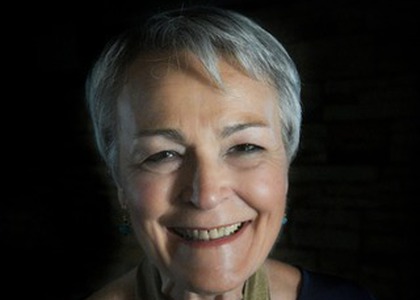
Gabriella Biagi Ravenni about La Boheme by Puccini
In preparation for this Saturday's live broadcast from the Metropolitan Opera in New York, we spoke with musicologist Gabriella Biagi Ravenni, President of the Giacomo Puccini Study Center in Lucca, about La Boheme, the work of the composer born in Lucca, Italy.
At the Met, La Boheme is presented in Franco Zeffirelli's production and marks the opening of the institution's live broadcast season. I invite you to join me in listening to this performance on Saturday, December 6th, 2025, at 8 p.m.
La Bohème is one of the most frequently performed and beloved operas, constantly present in the repertoire of opera houses around the world. In your opinion, what are the main reasons why this score has enjoyed such popularity since its premiere in 1896?
It's very simple. La Bohème is a perfect opera, it has no flaws. It strikes a perfect balance between drama and music. Puccini has this special quality, which not all opera composers have, of creating music that is perfect for theatre, music that blends perfectly with theatre. One of the reasons why this opera is perfect, in my opinion, could also stem from the fact that Puccini lived his own Bohème many years before his success with Manon Lescaut. Among his documents, preserved in the Villa Museum in Torre del Lago, there is a notebook he wrote many years earlier, about ten years before writing the opera La Bohème. The notebook is titled La Bohème. He notes his income and expenses, and some of the expenses make us smile-expenses for wood, food, newspapers, just like in the opera. It is truly moving to see this notebook.
Of course, one of the reasons for this perfection, which I consider almost absolute, is always the result of Puccini's tireless work. He was never satisfied with what he wrote, he always went further. Among other things, he had already done this for Manon Lescaut and would do it again for Madama Butterfly. He could be, for example, at a very advanced stage of creation, and completely abandon an act, throwing it in the trash. Because, I repeat, he had this ability to understand that it is not enough for music to be beautiful, but that it must work in a theatre setting. And these four scenes are flashes. We don't need to have all the details, all the explanations of how things happened, but when we find ourselves immersed in that scene, we understand everything because the music conveys that to us.
There is one more thing that could be said-it is generally written that Puccini had never been to Paris when he wrote La Bohème. However, this is not true, because thanks to the work we have been doing for years on his correspondence and letters, we know that in 1892, on his return from Madrid, he was in Paris, so he had seen Paris. Nevertheless, it must also be said that the bohemian lifestyle in Milan was not so different from that in Paris. The environment of artists, without money, full of ideals and always in love, is ultimately quite similar.
If we refer to the collaboration between Puccini and his librettists, Luigi Illica and Giuseppe Giacosa - how did it go? Are there any lesser-known episodes of this collaborative process?
Obviously, the Illica-Giacosa duo is unmatched from a certain point of view, because the work for all three operas they signed together is similar. Especially for the first two, because for Madama Butterfly we have a long period of interruption after the composer's accident, so there are other factors, but the way they worked was always the same. They often met in Milan, at Casa Ricordi, where they read what they had written up to that point and had long discussions and heated debates, because Illica and Giacosa were, of course, the best of that period. Puccini was as demanding of himself as he was of others, meaning he was not satisfied with his music, he kept working and became extremely demanding of the librettists.
There is a very famous letter from Illica to Ricordi, which is quite ironic, because the librettist writes that Puccini basically doesn't know what he wants, because when he asks for something new, he can't explain it. He says rather vague things, saying he wants something, something that is something, repeating this word that means nothing, because he is probably unable to define in advance what he wants. But I am sure he was perfectly capable of understanding when that something arrived and was right. Puccini often behaved in a way that made librettists avoid him. Even if they were not yet able to provide him with the text he considered suitable, Puccini continued to write the music and then told the librettists that he needed a text with that particular rhythm, because the music was already there. For example, to clarify the rhythm he wanted for the famous Musetta's Waltz, Puccini told the librettists: "cocoricò, cocoricò bistecca, quando me'n vò, quando me'n vò soletta". They considered this an insult, because Giacosa, in particular, was a refined poet and felt he was being abused. In the years that followed, both Giulio Ricordi and Puccini would regret those working sessions at Casa Ricordi, where, in a matter of hours, they would throw away entire pages, write new ones, and slowly arrive at the perfect compositions.
During the same period, another Italian composer was writing La Bohème-Ruggero Leoncavallo. In this case too, there are various stories circulating about an alleged conflict between Puccini and Leoncavallo on this subject. What is the truth, in your opinion?
The truth is difficult to establish, because much of it was conveyed through conversations and meetings in cafés, but what we know for sure is that Leoncavallo was the first to think of it, that much is clear to us. I don't think Puccini wanted to write something against Leoncavallo; but, as I said before, Puccini understood that it was the right thing to do, that the idea was good and he would not give it up under any circumstances. But again, when he decided on a whim, on a burst of enthusiasm, to write Manon Lescaut, theatres already knew Massenet's Manon, it was a challenge. But faced with these flashes of inspiration, Puccini did not back down, he went ahead, so we are not so interested in understanding exactly how things went with Leoncavallo. Both became passionate about a subject which, coincidentally for Puccini, was, as I said before, a return to a life he had lived. This is how he felt able to render it in the wonderful way he did.
Returning to Puccini's La Bohème, are there any documents or testimonies that reveal what kind of voice Puccini had in mind for the roles of Mimi, Rodolfo, Marcello, and Musetta during the composition phase?
No, not during the composition phase. We know that during rehearsals, Puccini was very dissatisfied with the performance of all the singers in the opera's premiere, except for Mimi. But it must be said that this is a constant-if we read Puccini's letters from the rehearsal period for an absolute premiere, and not only for the premiere, but for any performance, we always find him dissatisfied, because in this case as well, he wants the best. But then, perhaps after the opera is staged and is a great success, everyone becomes good, and then everyone seems good. So we must take this into account as well. However, in the case of La Bohème, Gorga, who was the first Rodolfo, was not to Puccini's liking, as he was very angry with those who had recommended him and liked him even less when the tenor asked to sing his part lower.
Above all, and this is very interesting, he was genuinely concerned about the baritone, named Wilmant; there is a phrase that I find wonderful, which says that the baritone is a salame (an Italian expression used to describe a clumsy, careless, and awkward person). So, the strong criticism of this baritone is not so much about his voice as his ability to interpret the character. These are observations that Puccini often made. I remember another example-Antonio Scotti, who was a memorable Scarpia. Puccini said that he was a memorable Scarpia in London, although he also said that Scotti had a terrible voice. But he was the perfect Scarpia, according to the composer.
Therefore, we should always consider not only vocal qualities, which are obviously necessary, but also a combination of vocal qualities and the ability to interpret the character, which I believe should be emphasized more. Marcello must obviously be a lively, very communicative character, all his jokes with Musetta must be very expressive, and if the baritone is a salame (salame in Tuscany means someone who is clumsy, who doesn't know how to move), it is clear that he cannot be Marcello.
Yes, of course, we are always looking for a combination of voice and acting.
In your opinion, how does La Bohème fit into the musical and theatrical context of the 1890s? What innovations does Puccini introduce here?
Let's say there's quite a big revolution here, in the sense that we have this type of singing that has been defined as conversational singing, a type of singing that is very much in line with the nature of speech. Because we have a type of realism (note: not verismo, realism), because you have to adhere to reality in order to be convincing, and because you want to reassure this very special situation. So, here we are, we don't really have arias, closed forms, in fact they don't even appear in Manon Lescaut anymore. Mimi and Rodolfo introduce themselves, which is very different from the operas written a few years earlier, where we always have this first area of the main character that is a little different. Here we really have a conversation between the two, even if Rodolfo then hits the high notes, but anyway everything is much more natural. Another new feature is that now we have scenes, it is no coincidence that they are not defined as acts, because it is a special type of dramaturgy that is new. Then the objects also become protagonists, and this obviously serves to describe the situation. Of course, in terms of orchestration and the ability to develop ideas, we are at a level that few had reached at that time.
Naturally, this was not particularly appreciated by critics. The premiere was not a triumph, and there was even one critic who went down in history for the absurdity of what he wrote. He wrote that this opera would leave no mark on the history of opera. So he won, so to speak, the Oscar for imbecility. But even some European critics, such as the famous Hanslick, listened to it in Vienna and, essentially, did not appreciate it very much. Instead, what exploded immediately was the recognition of the public. And this is the characteristic that we must always keep in mind. Puccini always manages to speak to the public. This does not mean, as some have unfortunately said, that he was only looking for that, that he wanted the approval of the public, no. But he always managed to do it. How is it that of Puccini's 12 operas, practically all of them are in the repertoire and have never been taken out? Because Puccini has this ability to speak even to those who are not prepared, those who have not studied music. That is, he is truly capable of communicating, which, in my opinion, is an extraordinary, exceptional characteristic.
This is one of the reasons why his works have sometimes been considered, shall we say, lighthearted. However, this is not the case...
Absolutely not. Quite the opposite, in fact. We know that Puccini worked incredibly hard to achieve this result. As I said before, he was demanding of his collaborators, but he was never satisfied with his own work. And now we know that Puccini never left his works alone. That is, every time he attended a performance, he made changes, because he always found something to improve. This means that he had a clear idea of what he wanted to achieve and that by listening (because it's one thing to have the score in front of you and read it, and another to listen to it in the theater, where the final test takes place), he was always perfecting, always adjusting, always fixing.
Translated by Miruna-Andreea Vartic,
University of Bucharest, Faculty of Foreign Languages and Literatures, MTTLC, year II
Corrected by Silvia Petrescu


