



> Interviews
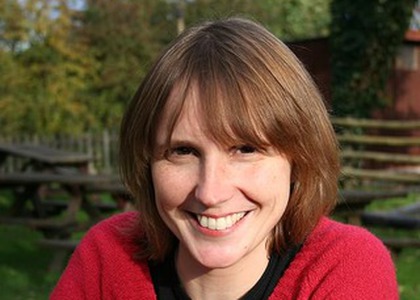
Professor Pauline Fairclough on Shostakovich’s Lady Macbeth of Mtsensk
To mark 50 years since the passing of Dmitri Shostakovich, the management of Teatro alla Scala in Milan has chosen to inaugurate the 2025-2026 season with a production of the Russian composer's opera Lady Macbeth of Mtsensk. We will be broadcasting the performance live this Sunday, 7th of December 2025, from 18:55.
During one of the two intermissions from Milan, I invite you to listen to an interview I conducted with Professor Pauline Fairclough of the University of Bristol, one of the most prominent scholars of Soviet music. Pauline Fairclough is Professor of Music at the University of Bristol, specializing in Soviet music and in Dmitri Shostakovich. Her first monograph, A Soviet Credo: Shostakovich's Fourth Symphony (2006), offers an in-depth and analytically rigorous study of Shostakovich's Fourth Symphony and its politico-aesthetic context. In 2019 she published a concise biography, Dmitry Shostakovich, in Reaktion Books' "Critical Lives" series-a volume that combines archival insights, rare photographs, and letters to create a vivid portrait of the composer's life under Stalinist rule. Looking ahead, Prof. Fairclough is preparing a book on Shostakovich's opera Lady Macbeth of Mtsensk (for Oxford University Press's Keynotes series), due to appear in 2025.
Our discussion explored the artistic evolution of the composer under the Soviet regime, focusing especially on Lady Macbeth of Mtsensk, a work that continues to provoke and unnerve audiences worldwide. The conversation took place in the context of the opera's Romanian premiere at the Enescu Festival.
Prof. Fairclough offers crucial insights into both the historical context of Shostakovich's opera and its continued cultural resonance. As Lady Macbeth of Mtsensk remains part of the global repertoire, these perspectives remind us of the complex interplay between artistic creation, political pressure, and the ongoing task of historical interpretation. This interview moves beyond the infamous scandal that enveloped the opera, examining instead the composer's artistic development under Soviet rule and presenting a new theory regarding Stalin's reaction to the work.
In 2025 we commemorate fifty years since Shostakovich's death. Given that he lived his entire life under the Soviet regime, how do you think his artistic voice evolved under constant political censorship and ideological pressure? This is, of course, something to which we Romanians can easily relate.
Yes, of course-I understand that perspective very well. I've thought about this at length over the years, and I believe that in the West we tend to assume that Shostakovich was shaped by his environment in an unusually intense way-the implication being that if he had lived in the United States or Britain, this would not have been the case.
I want to resist that assumption very strongly, because all composers are shaped by their environments. Although the Soviet environment was indeed intense and unique, if Shostakovich had been working in the United States, he would have been a contemporary of composers like Aaron Copland. And Copland was massively shaped by his environment-to the extent that he essentially had to reconstitute himself as a reformed modernist. He returned from his studies in the 1920s with Nadia Boulanger in Paris as a committed modernist, but then came the Great Depression: audiences increasingly preferred musical theatre and revues; the popular music industry was taking off; and they simply did not want to listen to Boulanger-inspired modernism-not in large enough numbers for concert promoters to programme it. So he completely changed his style and began writing works such as Billy the Kid-the very popular pieces we now think of as quintessentially Copland. But that was not how he wrote earlier.
So it is entirely mistaken to think that Shostakovich would somehow have been "free" to compose as he pleased in the West. What does it even mean to "compose as we please"? What does "free" actually mean? After the Second World War, generations of composers began writing rigidly avant-garde music and continued to do so for decades, largely alienating audiences in the process. We can say this openly now, though few wished to admit it at the time-certainly not in the Western academic music world.
I'm thinking here of the Darmstadt School, for example.
Exactly. So were those composers not also intensely shaped by their environment? When they look back at their works, do they truly like all the music they wrote? What does it mean to be "shaped by environment"? Everyone is. I do not want to suggest that Shostakovich was shaped more severely or more negatively than anyone else. We simply do not know what he would have been like in another country, and I've come to feel that speculating about this is not productive.
Here in Romania, Shostakovich's Lady Macbeth of Mtsensk had never been performed-neither staged nor in concert-before it was finally presented this year at the George Enescu Festival. Do you think the opera can still shock or challenge contemporary audiences, or has its transgressive power been neutralized by time?
I wonder whether the opera was ever truly transgressive, at least in the way we tend to imagine. When it premiered in Leningrad and Moscow, it was widely praised and nobody said a word about the sex scenes. But there was one important criticism-expressed not in a hostile way, but as an intellectual engagement that showed sincere interest in the opera. If the work was transgressive, what was transgressive was the final act and the way Shostakovich portrays the convict labour camp. He was criticized for depicting the convicts as utterly hopeless, lost individuals who elicit overwhelming compassion. From a Bolshevik revolutionary perspective, this is rather bourgeois. The criticism was: what purpose does this serve? These people should be shown as capable of revolt-the revolution is supposed to arise from this class. But Shostakovich presents them as beyond hope. This draws us back into a pre-revolutionary perspective, when you might see prisoners in chains marching to Siberia and ordinary people along the road would give them bread and show them pity. This was old Russia. Shostakovich's parents were from Siberia; it was part of their past. It is a profoundly humanitarian perspective, and Soviet critics were uneasy about it. They thought there should be some message of future hope. So if the opera was transgressive, this was the reason. The sexual content-which we consider transgressive-was not viewed that way.
Many opera librettos can seem a bit absurd. Do you think this is why directors have such a high tolerance for scenes like the one you mentioned from the original score of Lady Macbeth?
Exactly. Directors are used to this sort of nonsense in operatic plots. They think: "How can I stage this so that it works dramatically?" And they are often brilliant at finding a solution, even when the score and libretto pose problems. In this opera, the sex scene was problematic from the very beginning. The staging notes from the Leningrad production show that all the dialogue following the love scene between Katerina and Sergey was completely cut. And we know that both this production and the one at the Nemirovich-Danchenko Theatre in Moscow cut the descending trombone glissandi that always made the audience laugh. The sex itself was also minimized-the bed was placed behind a curtain, and most of the stage action consisted of a chase scene, at least in Leningrad. The problem was that the third production-the one Stalin saw-restored everything: the trombone glissandi, the dialogue, and the bed placed squarely at centre stage.
So do you think Stalin left because of the content of this scene?
Well, I have another theory. It's not entirely mine-my wonderful colleague Olesya Bobrik, who works at the Bolshoi Theatre, showed me the sources for it in 2019. Olesya discovered that in the original orchestral parts, the trombones were instructed to play with bells raised and in FFFF (Fortissississimo), which is extraordinarily loud. This performance instruction had been added by the conductor, Alexander Melik-Pashayev-not by Shostakovich in the score. In addition, there may have been (optionally) another ensemble on stage. Assuming the brass were seated on one side of the pit, there is a strong possibility that Stalin's box was positioned directly above all of this. The volume must have been overwhelming. So I suspect Stalin was simply deafened.
When he was quoted as saying "This is noise, not music"-the now-famous phrase used as the title of the anonymous Pravda article that eventually shut down productions of Lady Macbeth in Russia for years-I am quite sure he meant that he literally heard "noise," not that he was offering some nuanced critique of modern music. He simply heard modernist music played far too loudly. And if we also consider that he witnessed the "full-ingredients" version-with the sex scene and the bed placed centre-stage-we are justified in thinking he had a genuinely overwhelming experience. I doubt his reaction would have been as visceral had he attended the Nemirovich-Danchenko or Maliy productions. But who knows?
How do you view the fact that one of Shostakovich's students and friends, the cellist and conductor Mstislav Rostropovich, recorded the opera's original version in London-together with his wife, soprano Galina Vishnevskaya-for the first time?
I think Rostropovich was absolutely right to believe that this version would generate the greatest sensation. Because it coincided with the publication of Testimony (a book released in October 1979 by the Russian musicologist Solomon Volkov, who claimed the volume contained Shostakovich's memoirs-an assertion heavily contested by specialists), that original version of Lady Macbeth produced an enormous surge of media interest, precisely because it seemed so shocking. People almost immediately linked the opera's sexual frankness with Stalin's anger and the subsequent banning of the work-putting the two together, probably incorrectly. The idea that Shostakovich might genuinely have preferred the revised version of his opera vanished completely. Hardly anyone bothered with the second score afterwards, apart from Gergiev.
Returning to our murderess, our modern Lady Macbeth-you say that 1930s audiences were not offended by the sex scenes. Do you think audiences today are shocked by the violence of the sex scenes?
I think that historically audiences were not shocked, but perhaps they should be-and probably will be, increasingly so. I've seen my students' reactions change over the years, and I myself have become more aware of the issue as I've grown older. When I was in my twenties learning about this opera from the men who wrote and lectured about it, I always found them remarkably at ease with the whole scenario-"Yes, well, she's raped-or was it rape?-because clearly she enjoyed it and then fell in love with him afterward." Everything was treated almost as humorous. Everyone glosses over the Aksinya scene as if no one cares what happens to her, because she's just the maid. Some of the ways Sergey's assault on her is now staged are incredibly violent-sometimes it is portrayed as a genuine gang rape, brutally executed and with significant nudity.
When audiences are not shocked-when listeners think "this is just normal operatic sexual violence against women"-that is plainly a problem. I think it would be good for audiences to understand that it is normal, even appropriate, to be shocked by this violence. Keeping those descending trombone glissandi and the problematic dialogue that Smolich (Nikolai Smolich, the Russian director who staged several of Shostakovich's operas including Lady Macbeth) cut leaves us in this suspended, almost infantilized listening space, where we are encouraged to consume the sex scene between Sergey and Katerina as humorous. I do not think Shostakovich intended it to be humorous. When audiences laughed at the trombones, he was upset. His friend Isaak Glikman (literary critic, theatre critic, librettist, screenwriter, and professor at the St Petersburg Conservatory) confirms this, and Shostakovich publicly stated-very late in life-that the trombone slides had come to irritate him, which is why he removed them. They turned a serious moment into a cartoon, and it was never meant to be funny.
I think we have two options: either we keep the violence but audiences understand that it is problematic, or we do as Nikolai Smolich and Nemirovich-Danchenko (the Russian writer and theatre director) did and remove the violence altogether. Aksinya is not gang-raped in the original-she is rolled into a barrel. It is modern interpretation that has transformed this into a scene of serious sexual violence. If we are going to consume this, then we need to understand what we are consuming and respond accordingly. The scene is not meant to be humorous.
In Lady Macbeth, Shostakovich gives us a Katerina Izmailova who is both a victim of oppressive social structures and a woman who acts with remarkable independence and defiance. From your perspective, can this opera be understood as carrying a feminist message?
No, because there is an immaturity in the way those sex scenes were written. It is the immaturity of a young man who did not truly grasp how unacceptable the scenario he created actually was. It made no dramatic sense, but he believed it did. As an older man, when he revised the opera, he cut it all.
What are your thoughts on the revised version of the opera and its retitling as "Katerina Izmailova"? What do you make of the fact that theatres and musicians have returned to the original version, which is now the one most often performed?
When Shostakovich revised it, he left the scene with Aksinya (a charater in the opera, the housekeeper) almost unchanged, but the sex scene between Katerina and Sergey-the opera's protagonists-he brought closer to Leskov's original story (Nikolai Leskov, author of the novella Lady Macbeth of the Mtsensk District, on which the opera is based). Sergey enters Katerina's room, refuses to leave, becomes frightening-she panics-this is all in Leskov. But then Shostakovich did not want to continue into a sex scene, because by that time he was in his fifties and had realized that what he had done with the libretto in his twenties was not very good-he had made Sergey essentially rape Katerina, and then made her fall in love with him almost immediately. So Shostakovich cuts the scene, and instead has Boris Timofeevich (Katerina's father-in-law) appear at the window. The two lovers are terrified of Boris, which brings them together. Boris leaves, the woman says she is going to bed, the lovers remain together, and that is the end of the scene-almost identical to Leskov's text.
One does indeed lose all that emotionally charged music, but when you see the autograph score, you see what the composer did with those pages. He crossed them out with thick coloured pencil. And in the places where he rewrote the music, he pasted it firmly over the original pages so that the original could not be seen or retrieved. I believe he was completely serious, quite determined, in this undertaking.
You have heard and seen numerous productions of the opera. Do you have a favourite version, and why?
The production David Pountney created for English National Opera in 1987 is absolutely extraordinary, and I also think Martin Kušej's production for Dutch National Opera is brilliant. The reason I still admire Pountney's production is that it was a very specific interpretation that has stood the test of time remarkably well.
Josephine Barstow, who played Katerina, portrayed her as evil, diabolical. Her entire conception of Katerina was that she was a cold-blooded killer, and you can see this in the BBC recording of the staging. She said that when people came to her with the idea-echoing Shostakovich's comments from the 1930s-that Katerina was "a light shining in the darkness," that he was trying to portray her as a "Juliet or Desdemona of Mtsensk," and when people came with pity for Katerina, Barstow felt she had failed. It is such a powerful interpretation, full of immense integrity. And the sexual violence is not exaggerated in that production.
I also want to mention the production conducted by Christian Badea at the Spoleto Festival in 1981, directed by Liviu Ciulei. I would love for Badea to revive that production. There is a small fragment still available online, and it looks absolutely superb! It could be a fully Romanian production of Lady Macbeth, something that has never been done in Romania. I had a long phone conversation with Christian Badea about this, and he still remembers that Italian production with great affection. He conducted the opera magnificently.
Selections from an interview conducted for the 2025 George Enescu International Festival
and published in the Festival Album.
Translated by Miruna-Camelia Baicu,
University of Bucharest, Faculty of Foreign Languages and Literatures, MTTLC, year II
Corrected by Silvia Petrescu


