



> Events
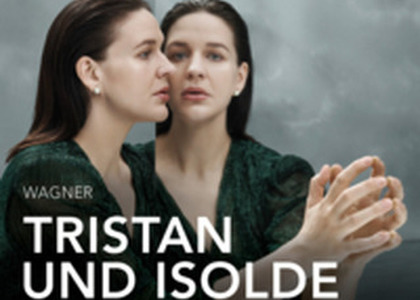
LIVE from the Metropolitan Opera in New York – Tristan and Isolde by Wagner
A truly exceptional event: Tristan and Isolde by Richard Wagner, live from the Metropolitan Opera, on Saturday, 21st of March, at 18:00.
From 9th of March 2026, the Metropolitan Opera in New York presents a new series of performances of Richard Wagner's opera Tristan und Isolde, spectacularly staged by Yuval Sharon. Equally spectacular is the voice of Lise Davidsen, who performs the role of Isolde. Her partner in this American production is the tenor Michael Spyres.
On Saturday, 21st of March, starting at 18:00, we will have the opportunity to listen live on Radio România Muzical to one of these performances - a true highlight of the opera world that fans of the genre know they shouldn't miss.
Lise Davidsen - the Wagnerian soprano of the moment
Lilli Lehmann, Kirsten Flagstad, Astrid Varnay, Birgit Nilsson - these are some of the most important Wagnerian sopranos who have gone down in the history of opera due to the exceptional qualities they owned and shared with the audience. These voices prefromed, in past eras, the role of Isolde on the Met stage in New York, applauded for the thunderous power of their voices, for their brilliant high notes, and for their seemingly endless reservoirs of volcanic sound. This season, the American company has added a new name to this pantheon - that of the Norwegian soprano Lise Davidsen.
With an imposing presence - including physically (she is approximately 1.90 meters tall), and a voice capable enough to shake the walls of the hall, Lise Davidsen is one of the biggest stars in the opera world today. Born in Norway, she has made a name for herself in recent years as the most important Wagnerian of her generation. Antonio Pappano sparked the wave of enthusiasm by calling her a 'one-in-a-million voice', and Peter Gelb, the manager of the Metropolitan Opera, fueled this enthusiasm by proclaiming her the Met's prima donna and making every effort to strengthen this image. Her debut in the complete role of Isolde took place at the Gran Teatre del Liceu in Barcelona in January 2026, also marking her return to the opera stage after a period of absence due to pregnancy. The reactions were extraordinary: The Observer asked, in the headline of its review, whether Davidsen was the soprano of the century; ABC celebrated the return of an Isolde that was beyond human reach on the stage of the Liceu Theater; and El País described her voice as monumental, capable of evoking sensations that seemed definitively lost in Barcelona. I, too, joined this large group of admirers of the 39-year-old artist in my review of the final performance with Tristan in Barcelona (http://www.example.com/Link20)
Davidsen is the mother of twin boys and spends most of her time, outside of performances, with them. This new experience of motherhood seems to have added an extra dimension to her performance - a dimension that the Met production has boldly harnessed: Yuval Sharon's most shocking directorial addition to the original text is the on-stage birth of Isolde's child, right before the sublime and painfully slow Liebestod performed by Davidsen.
In a recent interview with The New York Times before the premiere, Davidsen spoke about the immense responsibilities of the role of Isolde - a role that requires the soprano to be on stage for nearly four hours, almost without interruption, with moments of extreme dramatic and vocal intensity. She confessed that she had deliberately waited for the right moment to take on this role, as she wanted to make sure that both her voice and her artistic maturity were ready for such a challenge. Davidsen said 'it had always been clear to her that she wanted to wait a few years, to sing certain roles, and to feel that she was finally ready to meet Isolde'. In the same remarkably honest interview with The New York Times, Davidsen confesses that although she still loves opera, this world no longer means everything to her, as it did before her children were born.
Wagner at the Metropolitan Opera: A 140-Year-Old Tradition
The Metropolitan Opera's relationship with Tristan und Isolde began on 1 December 1886, when the company presented the American premiere of the opera, with Albert Niemann and Lilli Lehmann in the title roles, under the baton of Anton Seidl (a disciple of Wagner whose work at Bayreuth included contributions to the first accurate copy of the manuscript of The Ring of the Nibelung).
In the years between the Met's first production of Tristan und Isolde and the second half of the 20th century, the company hosted the world's most famous Isolde performers: Lillian Nordica, Milka Ternina, Johanna Gadski, Olive Fremstad (whose first Isolde at the Met was conducted by Gustav Mahler, making his debut there at the time), Helen Traubel, and Astrid Varnay. There was a similar golden age between 1935 and 1941, when the legendary Lauritz Melchior and Kirsten Flagstad performed the leading roles. Melchior and Flagstad performed this opera together no less than 86 times, primarily at the Metropolitan Opera, but also in London, San Francisco and Chicago.
Birgitte Nilsson's debut at the Met in 1959, in a production conducted by Karl Böhm, marked the arrival on the American stage of a new, exceptional Isolde - she was considered the leading interpreter of the role in her entire era. Erich Leinsdorf conducted Nilsson and Jess Thomas in the subsequent production in 1971. Dieter Dorn's staging premiered in 1999, with James Levine on the conductor's podium and Ben Heppner and Jane Eaglen in the lead roles. Mariusz Treliński's production opened the 2016-17 season, with Nina Stemme and Stuart Skelton in the title roles and Sir Simon Rattle on the rostrum.
The current production is directed by Yuval Sharon. The line-up brings back mezzo-soprano Ekaterina Gubanova as Brangäne, bass-baritone Tomasz Konieczny as Kurwenal, and bass-baritone Ryan Speedo Green in his debut as King Marke. With Yannick Nézet-Séguin as conductor, this is the first time when the music director of the New York institution is conducting Wagner's Tristan at the Met. The performance lasts just over five hours, including two intermissions of approximately half an hour each.
A masterpiece that changed music
Tristan und Isolde, WWV 90, is a music drama in three acts by Richard Wagner, with a libretto written by the composer himself, freely inspired by the medieval novel Tristan and Iseult by Gottfried von Strassburg. First conceived in 1854, the music was composed between 1857 and 1859 and premiered at the Königliches Hoftheater in Munich on 10 June 1865, under the baton of Hans von Bülow. The score of Tristan und Isolde has often been cited as a reference point in the evolution of Western music. Its advanced harmony, announced immediately by the famous Tristan chord in the Prelude, marks a defining moment in music history through its unprecedented use of chromaticism, tonal ambiguity, and prolonged harmonic suspension.
The music is built around the idea of a profound, irresistible, and self-perpetuating aspiration that cannot be fulfilled in this life. The prelude plunges the listener into an ecstatic yet agonizing world of longing, and the vocal parts are also extraordinarily intense. The opera culminates with the famous final aria of Isolde, "Mild und leise," in which the chord introduced in the very first moments of the opera is finally resolved, bringing this dramatic journey to an end.
Ekaterina Gubanova - a Brangäne to remember
Russian mezzo-soprano Ekaterina Gubanova, born in Moscow in 1979, is one of the most prominent performers of the role of Brangäne today. That is why I am pleased to offer you, during the first intermission of the live broadcast, an extensive interview with this artist, who began her musical studies as a pianist and went on to study choral conducting and voice at the Moscow Conservatory and at the Sibelius Academy in Helsinki. In this interview, you will learn more about the career and musical vision of one of the most famous mezzo-sopranos of our time. Her international career began in 2005 with her success as Brangäne in Tristan und Isolde at the Opéra National de Paris. Brangäne has become a signature role that she has performed all over the world: Baden-Baden, Rotterdam, Berlin, Tokyo, St. Petersburg, Munich, Madrid - and now, once again, in New York. At the Bayreuth Festival, Gubanova sang Venus in Tannhäuser (2019-2021, 2023), Brangäne in Tristan und Isolde (2022), and Kundry in Parsifal (2023).
Join us again on Saturday evening...
The tickets for the performances of Tristan und Isolde at the Met were quickly sold out, and the opera house added an extra performance in April (with tenor Stuart Skelton singing Tristan) - a clear sign of this production's popularity. The live broadcast on Radio Romania Music offers you, our listeners, the privilege of being present, through the radio waves, at an event that will be the subject of discussion in the opera world for years to come. With Lise Davidsen at the peak of her vocal and dramatic abilities, Michael Spyres as a Tristan of unique poetic grace, Ekaterina Gubanova in the most significant role of her career, and Yannick Nézet-Séguin at the baton, on Saturday, 21st of March, at 18:00, Radio România Muzical invites you to an unforgettable Tristan and Isolde.
Translated by Diana Sitaru,
University of Bucharest, Faculty of Foreign Languages and Literatures, MTTLC, year II
Corrected by Silvia Petrescu


