



> Events
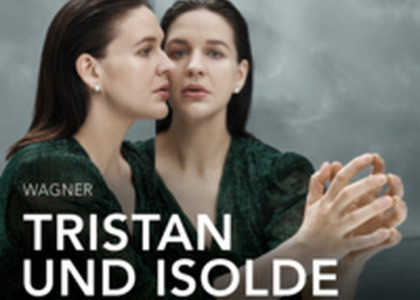
Mezzo-soprano Ekaterina Gubanova on the role of Brangäne in Wagner’s Tristan und Isolde
Ekaterina Gubanova, I must preface our interview by saying that it was a great pleasure to see and hear you in the performance of Tristan und Isolde at the Liceu Theater in Barcelona on January 31st of this year. I wrote a fairly extensive review for our radio station on that occasion. And now I want to thank you and congratulate you personally! The role of Brangäne is one you've sung many times and first performed in Paris in 2005. So that was more than twenty years ago.
It's scary to think about that!
How did you experience your first encounter with the role back then?
Well, the role was offered to me so early that, when I signed the contract for 2005, it was 2003 or 2004. So I was even younger and didn't have a single Wagnerian role in my repertoire. It was completely unexpected. Of course, the role was offered to me by knowledgeable people with a lot of experience, much older than me, who had already heard in my voice how the score would sound and who knew that the role would suit me. I, of course, couldn't say the same thing at all when I went through the role for the first time with the master accompanist. I could barely speak afterward! I was, after all, only 24 years old.
Yes, a huge challenge!
Yes, yes. But the hardest thing for me, though, at the beginning, was getting to terms with the amount of words and details, since it was my first Wagnerian role. And even though it's not the lead role, it still involves a lot of words, a lot of text, in a language I didn't know at all at the time. I remember sitting there before every act and having to go through it all. Literally, I would sit at the piano and almost recite or play on the piano everything that was coming up. Just so I could remember it. Because yes, it takes experience and practice to memorize these roles. Later, of course, every Wagnerian role in German became easier in terms of memorization.
I imagine that any new role is a challenge, regardless of the composer of the work. But with Wagner, other difficulties come into play, and here, in Tristan, Brangäne is on stage for a long time and has a lot to say in her dialogues with her friend, Isolde.
Yes, exactly. That's a challenge in itself, because to pull off a successful dialogue - and later, with experience in the role, you'll know this - you have to understand absolutely everything and take to heart what your stage partner is saying. You can't just… I don't want to belittle any other composer now, but with Wagner it's more difficult, precisely because the music is based on dialogue.
Over the years, you've sung Brangäne in so many places: Munich, St. Petersburg, Salzburg, Tokyo, Berlin, in Paris of course, now again in New York, in Baden-Baden, in Rotterdam, at the Vienna State Opera.
Everywhere. Even in Australia.
Exactly. I mean, probably all over the world. I have a long list here, and I've picked out a few places. When a singer has performed a certain role for so many years, the role evolves along with the performer, who develops both vocally and personally. How, then, has this role evolved for you over the course of more than two decades? How do you understand Brangäne now compared to how you understood her at your debut?
Well, I think the main thing that has changed - especially now, with this cast in Barcelona and New York - is that for the first time, I'm older than the singer playing Isolde. That's never happened before. And that, of course, creates a completely different dynamic on stage, which offers a new perspective. It's very, very refreshing for me, after 20 years in this role. It's truly enjoyable. It's beautiful. Then - singing a role like this over so many years has required a lot of technical adjustments, because the voice changes. It changes a lot. And it almost makes performing this old role in my repertoire more difficult than a newer one, because there are so many things that no longer work. Something that worked in 2005 didn't work in 2015. I had to change it. And it was wonderful. But now it's 2026 and again it doesn't work. So I always have to come up with new tricks to make it sound and feel fresh to the audience - new and spontaneous. That's a particular challenge with roles that someone has performed so many times.
When I saw you perform at the Liceu in Barcelona, your performance struck me as truly mature. I mean, you could feel, see, and hear the experience you've gained over the years in the role, yet it still felt very fresh and possessed a certain elegance and calm that I admired. I enjoyed the production in Barcelona, directed by Bárbara Lluch. I'm curious to know how you felt performing in it, because for me, as a spectator, it felt balanced. I liked that its minimalism allowed the music to breathe, to take center stage. We know that there are often productions-even at Bayreuth-that, in their desire for novelty and modernity, transform Wagner's operas to such an extent that they sometimes become unrecognizable.
Yes! Especially with Wagner, where the music is so rich and there are so many details to focus on, I prefer a fairly minimalist approach. And I loved what they did in Barcelona. In fact, the first production I sang in was also very, very minimalist. We had projections, but otherwise it was just the personal connection between the singers. There was nothing else. And maybe that's why it was so successful.
Sure, stage minimalism works when you have wonderful voices on stage, because then you don't need much else.
Yes, exactly. You don't need it. And personally, I like modern versions of operas. But there are also new versions that can be quite minimalist as well. So it's not about the era in which we're set. It really is, as you say, about the cast and not about the unnecessary details that distract attention; attention that directors, often afraid to do less, prefer to keep the audience's focus on the surface, rather than directing it toward the music. Which is reasonable, but, you know, only up to a point.
It really depends on the case, yes. Now, in New York, you're reunited with part of the cast you performed with in Barcelona-with Lise Davidsen as Isolde and Tomász Konieczny as Kurwenal. Does this familiarity help? Does it make things a little easier, especially in the context of rehearsals for a new production of Tristan, as is the case in New York now?
I think it helps more on a personal level, at least in my case. Of course, we've all done new productions of the same opera-completely different takes. But what helps me (because we singers travel so much, we're always changing locations, colleagues, everything) is that it feels more like a brotherhood, like a musical family, when we've spent so much time together with the same colleagues. It offers a kind of good intimacy and a pleasant working atmosphere. Because when you've been in this career for so long, you're used to constantly jumping from one place to another. So whenever there's something constant-the same opera and the same colleagues-it's a relief.
How do you feel about this new production by Yuval Sharon at the Met? It looks very futuristic; it reminded me of Star Wars!
Yes, it's very different from the one in Barcelona, in any case! And that's understandable, first because the scale of the Met is different, and second because we're in a different country. I think Yuval had that in mind. And also, Barcelona has a very long Wagnerian tradition and the audience is different. Of course, there are Wagner fans here too who don't need all these colors and projections and can simply enjoy the music. But to satisfy the masses (and the Met has nearly 4,000 seats!), it was a good idea to do it on such a grand scale, with projections and moving sets and all the colors, all that amazing lighting. However, the staging is a bit less generous toward the secondary characters. But yes, it has its own logic, and I understand the need for this type of production here.
From what I've seen, it looks spectacular and quite cinematic.
Yes, actually. And my husband, who attended the premiere, said, first of all, that he felt like he was witnessing a historic event. And then he added that it was probably one of the most captivating versions of the opera - the least boring Tristan - he'd ever seen. And that means a lot, coming from him, because he's not at all a fan of Wagner's operas. But this was a win for the audience here, because many people are new and enthusiastic, just discovering the world of opera. And it's especially important that they like what they see, so they'll come back.
This is always a question when it comes to new productions: how far can you go to ensure that even the new audience, watching opera for the first time, can enjoy the experience and return to the opera house?
Exactly! For us, things are very clear, because we've worked very meticulously and intensively with the director and the entire production team. There's nothing happening on stage that we haven't properly internalized and discussed. We're all in agreement about everything that's happening, which is, of course, a very pleasant thing.
You referred to Brangäne as a secondary character, and of course, in many respects, she is. However, Brangäne is very important, both in terms of her stage presence and her significance in the development of the story. I would even say she is a key character!
Of course! I often think that there are so many mezzo-soprano roles without whom nothing would happen. Look at Aida, look at Adriana Lecouvreur, and all the supporting characters in these operas. If it weren't for us, there would be no story. But, you know, when I'm on stage, of course I don't consider myself a supporting character. Brangäne is a character with a full life and a complete arc. I mentioned this specifically in relation to this production; because, for example, in the second act we have this wonderful effect of Brangäne turning into a burning candle, symbolizing the signal that Isolde gives to Tristan so that he may approach her. And it's a beautiful effect, but it completely deprives me of the personal connection with Isolde at that moment, because I'm placed in the background, up high, covered by a screen onto which the image of the candle is projected. I've become detached here, then. I've become a fantasy character, which takes me completely out of the act. But for the sake of this amazing effect, it doesn't really bother me. I've done so many productions with personal interaction with Isolde at this moment. But it's just an example of what can happen. Of course, they wouldn't put the main character in this situation.
Yes, I see. I was curious to know how you see the character. You have a new Tristan in this production-new compared to Barcelona. Is there good chemistry among all of you, the cast members?
Oh, it's wonderful, yes. Absolutely wonderful chemistry. But Michael Spyres and I have known each other for a while, of course. And I think Lise has worked with him, too. He's so soulful, so kind-the core of his being is that he's such a good soul. It's a pleasure to work with him or just spend time together. He's wonderful, absolutely wonderful.
Great! Ekaterina Gubanova, you studied piano before becoming an opera singer, and I think that's a huge advantage. I was wondering how your training as a pianist supports your work as a singer today?
Very much so, of course! Because after studying piano, I also graduated as a choral conductor, which gave me a wonderful and broad musical education-I didn't focus exclusively on a single instrument. I already had an idea, I began to get a sense of opera, since we also had to conduct opera choruses. So, not just a cappella pieces. And there are many, many people from this choral conducting department who have become choir masters in opera houses. So that's one of the paths you can take.
The first chorus I conducted was the Zingarelle from Verdi's La Traviata. That was my first conducting experience. And of course, I didn't know then that I would sing opera, but it's a good education. They taught us to read the score-the full score, not just our own part-but we also sang in the chorus. So you learn to listen to others while you're singing yourself. That gives me a broad perspective when I'm on stage. I can hear both the orchestra and the various instruments within it with a bit more clarity, thanks to that training. And also, understanding the conductors' gestures is truly important-very important.
Those were exactly my questions-does this triple training help you read the score differently, understand the conductor's intentions more deeply, or shape a musical phrase with a greater sense of harmony, which is very important in Wagner?
Yes, yes. Perhaps an exclusively vocal education isn't enough. And it certainly isn't as deep, because when I switched from choral conducting to singing, I took the exams at the Moscow Conservatory two years early; I took all the exams in advance because the program was much easier. And the same thing happened when I went to Finland to finish my studies. I also took the exams-theory, solfège, music literature, all at once, for all the years-because I already knew everything.
During the 2021-2022 season, you also sang in George Enescu's Oedipe at the Opéra Bastille in Paris. A rather unusual opera, by a remarkable composer who, however, was not what one would call an opera composer. This was, in fact, his only work in the genre. How do you remember that experience? How did you perceive Enescu's vocal writing?
It was special in every way! Starting with the musical language, which was unlike that of any other composer I've ever performed-because of the effects he achieves by using the vocal melody in that way. It's absolutely, absolutely incredible, not just in Jocasta, but in the other characters as well. And the production was also very, very special. Different from anything I've ever done, very unusual, very visually interesting. And yes, just different from anything else! And somehow it felt raw. It felt like cutting through the flesh of a living person, you know-every time it was so raw. But that's art, too. Not just the superficial suffering, some vague existential issues. Here there was blood and reality and real horror. It was very, very impressive. Unforgettable.
You've already accomplished so much. I've focused, of course, on Wagner and Brangäne in this interview, but I was wondering what exactly you're planning for the future? What are your professional plans?
Together with my management, we're now looking in a new direction-nothing radical, but it would be interesting and challenging. I think I'm finally ready enough; I'm at the right age and have enough experience to try roles like Lady Macbeth and Leonore in Fidelio. Roles that would allow me to use my voice to its fullest potential, since, of course, as Brangäne I'm giving my voice a rest. There's no real challenge, at least not in terms of diapason, tessitura, or anything like that. So I'd like to try something that really puts the "machine" I have to work.
Wonderful, I can't wait! Are there plans that can already be announced, or is it simply a desired new general direction?
I think Leonore can be announced. Yes, I'll be performing it at the Baltic Festival in Poland in 2027-so not next summer, but a year from now. But I can't announce Macbeth just yet.
Whenever I think of Lady Macbeth, I remember what Verdi wrote about her voice-that it simply has to be ugly!
Well, it's true. And there are some masters who have known me for a long time, and when I told them I'd received this offer, they said, "Oh, no, it's for an ugly voice. Verdi wrote it for an ugly voice." But if you listen to who's singing it today, those singers are very, very far from having ugly voices. And I think it's primarily about technical ability, because it's not an easy role technically. The range is enormous, and you have to do so many things. It's multidimensional. But also the fact that, artistically, as an actress, it's so interesting. And I think I'm ready to create something like this on stage, to take a step forward and, you know, give it my all!
Translated by Miruna Vartic,
University of Bucharest, Faculty of Foreign Languages and Literatures, MTTLC, year II
Corrected by Silvia Petrescu


