


> Events
A new live version of Handel’s oratorio “Messiah” with William Christie, the Vocal Ensemble and the Chamber Orchestra of Lausanne
The 13th of April 1742. The great new oratorio "Messiah" was performed for the first time in Dublin, in a charity concert featuring two cathedral choirs - a triumph eloquently described by the Irish press: "there's no words to describe the delight afforded to an admiring audience, which gathered in great numbers. The sublime, the grandiose, and the tender, all in the service of the noblest and most moving words, conspired to enchant both the heart and the ear." I believe these observations remain just as relevant today, for Handel's "Messiah" continues to be performed with equal success across the globe and in a variety of formats, ranging from interpretations close to the original, featuring smaller early-music ensembles, to monumental versions (Mozart himself is said to have orchestrated one such version) played on modern instruments.
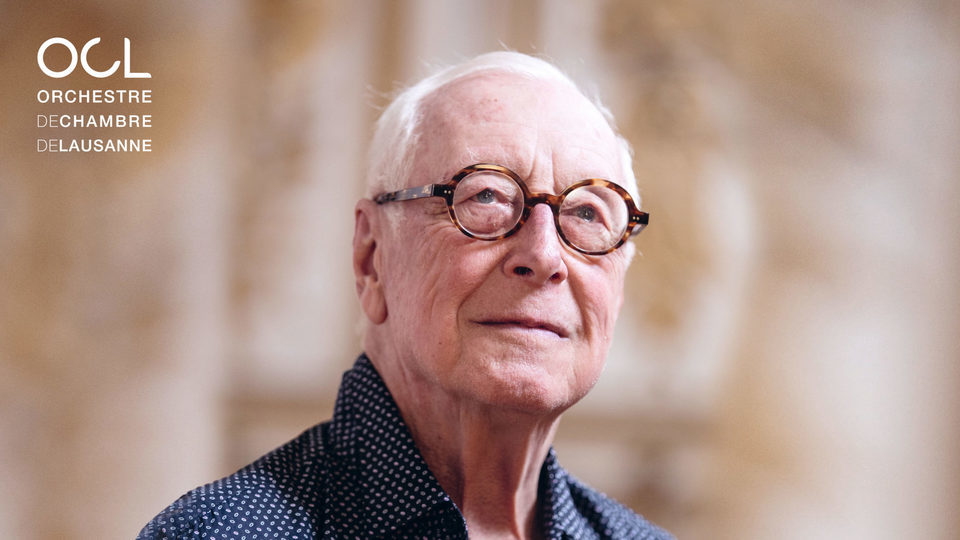
Such is the case with the newest concert that we will be broadcasting live from the "Beaulieu" Theatre in Lausanne, reuniting the Vocal Ensemble and the Chamber Orchestra of Lausanne, having a master of historically documented versions at the rostrum, the legendary William Christie, one of the pioneers of the early music revival movement and who founded the "Les Arts Florissants" Ensemble, thus beginning an extraordinary odyssey into the realm of 17th and 18th century music that continues to this day. This journey, of course, spans over other coordinates as well, not just the French ones, or coordinating modern instrument ensembles, as is the case here. They will be joined on the 29th of October by five soloists from the new generation, some of them being prize winners or discovered though the "Le Jardin des Voix" competition, part of the "Les Arts Florissants" Academy, namely soprano Ana Vieira Leite, mezzo-soprano Bethany Horak-Hallett, countertenor Hugh Cutting, tenor James Way, and bass-baritone Padric Rowan.
"Messiah" was created in 1741, based on a libretto by Charles Jennens, described by Bernand Shaw as "a reflection upon our Lord as the Messiah within Christian belief and attitude". Hendel structured the oratorio in three parts, starting from the prophecies of the Old Testament regarding the arrival of the Messiah, His birth, His death on the Cross and the Resurrection of Jesus Christ with the promise of his Second Coming in the Apocalypse. Handel creates very poignant scenes, alternating between recitals, arias, majestic choir pieces and instrumental breaks of an outstanding musical variety. Let's not forget that the German composer used to take his audience's preferences into account, his musing covering a great range of feelings, experiences and emotions. From waiting for the Messiah to the famous "Hallelujah", that celebrates the victory of life over death, to its final "Amen", the "Messiah" oratorio offers an introspective look upon the meaning of life and the hope it carries with it, every new version unveiling itself through the power of music and Handel's genius.
Translated by Narcisa Bleau,
University of Bucharest, Faculty of Foreign Languages and Literatures, MTTLC, year I
Corrected by Silvia Petrescu


