



> Interviews
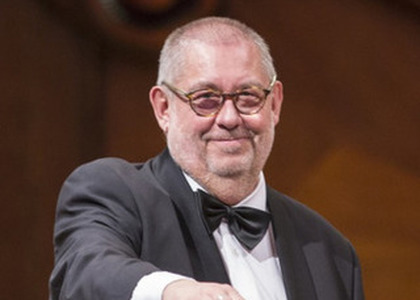
Interview with Remy Franck, President of the International Classical Music Awards Jury
The recipients of the 2026 International Classical Music Awards (ICMA) were revealed today. In this year's edition, 27 awards were granted from an initial pool of 307 nominations. Remy Franck, President of the ICMA Jury, discussed the intricate process behind the awards, contemporary discographical trends, and the preparations for the 2027 ICMA Gala, which will be hosted by the "Transilvania" State Philharmonic in Cluj-Napoca.
From your perspective, what qualities are requisite for a recording or an artist to receive a distinction at the International Classical Music Awards? What exactly is the jury looking for?
First and foremost, as always, we pursue the highest possible caliber of excellence. It is not merely a matter of "good" recordings, but of truly exceptional ones. We evaluate whether the programming is genuinely compelling, whether the performance achieves a superior standard in every respect, and, crucially, if the recording "speaks" to us-if we perceive that it contributes something novel and profoundly singular. That is the essence of our search.
What were the defining characteristics of this year's nomination and selection process?
We had slightly fewer nominations than last year, which suggests that the jury may have become more stringent in evaluating even very high-quality recordings. Nevertheless, the numbers remained substantial, particularly in highly competitive categories such as Solo Instrument, Symphonic Music, and Chamber Music. We observed a slight decrease in proposals for Early Music and Baroque, but overall, the nomination base was robust enough to proceed with the voting. As is well known, we vote in three stages: for instance, if we have 40 nominations in Chamber Music, we shortlist them to 10 in the first round, then to five, and finally select the winner from that quintet.
In the 2026 edition of the International Classical Music Awards , were there categories where a winner could be anticipated from the initial stages?
Yes, in certain categories, specific recordings garnered numerous nominations. To secure a nomination, a proposal must come from at least two jury members; however, some recordings received ten or more. This indicates a clear consensus of interest within the jury from the outset. This was the case for the album featuring Joseph Haydn's oratorio Die Schöpfung (The Creation), performed by Sir Simon Rattle and the Bavarian Radio Chorus and Symphony Orchestra on the BR Klassik label. Similar patterns emerged for Richard Wagner's Der fliegende Holländer (The Flying Dutchman), conducted by Edward Gardner for Decca; Mahler's Symphony No. 5 with the Tonhalle Orchestra Zurich under Paavo Järvi; and, most notably, the collection dedicated to Arnold Schoenberg's works by the Berliner Philharmoniker on their own label. These recordings remained prominent throughout the three rounds. While we might have suspected they would prevail, nothing is ever guaranteed, as we vote individually and remain unaware of our colleagues' final decisions. On this occasion, however, there were no surprises.
Please tell us about the winners of the International Classical Music Awards' special categories.
Special category awards are conferred through distinct procedures. Some recipients become apparent two or even three years in advance during our general assembly discussions, where we collectively decide that a certain artist merits special recognition. We generally focus on highly esteemed musicians, though not necessarily those labeled as "stars" by the industry. An example is the Lifetime Achievement Award laureate, Stephen Kovacevich: a deeply respected musician with a formidable artistic personality who has profoundly influenced the art of the piano, despite not always being in the global media spotlight. For the Artist of the Year title, Jakub Hrůša was an evident choice, particularly as the Gala was set to take place in Bamberg. In my view, he is among the most significant conductors of our time. Currently the Music Director of the Royal Opera House, Covent Garden, he has successfully restored the distinctive "Bohemian sound" to the Bamberg Symphony-a quality that had been lost for a period and one we find extremely relevant. We also place a significant emphasis on young talent, with three special awards dedicated to them. The Young Artist of the Year title, an established tradition, goes this year to the Austrian mezzo-soprano Anja Mittermüller. Then there is the Discovery Award, established a decade ago in collaboration with the International Academy of Music in Liechtenstein; this year's laureate is the Hungarian-Egyptian violinist Mariam Abouzhara. The Academy proposes several musicians, we analyze their activity and recordings, and the jury makes the final selection. Furthermore, for the past three years, we have collaborated with the online platform Classeek, which supports emerging musicians; following a selection process similar to the one with the Liechtenstein Academy, the American pianist Antony Ratinov was chosen. Clearly, the emphasis on supporting new generations is intensifying. We have recently established a network to assist young artists in securing concert opportunities post-distinction, a system that is already functioning effectively.
What constitutes the uniqueness of the International Classical Music Awards?
Primarily, the independence of the jury. Unlike other major accolades such as the Grammys or Opus Klassik, the ICMA operates entirely independently of the music industry. This is paramount. In other awards, labels are the ones nominating productions, which does not offer the same objective perspective. Artists frequently tell us that an ICMA award holds a particular value for them precisely because of this institutional independence.
From your perspective as President of the ICMA Jury, how have discographical trends and the classical music scene evolved in recent years?
As has been the trend for several years, the physical disc no longer holds its former dominance; digital downloads and streaming are becoming increasingly relevant. Consequently, we now accept digital-only releases, provided they are issued by an official label. The volume of releases is not declining because artists require recordings, even if an album only sells 500 copies. In today's climate, 500 is actually a significant figure; we can no longer speak of sales in the millions as in the era of Karajan.
Simultaneously, in my capacity as a music critic, I now have the opportunity to listen to recordings of works I have never heard before. I am referring not only to contemporary music but also to numerous valuable rediscoveries-forgotten works from the Baroque, Classical, or Romantic periods. Not everything merits publication, of course, but some findings are truly remarkable-such as the quintet and quartet by Ernst Gernot Klussmann, awarded in the "Premiere Recordings" category. Both chamber works are exceptional musical specimens, and the performances by the Kuss Quartett and Peter Nagy are superb. Thus, many rediscovered scores are well worth publishing and recording.
In that same "Premiere Recordings" category, an album dedicated to Shostakovich discoveries, featuring Romanian pianist Daniel Ciobanu, was also honored. This proves that even works by celebrated composers can still be premiered.
Indeed! I am aware that this Deutsche Grammophon recording was curated by someone from the Gewandhaus Leipzig, although the orchestra on the disc is the Staatskapelle Dresden. It was fascinating to discover these hitherto unknown works by Shostakovich. They demonstrate that even with a composer as renowned as Dmitri Shostakovich, the entire oeuvre has not yet been fully brought to light. This significance led us to award two distinct prizes in the "Premiere Recording" category: one for the Klussmann works mentioned earlier, and one for the Shostakovich discoveries.
How is the ICMA Gala Concert on March 18 taking shape? It will be performed by the Bamberg Symphony-a "Special Achievement" awardee-under the baton of Jakub Hrůša, the "Artist of the Year."
We are still finalizing the program, so I cannot provide exhaustive details at this stage. I can say, however, that it will again be an extremely diverse program featuring approximately ten soloists. We are still discussing the repertoire, as each artist is allotted only seven to eight minutes during the Gala. Top-tier artists will convene in Bamberg, and this concert holds a special significance for us and the orchestra alike, as it serves as the official anniversary concert for the Bamberg Symphony. The ensemble gave its first performance in March 1946, 80 years ago. Therefore, it will be a highly prestigious event with a strong official character: political figures will be in attendance, and a minister will deliver opening remarks. The concert will, of course, be broadcast live via video by Deutsche Welle. Additionally, all ICMA jury members representing radio stations will be able to broadcast the concert live or at a later date, ensuring a substantial media presence.
Naturally, here in Romania, we are already anticipating the 2027 ICMA Gala, to be hosted by the "Transylvania" State Philharmonic in Cluj-Napoca. What do you believe will be the significance of such an event for the Romanian musical scene? It would also be worth considering that this gala concert will be broadcast live by Radio România Muzical and offered for broadcast to partners within the European Broadcasting Union, but also available în video format via Deutsche Welle.
I visited Cluj-Napoca in October for the inauguration of the new concert hall, and I was very impressed. The hall possesses excellent acoustics and is a beautiful space; I truly admired how such a successful project was realized with relatively modest financial resources-especially compared to other constructions in Romania. I also appreciate that the hall is integrated with the Music Academy in Cluj. I look forward to this event with great interest, and I believe those I spoke with in Cluj are very proud that their city is now part of the ICMA's itinerary. I am convinced this will help place Cluj firmly on the international musical map. The city is not yet widely known internationally; I myself had visited Bucharest several times but had never been to Cluj. I discovered a vibrant university city-an absolutely wonderful location for our Gala-and we will do our utmost to promote Romanian musical life by organizing this event there.
How do you evaluate the collaboration with Radio România Muzical in preparing for this event?
When I was in Cluj-Napoca, I felt very warmly welcomed. I had the opportunity to meet the orchestra's organizing team. I was there with the General Manager of Radio România Muzical, Cristina Comandașu, and we had a very pleasant time. I saw how proud everyone involved truly is. Furthermore, I had the chance to meet Gregory Vajda, who was recently appointed the new Music Director of the Cluj-Ochestra. I contacted him immediately to offer my congratulations, and he expressed his delight at being part of our 2027 Gala. Thus, everything is coming together beautifully, and I am very pleased.
Translated by Miruna-Camelia Baicu,
University of Bucharest, Faculty of Foreign Languages and Literatures, MTTLC, year II
Corrected by Silvia Petrescu


