


> Interviews
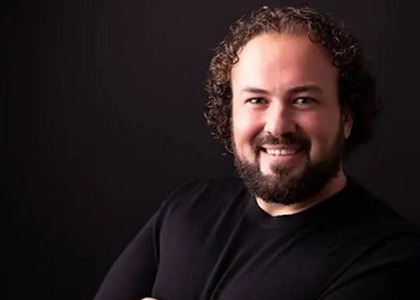
Interview with tenor Ștefan Pop regarding the "Norma" album
On September 12th, 2025, the EuroArts label released a new recording produced in Romania: Vincenzo Bellini's opera, Norma. This elite production brought together a stellar cast, featuring soprano Melody Moore, tenor Ștefan Pop, bass Adam Lau, mezzo-soprano Roxana Constantinescu, soprano Noemi Modra, and tenor Eusebiu Huțan, alongside the Transylvania Philharmonic Choir (prepared by Cornel Groza) and Orchestra of Cluj-Napoca, under the baton of conductor Pier Giorgio Morandi.
On this occasion, we spoke with tenor Ștefan Pop. This interview was originally included in the inaugural edition of the radio program "Opera, a World" on October 5th, 2025, coinciding with the album's broadcast premiere (the full show can be listened to again on our website).
During the fourth edition of the Musicrit Awards Gala (January 14th, 2026), the Romanian Union of Critics, Editors, and Music Producers (UCRRM) presented the Discography Award to the album Norma, released in 2025.
2025 was a landmark year for you, marked by the release of two albums. In the spring, your second solo album, Canto per te, was released, followed this autumn by the new recording of Bellini's Norma. On a personal level, what is the significance of this double achievement?
I would describe it as a "crowning achievement," particularly on a personal level. The album of canzonette has been a dream of mine ever since I first saw Luciano Pavarotti performing all'aperto concerts; it is my dream as well-to perform on the grandest stages possible. I call it a personal milestone because almost every piece on the album was chosen with intent. Mamma is clearly dedicated to my mother, but Oi Marì-one of the nine songs I studied in Naples and recorded in the original Neapolitan dialect-has a recent and very poignant history. When my second daughter was born in Vienna, I was fortunate enough to be home at the time. I sang Oi Marì to her the moment they placed her in my arms, and she stopped crying instantly. The doctors said they had never witnessed anything like it. In that moment, I knew that song belonged to her. That is just one example. Carusso, on the other hand, represents the life of every singer-everything we do and sacrifice for the public. It is an achievement greater than many might expect; we recorded nearly twenty songs in a record-breaking four days. I've received feedback suggesting it feels as though I selected the best of three Pavarotti albums to create one. Every canzonetta was chosen for a specific reason; nothing was left to chance. I feel immense satisfaction because a dream has been fulfilled. From here on, I feel a sense of peace, knowing I have left this recording as a legacy for my daughters, my family, and our audience. Regarding Norma, it is my second release this year, but there is a surprise: Lucia di Lammermoor with Lisette Oropesa is also forthcoming. All three were actually recorded last year. While Lucia was recorded in Catania, Norma is, as the Italians say, one of i miei cavalli di battaglia-a signature role that has defined me since my debut in 2016. I have always wanted a professional studio recording. Although I have a live recording from the Teatro Carlo Felice in Genoa with Mariella Devia, the studio environment is different. Furthermore, since both albums were recorded in Cluj, I felt completely at home. I personally chose Maestro Morandi for my solo album, and by a fortunate turn of events, he stepped in at the last moment to lead Norma. I am incredibly proud to have two representative recordings in my discography featuring the Cluj Philharmonic-the city where I grew up and studied at the "Gheorghe Dima" National Academy of Music. Since I represent Romania globally, it is deeply gratifying to showcase a Romanian orchestra on these two discs.
...both released by EuroArts Music International. There is another common thread: Melody Moore, who sings the title role. You previously collaborated with her on the recording of Puccini's Tosca, released two years ago on Pentatone. What was it like to reunite with the American soprano?
I must say that the Tosca recording opened what I call a "fanfare" of opportunities - then I met Melody and the whole staff for the first time. It led to my Verdi recordings, the canzonette, and now Norma. After the Tosca performance with the Rundfunk-Sinfonieorchester Berlin, Melody and I discussed future projects, weighing La Bohème against Norma. I suggested Norma because I felt her vocal timbre would be extraordinary for the role. This disc marks her role debut; she has never performed it on stage. And so, from a friendly conversation, an album was born that I believe is quite compelling, if not unique.
The role of Pollione is one you debuted to great acclaim in Naples nearly a decade ago. Since then, you have performed it across Europe, at the Gstaad and Baden-Baden festivals, and in Japan. It is a demanding bel canto score featuring a complex character-a Roman proconsul caught between two loves, Norma and Adalgisa How do you view the evolution of your interpretation?
The difference is night and day. As I mentioned, I had the honor of debuting at the Teatro di San Carlo alongside Mariella Devia and Maestro Nello Santi. When you debut under such a legendary conductor, it leaves an indelible mark on your artistry. I haven't had quite that same experience with many subsequent conductors until I revisited Norma with Maestro Morandi, who is also a conductor of the vecchia scuola. The greatest shift has been interpretive and vocal. As the years pass and experience accumulates, my understanding of Pollione's love for these two women has matured; it is different at thirty-seven than it was at twenty-seven. Vocally, it remains one of my most comfortable roles, despite its difficulty for many tenors. It requires a two-octave range and a voice that is essentially heroic-a full lirico-spinto. If one can master the mezza voce in the Troppo tardi... section, it adds immense value. That is something I couldn't quite achieve in 2016. I truly discovered my mezza voce at the Berlin State Opera during my debut in Don Carlo two years ago. Maturity, both vocal and personal, changes your perspective. Now that I am a father, understanding the stakes of the children's lives in Norma makes the performance feel entirely different, and that resonance undoubtedly reaches the audience.
What is the recording session process like for you? How does it differ from preparing a staged production?
The difference is vast. During recording days, I try to remain silent during every free minute; it requires a completely different level of concentration. We repeat phrases multiple times. I consider myself lucky because, initially, I wasn't sure about my sound engineer's method. He prefers to record "from top to tail" rather than in small fragments. For example, we recorded the aria and the cabaletta three times each in full, without splicing individual phrases together in post-production. This is much more demanding for the soloist, but studio recording should strive for that kind of perfection and having the opportunity to redo it even if it's just a sound. I think thateven în the canzonette album there are probably some sounds that are not perfect, but the sound engineer always considered (since the first Verdi album) that the charm, the different thing (at least în my case) compared to other singers who are from my generation or from the past, is that it is transmitted all the more when something is not perfect, a small imperfection. At first I did not agree with this ideea...
... of naturalism.
Exactly. Now, whenever I listen to the canzonette album (because I have it în my car), I realize those moments add value because they represent who I am. There are certain emotions-the way you stress a word like troppo tardi, following Bellini's specific accentuations-that carry a weight within the context of the full duet that you simply cannot capture if you record the phrase in isolation. It was an exhausting process, essentially performing the show three or four times a day. It takes absolute technique and vast experience to endure such a marathon. Thank God I persevered, and that Romania finally has an internationally recognized Norma.
What are your future plans? Are you preparing a new role or a new album, aside from the Lucia recording you mentioned?
Regarding discs, there is nothing concrete on the immediate horizon, though a project of Bel Canto or Verdi duets would be welcome. As for roles, I am scheduled to debut as Don José in Carmen this year, and next season in La Gioconda. I am also slowly looking at Aida and there are discussions regarding Il Trovatore. I don't necessarily want to change my repertoire, but I do want to "spread my wings." I have over twenty roles in my repertoire now, but I aim for at least one debut per season. A new role is always a challenge, and I thrive on challenges; they keep you disciplined and attentive to your technique. I've performed La Bohème countless times, Pollione, so there are roles that I've always sung, that have become mine, and it's a certtainty every time I go on stage, but a new role will always be a challenge.
So, the upcoming Carmen in Bucharest will mark your role debut?
Most likely, yes. That is the plan. I say "most likely" only because my schedule is incredibly demanding. I've just finished at the Staatsoper, I've been to Japan, and now I'm heading into Tosca. I have no downtime until March. I've committed to Carmen in Bucharest for March, which means I have to assimilate the role between my current contracts. At La Fenice theater, I'll have a month of rehearsals, which is a more relaxed pace. In Bucharest, we have a week to put it together-a much higher level of intensity. If I don't sing Carmen, I'll come anyway without a doubt. It is a personal rule of mine to perform at home at least once a year.
As you mentioned, the upcoming season is filled with beautiful roles and a very dense calendar. Beyond your return to Bucharest in the spring, what are the highlights for you?
I approach every contract as if it were the first time. Even though I've performed this production of La Bohème at the Royal Opera House three times, returning to it this season feels like a fresh challenge. Another example is Alfredo in La Traviata. Although I've sung it over 350 times, I haven't performed it in recent years. Now, in the 2025-2026 season, I have four contracts for it. I'll be singing it at the Berlin State Opera, where I feel at home, alongside Marina Rebeka. It's a joy because we know each other well-we even sang Norma together at the Bellini Festival-but it is a challenge because I am no longer the same Alfredo I was at twenty-two when I debuted at the Rome Opera.
Certainly.
I view it as a challenge because the voice has evolved. I performed two shows of Traviata at the Reggia di Caserta in July with Maestro Daniel Oren, and I realized then that the experience I've gained over the years has given the character of Alfredo Germont entirely new facets.
Translated by Miruna-Camelia Baicu,
University of Bucharest, Faculty of Foreign Languages and Literatures, MTTLC, year II
Corrected by Silvia Petrescu


