



> Interviews
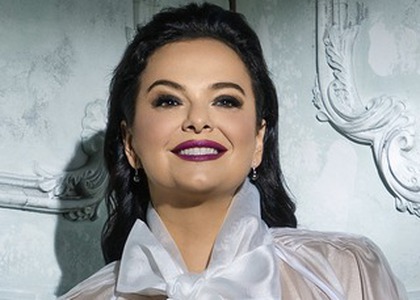
Interview with mezzosoprano Roxana Constantinescu, about the album entitled ”Norma”
On September 12th, 2025, EuroArts released a new album recorded in Romania - the opera Norma by Vincenzo Bellini. An elite cast that brought together soprano Melody Moore, tenor Ştefan Pop, bass Adam Lau, mezzosoprano Roxana Constantinescu, soprano Noemi Modra, tenor Eusebiu Huţan, the Choir (led by Cornel Groza) and the Transylvania Philharmonic Orchestra of Cluj-Napoca. Pier Giorgio Morandi was the conductor.
We discussed this topic with mezzosoprano Roxana Constantinescu, and the interview was included in the opening edition of the show "Opera, a World", on October 5th, 2025, when this album was released for the first time (the entire show can be listened to again on our website).
At the fourth edition of the Musicrit Awards Gala (January 14, 2026), the Music Critics, Editors and Producers Union of Romania (MCEPU) awarded the prize for Discography to the album "Norma", released in 2025.
A second disc is being added to your discography this year, the opera Norma, released a short time ago, a recording made in the Radio Cluj studios. Please tell us about this experience, how did this project arise for you and how did the collaboration with the participating musicians go?
Indeed, the recent release of the CD containing Bellini's Norma is wonderful news. It is a production very close to my heart, because the role I played, Adalgisa, is a role I simply adore, I love the character, if I may say so, and I identify with her vocally, musically, in terms of interpretation, and also on a human level. In this production, there was a context of circumstances due to Maestro Lawrence Foster, who had initially planned to make this recording. I had collaborated with Maestro Lawrence Foster on several occasions, and he knew that I already had the role of Adalgisa in my repertoire. He invited me to this recording session in Cluj. I had already had the pleasure to meet the Transylvania Philharmonic Orchestra and to collaborate with them very nicely. These were the beginnings of this new project. Similarly, with regards to my colleagues, I had already performed with Melody Moore, we met at the Dresden Philharmonic for recordings with Il tabarro and Cavalleria Rusticana, under the baton of maestro Marek Janowski. Here in Cluj, due to certain circumstances, maestro Larry Foster had to cancel his participation in the project, but maestro Pier Giorgio Morandi took over, with whom I already had a history here - at the National Theater in Beijing, in a production of The Barber of Seville. At that time, we knew each other, but not in this type of repertoire. It was an intense week, because it was somehow a week of rehearsals, recordings, etc., of duets, all this synchronization and cadences and Maestro Morandi's conducting style compared to that of Maestro Foster. It was a week full of adventures, a very intense week of recordings, and I hope that the result is a worthy one, certainly one that is close to my heart.
Adalgisa is a role you first played 10 years ago. You said earlier that you identify with this character, but how do you feel about this musical score? How would you define it?
It is very complex, even though we are not talking about the leading role. Let's not forget that Adalgisa is the key character in the narrative and beyond, but it was originally written for a lyric soprano, as you well know. So it has a certain challenge, a rather difficult vocal range. Indeed, I had the great opportunity to debut the role under the baton of Fabio Luisi in Zurich, but at the same time, as happy as I was from a musical point of view, Robert Wilson's production was just as difficult - known to music lovers and the public, of course, for his rather static staging, living tableaux, and visual aesthetics. There was nothing organic about it and it had nothing to do, I would say, with the interrelation between the characters. So, for me, from a directorial point of view, it was really a challenge at the time, and I remember that I struggled a lot with this slowing down and this static gestures typical for Robert Wilson, while still maintaining a musicality, an honest and sincere dramatic expression of the character. I really like the role because we are talking about a simple, naive girl who has moral values, who is in love, but at the same time has this feeling of guilt and is full of remorse, so there are many nuances in her character. Adalgisa begins with an introverted scene, a scene in which she is alone, overwhelmed by thoughts, love, and regrets. This whole spectrum of emotions fascinates me and gives me this openness towards colors, towards special phrasing. That is why, as I mentioned, I resonate very well with the manner in which Bellini described Adalgisa musically.
You have returned for this recording session after a period of hiatus, if I am not wrong. So my question is, how did you perceive the musical score this time? Is it different after this period of rest?
I think that a role you return to is always different, in fact. It could be just two weeks later, or, say, just one year. We recorded last summer. I am returning to this role in a new production in just a few days, and I already feel it and see it with different eyes, and I sing it from a different perspective. I think that simply the life we live and the maturity and experiences we gain, all enrich us and change us from one day to the next, perhaps, in some way. Indeed, a few years have passed, the last time I performed it was at the La Fenice theater, alongside Mariella Devia, in the titular role. Likewise, it was a life lesson and a singing lesson. That's why I say that every time you revisit a musical score, it's a rediscovery, and I never feel that once I've learned a role, it's there, it's settled, it's safely stored, so to speak, in my mind, and there's no need for constant work. I still see Adalgisa as being young, and she has to be young, but I think I have a different vocal and tonal maturity, and a different approach in terms of Adalgisa's inner turmoil. I think I've learned to bring even more color and expression to the words. This comes with a certain level of experience, I would say. Because, indeed, the years pass and we do nothing but enrich ourselves, creating a snowball that rolls and rolls and...
...and grows.
As you said, things have come together very nicely, and here you are, back on stage with Adalgisa after the recording session. It will take place, as you said, very soon at the Zagreb Opera, with the same conductor, Pier Giorgio Morandi. Is it basically an invitation, or even a "consequence" of this recording session?
That is exactly what happened! We got along very well and he appreciated the contribution I brought to this role. Therefore, shortly after our meeting in Cluj, he called me and offered me this invitation to the Zagreb Opera, which is of course an honour and also a statement, a confirmation of the fact that we collaborated very well together.
From what you know so far, does it seem to be a more lively production than what you were mentioning earlier about Zurich, that static stage vision?
Exactly, Robert Wilson. We had atypical directors, because there was also a production in Vienna... it was part of the Biennale, and the director Kara Walker is a contemporary American artist, but very well known for her paper and cardboard installations, which are very far from the world of lyrical theatre. It was clear that she had no experience in working with opera singers, etc. It was a challenge for her and for us. She somehow moved the entire historical setting to an African colony. So, in every Norma production - except for this recording, which was, thank God, somehow an ode to the music and lyrics, come scritto - until now we've had surprises and variations on a given theme, but I hope that this time it will be, perhaps, a classic, traditional, and simply beautiful staging. It is signed by Dora Podolski. We haven't had a chance to discuss it yet. It will happen very soon.
To conclude, could you please tell us what you are preparing for the near future, what would be the main news?
We are talking strictly until the end of the year (2025). I am very happy to return to Cluj, right after the last performance of Norma. I am flying directly to Cluj to join the SoNoRo festival, this year's special edition. I will be there for three recitals, with works by Brahms, Enescu, Montsalvatge, alongside Răzvan Popovici and the musicians invited to the festival. Then there will be a December full of oratorios - from the Christmas Oratorio to Messiah, Bach cantatas, and so on. I will return a little to vocal-symphonic music after a summer dominated by Wagner's music and now by this bel-canto production.
Translated by Diana Sitaru,
University of Bucharest, Faculty of Foreign Languages and Literatures, MTTLC, year II
Corrected by Silvia Petrescu


