


> Interviews
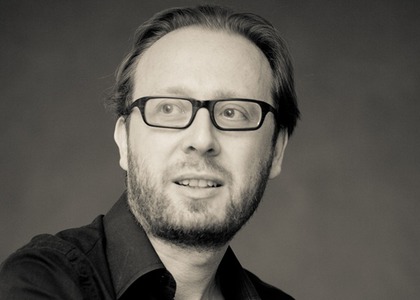
Roberto Prosseda: "Recordings are a long-term communication tool for a musician."
Italian pianist Roberto Prosseda won this year in the ICMA category 'Concertos' with his Hyperion recording 'War Silence,' with the Concerti di Fano, Dallapiccola, Omizzolo, and Carrara. Jury member Nicola Cattò from the Italian magazine Musica made the following interview with the pianist.
You are very attached, as a performer and teacher, to the Italian repertoire: Can you tell me about that?
As pianists, we are fortunate to have such a vast repertoire, yet many people always focus on the same pieces. I, on the other hand, believe it is wise, even from a professional point of view, to promote lesser-known pieces that deserve to be (re)discovered. When I was studying at the Conservatory of Latina with Sergio Cafaro's wife, Mimì Martinelli, he introduced me to composers of the Roman school, such as Petrassi, and others such as Peragallo, Porena, Dall'Ongaro, and Arcà. I played many world premieres and I still like the idea of collaborating with composers, who are not abstract entities but people who are very happy when a young pianist takes an interest in their music and are even willing to adjust it. Even when working on Mendelssohn, I was very passionate about working on unpublished works and sketches and, in a sense, it was a dialogue. Returning to the Italian repertoire and the Hyperion CD 'War Silence', I started out in the recording world with the complete works of Petrassi and Dallapiccola: in recent years (it was 2018) I had played the Piccolo concerto for Muriel Couvreux at the Maggio Fiorentino (when I met the dedicatee). I approached Fano and Omizzolo through solo piano music: Vitale Fano, the nephew, introduced me to the music of Omizzolo (who was a close friend of Dallapiccola), including the Dieci studi sul trillo, which were recorded by one of my doctoral students for an upcoming release. Omizzolo's Piano Concerto is somewhat reminiscent of Bartók and Prokofiev and is very interesting. The CD closes with a piece by Christian Carrara, my contemporary and friend, which gives the album its title and introduces lesser-known aspects of Italian music for piano and orchestra: a less central but important genre, which has benefited from collaboration with a great orchestra such as the London Philharmonic.
What does winning the ICMA award mean to you?
I started recording albums almost thirty years ago and I continue to believe deeply in the recording medium as a long-term communication tool for a musician. Only the album, in fact, allows you to leave a real message in a bottle, removed from the precariousness and immediacy of social media content. It is a message that remains over time and conveys the musical thoughts of those who recorded it. In this sense, the ICMA's recognition of such an unusual and avowedly anti-commercial project as 'War Silence,' dedicated to four concerts for piano and orchestra by Italian composers, is a great encouragement for me to continue along this path. A path that considers the record not as an ephemeral product, but as a tool for rediscovering and promoting repertoires that are still little known, and as a means of sharing musical passions and enthusiasm with a wide audience.
I would like to thank everyone who contributed to the conception and production of the album, starting with conductor Nir Kabaretti, with whom we are already planning new similar projects, together with the London Philharmonic Orchestra and the Hyperion label, as well as the institutions that supported the production of the record: the Omizzolo-Peruzzi Foundation, the Fano Archive, and Casa Musicale Sonzogno.
A few years ago, you completed a major recording project, the complete works for solo piano by Wolfgang Amadeus Mozart, which followed the one dedicated to Mendelssohn, celebrated by audiences and critics alike, of whom he can rightly be considered one of the world's leading experts. But the beginnings of his recording career had already been marked by two complete works, those dedicated to Dallapiccola (Naxos) and Petrassi (Fonè). Now, for Hyperion (which, we recall, is part of the Universal group) and with the musicological support of the Palazzetto Bru Zane, you turn to Georges Bizet. How did you come to Bizet? And what did you know about him before?
The collaboration with Bru Zane has been active for almost ten years, and we had worked together on the Hyperion disc dedicated to Gounod's pieces for piano-pédalier and orchestra. Two years ago, Alexandre Dratwicki, their scientific director, contacted me to offer me a concert as part of the Bizet Festival that took place in the spring of this year. So I seized the opportunity: why not dedicate a larger project to Bizet and record his complete piano works? That's what we decided. Before this initiative, my knowledge of Bizet's piano works was limited, as for many of my colleagues, to Jeux d'enfants for four-hand piano, which I had already played at the Conservatory with my classmates. And I found it rather difficult, despite being intended for 'amateur' instrumentalists. But even then I liked the finesse of the writing, the respect for the instrument, the precise stylistic signature: it is not yet Fauré, but it is no longer Gounod, his mentor. In some ways, it is Berlioz applied to the piano, with great coloristic imagination in a sort of pianistic 'orchestration'.
Hugh Macdonald also says this in the accompanying booklet: 'He thought like a composer and not like a pianist'. Bizet was an excellent pianist, coming from the highly celebrated school of Marmontel. Did you get an idea of how he played?
He certainly had remarkable skills, unlike Gounod, whose works I have recorded almost in their entirety; but even the latter's best pieces do not reach the level of virtuosity and timbral inventiveness that Bizet achieves. He earned his living as a transcriber of famous works, but also by playing in public, even at first sight: some of his pieces are really complicated and required a lot of study on my part. The writing is distinctly French, transparent and logical, I would say Cartesian: you can never hide. This is why I felt at ease, because my repertoire of choice ranges from Mozart and Mendelssohn to 20th-century Italian counterpoint.
The rich program includes many occasional pieces and two important collections: the Chromatic Variations and the Chants du Rhin. In the former, Beethoven's influence is evident, with his 32 variations in C minor: it is a very unusual composition, experimental in the aphoristic brevity of the 14 variations...
It is certainly the most surprising piece in Bizet's piano repertoire, which is why it opens the album: it dates back to the last years of the composer's short life and gives us an idea of how his music might have evolved had he lived longer. It combines a traditionalist soul, rooted in classical forms and counterpoint, with a visionary one: it starts with Beethoven, Mendelssohn, and Brahms and moves on to other shores. While the first two variations are very traditional, others take us well beyond Wagner, almost to the 20th century of Berg and Shostakovich. They have a dark, fatalistic tone, and on a narrative level, Bizet creates a theater of variations: each one is an opera character, which is not the case with composers who preceded him, in whose work the abstract art of thematic elaboration predominates. But Bizet was first and foremost a man of the theater. And the theme itself, like all those that give life to masterpieces, is banal, a chromatic scale that rises and falls: the model is clearly Beethoven's 32 variations in C minor, where, however, the theme is descending.
Hervé Lacombe, a Bizet scholar, likens these Variations to a cyclothymic form, between depression and redemption, and each variation to an emotion, until the final victory of the spirit: an exaggerated dramaturgical construction?
Musical dramaturgy is never linear, and reading these Variations in this sense is limiting: music is made up of flashbacks, dreams, jumbled thoughts, where reality coexists with memory. There is much more than a linear path to overcoming depression: also because it remains a dark piece, even in the major keys. It is an artificial smile, as in Shostakovich. And each of us - performer and listener - can identify with a different state of mind: this is the challenge that the album accentuates, that of an emotional journey through listening.
The Chants du Rhin seem easier to interpret on a dramaturgical level: the Mendelssohnian homage is evident, but there is also a lot of Chopin (I am thinking of No. 5)!
The Lieder ohne Worte are published in collections of six. Bizet wrote six, with the same subtitle in German. In addition, in the first one he explicitly mentions Mendelssohn's Op. 19 No. 1, so the homage is clear. But there is a difference that overturns the concept between the two composers: while Mendelssohn never wanted to make the texts explicit, he included very few titles (many of which are apocryphal) and in any case they are short and generic, Bizet's titles are much more explanatory, with poetic texts that he published alongside them (as Liszt did for Petrarch's Sonnets). There is a direct relationship with the textual versification and with the texts of Méry, who was also one of the two librettists of Don Carlos: here again, the theme of theater returns.
Each Lied, therefore, is framed in a very defined context, with real characters such as the Bohémienne, a sort of Carmen transferred to the piano. And then, as you said, the fifth Lied is taken from the slow movement of Chopin's Sonata in B minor: the result is different, but the origin is very clear. And the sixth Lied returns to pay homage to Mendelssohn by quoting a theme from the Cello Sonata No. 1. The result, however, is very personal, and this also applies to the two nocturnes: the first, in F, takes Field as its model but surpasses it in its harmonic richness, while the second in D is almost Straussian in its chromaticism and its constant evolution (thus going well beyond Chopin).
A preview of Fauré, perhaps?
It is an interesting topic, to be verified at a musicological level. In any case, when a pianist records unknown music, he or she has even more responsibility, because the listener's judgment depends on the quality of the performance: this was true for Mendelssohn, and it is even more true for Bizet, of whom there were already some high-quality recordings, including Glenn Gould's fascinating but extreme recording of the Chromatic Variations and the Nocturne in D major.
Is yours album a complete recording, by the way?
Yes, but we deliberately chose not to include transcriptions, either of other composers' music or of Bizet's own. In some cases, such as the Suites from L'Arlésienne, it is not clear whether the transcription is by Bizet or merely approved by him. And then there are the piano solo versions of many mélodies for voice and piano...
What else would you highlight as worthy of attention?
The two nocturnes, the Variations, and the Chants du Rhin are certainly the pinnacle of Bizet's piano writing: the other pieces are mainly early works, recently published by a small French publisher in anticipation of a Harmonia Mundi recording by the Armenian pianist Setrak. There are four Preludes (who knows if he planned to write 24, like Chopin?), a brilliant Waltz, and other pieces, but all significantly published as Op. 1: he considered them sins of youth, so much so that both nocturnes are indicated as 'First Nocturne', as if one cancelled out the other. But both are worth listening to. Then there is Marine, written in Ischia, with a use of harmony made up of broken chords and a particular use of the pedal, and one that I did not like very much, with its blatant virtuosity, the Chasse fantasque, dedicated to his piano teacher, as if to prove that he could also be a Lisztian virtuoso.
You used a Fazioli: why not a period French instrument?
As you know, I am increasingly interested in historical instruments: even when I was a student, I attended courses with Staier and Badura-Skoda. But I had never dared to try it in public or on record, at least until the Challenge recording dedicated to Beethoven's Op. 2 on an 1820 Graf. The idea of using an Érard or a Pleyel came to me, of course, but I would have had to familiarize myself with the instrument for a long time: one day of rehearsals and then off to the recording studio was not enough. For Beethoven, I had the Graf in my studio for over a year and a half! But the Fazioli 'Mago Merlino' still has a different sound from that of a standard modern piano: using a rather 'dry' pedal, with remarkable transparency in the registers, it brings the sound aesthetic of this record closer to what I could have played on a late 19th-century French piano. Properly set up, with the microphones very close, it allowed me to have a clearer sound and to experience the dissonances in a much more 'tense' way than I would have achieved with, for example, a Steinway: the Fazioli has this typical separation of registers.
Which, incidentally, was typical of 19th-century aesthetics: for voices even more than for instruments!
This is precisely why I never use the full pedal: I try to create the resonance typical of late 19th-century pianos, where the damping is less pronounced and the resonance less excessive, with a more direct attack on the text, without the harmonies becoming confused.
Moving on to the aforementioned CD Challenge, playing on a historical instrument such as the Graf requires a total rethinking of technique, in terms of weight, key attack, articulation...
That's right: that's why it's an experience that appeals to me more and more. It's not about recovering the sound that Beethoven had, about reviving an unlikely fidelity of sound (our ears are used to something else entirely): I have to be loyal to the text, to the composer. I'm not Beethoven, but with my own perspective, I use my instruments to bring his music back to life. Today, traditionalist performers are often contrasted with 'innovative' performers: but, as we know, the etymology of tradition is the same as that of betrayal! And if we deliver false customs and traditions to the public, we are betraying them.
Take the way Beethoven's sonatas are played today: if we really read the texts and analyze what a fork, a cadence of deception, a slur means, we understand that almost none of the pianists who use the modern instrument even consider the issue. Starting with Schnabel and moving on to Backhaus, Kempff, Serkin, and Pollini (all great artists), the path is already laid out by the piano itself: even I would not have been able to break free from the influence of tradition.
The sound is more uniform, leading us to take refuge in the regularity of the beat; we still hear this today with Levit or Giltburg. We have the idea of the titanic Beethoven going straight ahead on his path: fascinating, but not entirely accurate. Especially with the early sonatas, the numbers don't add up: that's why I'd like to continue with this recording project on historical instruments. After working on Mozart, the ideal follow-up is Haydn, Clementi, and early Beethoven.
A book dedicated to Sergio Cafaro, edited by your colleague Francesco Libetta, has recently been published in Italy. Could you share a memory of this great teacher with us?
As I said, I studied from the age of 10 to 20 with his wife Mimì Martinelli, who passed away last year in Latina, my hometown. Cafaro often picked her up in his car, attended lessons, and listened to us. He was an unconventional character, not embodying the aura of a 'great maestro'. He was distinctive in the way he walked and talked, a shy and modest man -while Mimì was strong and self-confident - who lived in his own world of music and entomology: he was a writer, illustrator, poet, cartoonist, and composer, but he also loved sports cars.
Did he create a school of students that was easily recognizable?
It depends on what you mean by school: being very open-minded, he did not impose his own musical vision. The Cafaro School consisted, if anything, in respecting the students and giving them lots of musical and extra-musical stimuli; indeed, especially the latter! He taught them to have fun with music, without taking themselves too seriously, always playing and trying out unusual repertoires. In short, to experience music with lightness: and Cafaro was also physically light, in his extreme thinness.
It seems to me that you, as a teacher, are following in Cafaro's footsteps...
Teaching is not a fallback or a parallel activity: by choice and by destiny, I only started doing it on a permanent basis five years ago, at the age of 45. Before that, I held masterclasses. But helping young people solve technical, aesthetic, or interpretative problems helps me first and foremost to understand who I am and what music I want to make: teachers should not create clones, but stimulate doubts and curiosity, evoking the multiplicity of approaches that are possible in music.
I do not accept students who come by chance, but only those who really want to study for me. That's why, in Rovigo, we are carrying out two projects that have attracted many students from outside the city: play & rec and the PhD program in Italian piano music, which is now entering its second cycle. We have just been to China, at the Beijing Conservatory, for a series of masterclasses on Italian music: a wonderful way to spread our repertoire around the world.
What are your next projects?
The Mendelssohn Association, of which I am president and founder, has presented an initiative funded by the ministry, which involves twenty concerts each year and consists of bringing piano recitals of Italian music only to different regions. This has already begun and will keep us busy until 2027. We will also involve famous pianists: at a time when there is so much talk about Made in Italy, this seems to me to be the right way to support and develop it. Because, as we know, the piano was invented by an Italian. In addition, in March, at the Cini Foundation, I will hold a workshop entitled 'Research-led Performance': six invited pianists will study pieces by Petrassi, Dallpiccola, Casella, and Aldo Clementi, first with musicologists who are experts in the field and then with me at the piano, thus combining the analytical and performative aspects.
On a personal level, I have started recording Castelnuovo-Tedesco's Greeting Cards, I am working on other Italian concertos for piano and orchestra - but I can't go into details - and with Bru Zane we are thinking of a program for 2027 featuring Beethoven and the 'French Beethovens,' that is, the sonatas written in France in the 1820s and 1830s.


