


> Interviews
Anja Mittermüller, ICMA Young Artist of the Year: "There isn't a guaranteed route"
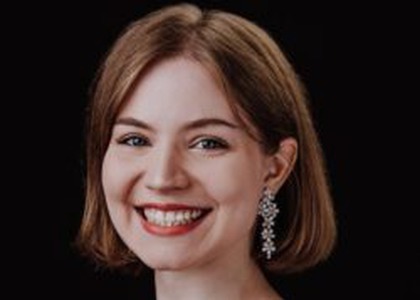
Austrian mezzo-soprano Anja Mittermüller is the 2026 ICMA Young Artist of the Year.
Bogdan Brkic and Max Beckham-Ortner from ICMA Jury member IMZ Vienna made the following interview with the young singer.
When did classical music first enter your life?
I was born in Klosterneuburg but grew up near Korneuburg. My parents are musically inclined and listened to classical music, but also many other genres. I sang in a children's choir.
When I was around eight or nine, I attended a children's birthday celebration at the Volksoper in Vienna. They were performing Antonia und der Reißteufel by Angelika Messner and Christian Kolonovits. We had a backstage tour, and I received a DVD of the production. Apparently, I sat there completely spellbound. I watched that DVD almost every day for months and told my parents: "That's what I want to do."
I started taking individual singing lessons at ten or eleven. From there, it gradually became more serious. I attended a music-focused secondary school, then studied in Hannover. Originally, I had hoped to study with a different professor, but when she retired, she recommended alternatives, which eventually led me to where I am today.
Is there a classical path into this profession?
I don't think so. It depends entirely on the voice type, repertoire, timing and opportunities. There isn't a guaranteed route.
Of course, being part of an opera studio can help, you gain regular stage experience and visibility. But it's never a formula. Everyone's path unfolds differently.
In Austria, particularly in Vienna, there's actually a strong sense of community among singers. I've met only supportive colleagues so far. When you rehearse together, perform together, you build connections. That's something I value deeply.
At the end of 2025, you signed your first contract with an artist agency. Has your life changed since joining Machreich Artists?
Organisationally, yes. Things are busier now. Before, I managed everything myself, which, looking back, I don't quite know how I did. But there was also less going on. Now it's incredibly helpful to have someone updating biographies, handling communication and taking care of my schedule. That structure makes a real difference.
But the actual artistic development didn't happen overnight. People often ask: "How did you do it?" And honestly, I don't know. It just evolved. It wasn't a strategic master plan. I had worked with singers from the agency before, then came the Wigmore Hall/Bollinger competition. Winning a renowned competition at a young age shifts perception, you're no longer just seen as a student.
It was actually my first major competition. I mostly did youth competitions when I was thirteen or fourteen, then none for years. I entered because I loved the repertoire, lots of Schubert, which I adore. When I reached the final, I was genuinely surprised. It was exciting and exhausting, but musically incredibly fulfilling.
That's also how I met Richard Fu, my pianist. He had originally intended to participate with another singer, but when that fell through, we started working together, and since then, we've remained a duo.
Beyond the artistic work itself, you've mentioned the organisational side of the profession, management, planning, etc., but today there is also a strong marketing dimension. Social media plays a significant role in that. How do you approach it?
Carefully. I think you have to be mindful not to get pulled too far into it. Being present can be positive, sharing projects, showing what you're working on, but I wouldn't want to document everything daily. You risk losing the ability to experience moments fully.
It's also incredibly time-consuming. With rehearsals and performances, there simply isn't the capacity to treat it as a full-time responsibility. If others tag me, I'll repost. But I don't have a rigid strategy. I don't use TikTok. Only Instagram and a bit of Facebook.
Viewers at home were recently able to experience your performance at the Emmerich Smola Prize, which was filmed and broadcast on SWR. What role do filmed performances and broadcasts play for you?
It's wonderful that recordings exist. You can sit here and watch something from America instantly, that's extraordinary. For discovery and access, it's invaluable.
But nothing replaces live performance. Recently I sang Beethoven's Ninth in Milan. Sitting on stage, with the chorus behind you singing the Ode to Joy, that feeling, that physical immersion in sound, you simply can't translate that onto a screen. There are the acoustics, yes, but also the atmosphere, the collective energy in the room. It's a shared experience.
Often, in recordings, something is missing, especially in sound. Voices can sound flatter or harsher than they do in the hall. That's frustrating because sometimes that recording becomes someone's only impression of you.
If it's done well, though, it can be fantastic. The only slightly strange part is having cameras follow you backstage before you go on stage, but on stage, you forget about it. The moment you step out, it's the same focus as always.
Brigitte Fassbaender recently mentioned you as an example of an outstanding young artist she would protect at all costs. What does that mean to you?
It's overwhelming. I would never have imagined even meeting her one day. We share the same voice type, which creates an immediate understanding. When you work with someone who has lived through that repertoire physically, their advice resonates differently.
I see her a few times a year for coaching. That's incredibly valuable. She's constantly directing, constantly active. To receive such support and encouragement is something I don't take for granted.
How did it feel to be named Young Artist of the Year by the International Classical Music Awards?
Completely unexpected. When I received the first phone call, I thought it must be fake. Then the emails came. It slowly became real.
It means a lot because the award is decided by an international jury of music critics. It's based on artistic merit. To receive that kind of recognition at this stage is encouraging. It reassures you that what you're doing resonates beyond your immediate circle.
What would you like to achieve next? A particular stage, a recording, a role?
My answer might sound simple, but I genuinely just want to make very good music with very good musicians for as long as possible.
Quality is everything. The higher the artistic standard, the more fulfilling it becomes. Of course, there are dream roles, Octavian in Der Rosenkavalier, for example, but that's something for much later. The voice has to develop naturally. There's no rush.
Ultimately, it's about making meaningful music, growing steadily and remaining curious. If that continues, I'll be grateful.


