



> Interviews
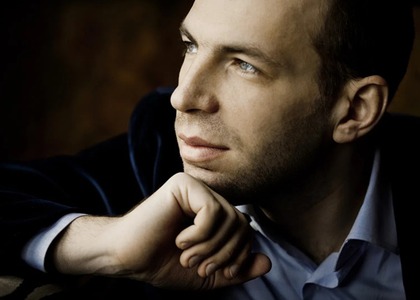
ICMA Prizes 2026. Andrei Korobeinikow: "Humanity is becoming increasingly aware of what Shostakovich wrote"
The album 'Shostakovich Discoveries: World Premiere Recordings & Rarities' was honoured by the ICMA jury in the Premiere Recordings category. Half a century after the death of Dmitri Shostakovich, this album of rarities and lesser-known works by one of the 20th century's greatest composers is performed by a line-up of top-level artists. In addition to Daniil Trifonov, Gidon Kremer, Nils Mönkemeyer, Yulianna Avdeeva, Rostislav Krimer, Thomas Sanderling and numerous other artists, pianist Andrei Korobeinikov is among the performers of works that are only now finding their audience. Jury member Anastassia Boutsko (Deutsche Welle) spoke with Andrei Korobeinikov.
Andrei, on the album 'Shostakovich Discoveries' you perform (together with Belarusian bass Alexander Roslavets 'Yelabuga Nail' to poems by Yevgeny Yevtushenko. Shostakovich left the composition unfinished in 1971, shortly before his illness and death. The work was completed in 2024 by composer Alexander Raskativ at the request of the Shostakovich Festival in Gorish. This composition brings together many Russian destinies, which are probably worth telling the listener about in more detail. Let's start with what the 'Yelabuga Nail' is: in August 1941, the great Russian poet committed suicide. She hanged herself on a rope attached to a nail in the city of Yelabuga. This step was a sign of her despair after her failed attempt to gain a foothold in Soviet Russia after returning from exile. Thus, the "needle of Yelabuga" became a symbol of an artist's failure in the face of state violence. It was precisely this symbol that the poet Yevgeny Yevtushenko took up during the brief thaw in the 1960s. And Shostakovich composed his poem - based on a real visit to Yelabuga, the site of Tsvetaeva's suicide - shortly before his death in 1971. Why did he choose this poem and this theme?
The figure of Tsvetaeva was extremely important to Shostakovich. Both as an artist in general and from the point of view of the theme of 'the poet and the Tsar'. This composition is about the feelings of a person who decides to commit suicide. And not just any person, but a person who understands that she is the greatest Russian poet.
Tsvetaeva's suicide was and remains an extremely important event for many people involved in the arts in Russia. For example, for me. Incidentally, I was also in Yelabuga, and I also wrote poems on this theme. The suicide of this great woman is our common, unhealed wound. And Shostakovich helps us to somehow understand and live through this tragedy.
Shostakovich did not complete the composition. Why do you think that is?
It is powerful music. Shostakovich seemed to break off the composition at its climax. I think that he did not simply leave it unfinished, but put it aside for a while, because he apparently wanted to do something surprisingly large-scale with it. He did not have time.
Over the last decade and a half, perhaps two decades, the world of music has been experiencing a genuine Shostakovich renaissance. This refers to the number of performances and the degree of understanding of his music. I believe that the objective reason for this can be attributed to the outstanding work of institutions such as the DSCH publishing house and foundation in Moscow, which is still headed by the composer's widow, Irina Antonovna Shostakovich, and the Shostakovich Festival in Gorish. It was the festival in Gorish and its artistic director Tobias Niederschlag who initiated the release of the CD 'Shostakovich discoveries' which is the reason for our conversation today. But there is also another reason related to the spirit of the times. What do you think?
It seems to me that humanity is becoming increasingly aware of what Shostakovich wrote. Without his symphonies, without his very presence, it is impossible to imagine today's world concert life. Shostakovich tells us about our time. And the conditions for understanding his music, for a complete understanding of his work, have only now matured.
It is interesting that this process is not limited to one country. All over the world, the situation seems to have clarified. One of my first piano teachers, Natalya Yurievna Samovich, emigrated to Stuttgart in the late 1990s. She told me something interesting: as a student, she, like everyone else, attended all of Shostakovich's premieres, and this music was very close to her heart.
"Of course, you could feel the scale, you could feel that it was great music," she says. "But I finally began to understand everything in this music when I was here in Stuttgart and started playing the discs, and suddenly everything became clear to me. I began to see and hear everything he was talking about." And I absolutely agree with her: it seems to me that there has been some kind of accumulation of collective listening experience.
Bach's music has played a key role in your repertoire in recent years. Much has been said and written about the connection between Shostakovich and Bach, about Shostakovich's attitude towards Bach. How do you, so to speak, feel these composers from within?
Working with Bach, immersing myself in him, an interesting thought occurred to me: in fact, Bach's compositional ambition is so colossal that even his evangelical connections and chorales are only context. He is obsessed with the idea of creating his own musical universe; this is his ultimate goal. And he kind of recruits you, and at some point you realise that you are 'recruited' into his enormous game. Of course, without losing sight of the spiritual, prayerful aspect. And it seems to me that Shostakovich understood this and structurally gave Bach primacy in terms of creating a musical universe. Shostakovich seems to be going there, to Bach, but consciously gives him primacy.
Andrei, how do you feel about yourself as a person and a musician? Is it still possible today to feel like a "citizen of the world"?
Covid has taught us artists to be grateful for every concert. Our profession is similar to that of an actor: you immerse yourself in the composer, in the composition, in what you understand about them. In fact, a person is what they were at the age of twenty for their entire life. When I was twenty, the world was moving towards unity. And then something broke. I hope that this is historically reversible. After all, Dostoevsky said that "beauty will save the world." You have to believe - and do your job.


