


> Interviews
ICMA Prizes 2026. Jakub Hrůša: "Harmony is the key word"
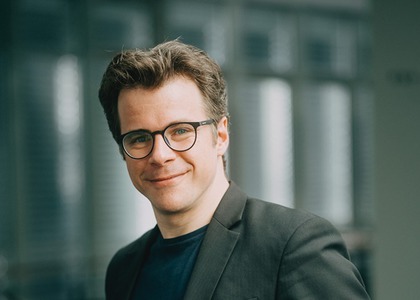
Czech conductor Jakub Hrůša is Artist of the Year at the 2026 International Classical Music Awards. Anastassia Boutsko from Deutsche Welle made the following interview with him.
"Jakub Hrůša, who has restored the Bohemian sound of the Bamberg Symphony Orchestra," said the ICMA jury in its statement. What does the Bamberg Symphony Orchestra stand for today, 80 years after its founding?
I believe harmony is the keyword. Harmony within the institution, between people, harmony in the shared feelings of musicality and orchestral culture. Harmony in contact with the audience and with management, with the government in Munich. On many levels, the Bamberg Symphony Orchestra functions as a sign of stability. But this stability is not something passive or comfortable; rather, it is a starting point for musical creativity and the deepening of our art and our mission.
What is this mission? What kind of musicality, but also what ideas and principles does Bamberg stand for?
On the one hand, there is the phenomenon of, let's say, the Central European musical tradition, the culture of authentic music-making. And the destabilisation in the world that we all feel makes these qualities, these tasks, more urgent than ever. We stand for connecting humanity through art, through music. Yes, it may sound a bit like big words, but at the end of the day it's quite simple: we must continue and continue to nurture what is really important.
You will remain chief conductor in Bamberg until 2029, when you will move to Prague to become chief conductor of your country's national orchestra. You have also been conducting at the Royal Opera House in London since September 2025, and numerous other engagements take you all over the world - during this interview, for example, you are in the USA. How do you reconcile so many different tasks logistically, but also emotionally and intellectually?
It depends on when I would answer this question. There are moments when I feel it's almost a bit too much "on the plate" and there are other moments (and fortunately that's the vast majority of my time) when it feels very natural.
You can look back on a unique career that looks like a steady, consistent rise to the top, without setbacks or crashes. "No one can get past him" - that was the headline about you in one of Germany's biggest newspapers recently. What is your recipe for success? What qualities are crucial for a career as a conductor today?
It is difficult to assess or criticise one's own qualities. Of course, a certain amount of talent is necessary, not only musically, but also specifically for conducting. I have never felt more musically gifted than other colleagues. But I probably do have a certain natural, authentic talent for this particular profession - namely that of a conductor.
And I believe there are two aspects to this. One aspect is the connection to the material and the task itself, that is, to the symphony orchestra and the scores. Understanding the complexity of musical language and style. It was precisely this complexity that fascinated me from childhood onwards. Even as a child, I was interested in this fundamental complexity - that of the fantastic music we call symphonic music.
But the other thing is, of course, the connection to the people, a deep empathy and respect for each individual. And I believe I have developed greatly in this respect, thanks in part to the Bamberg Symphony Orchestra and my many years of working with this fantastic orchestra. A conductor has a lot of power in his hands. But the lifelong task is not to become a slave to this power, but to use it only for the purpose of the most beautiful possible inspiration for making music.
You have chosen two works by Beethoven as a kind of framework for the concert. You play Leonore Overture No. 3 at the beginning and No. 7 at the end. What does Beethoven mean to you?
The reason in this particular case is simple and beautiful - beautiful and simple. Simple because what we are playing, Leonore Three, was the very first piece that the Bamberg Symphony Orchestra played here in Bamberg in front of an audience in the spring of 1946, 80 years ago. Beethoven has also remained a central part of the repertoire in general, especially. I believe it is hardly possible to find other music that is so timeless, so significant for the concept of symphonic music that always feels fresh and remains absolutely relevant.


