



> Interviews
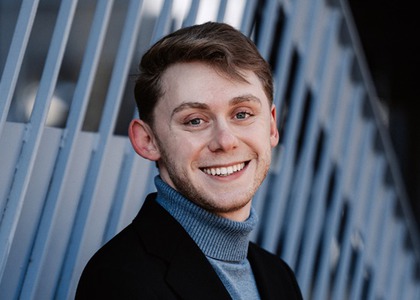
ICMA Prizes 2026. Anthony Ratinov: "I love the excitement of being on stage and sharing my music"
American pianist Anthony Ratinov is the winner of this year's ICMA Classeek Award. Marie Schockmel from the Luxembourgish Jury member Radio Opus has made the following interview with him.
Have you ever visited Bamberg or Germany in general?
I have never been to Bamberg before, but I've heard it's one of the most beautiful places in Germany. I have been to Germany many times before though, and I will be going back in May, to play at the Berlin Philharmonie, so I'm very excited to make the first of several trips to Germany in 2026.
The reason why you come to Bamberg is because you won the ICMA Classeek Award this year. How was the moment for you when you found out that you won it?
Well, I was absolutely thrilled. It's a huge honor. I have had a wonderful membership in the Classeek program this year in Switzerland. They have been absolutely wonderful and I was already very excited to get admitted into this program, and then to find out that I received this additional award was just very special and meaningful to me.
Where were you when you got this news?
I learned before it was public, while being in Switzerland at one of the workshops. I had just come back from the Chopin Competition in Warsaw in October where I made it to the second round. I was having a meeting for the Classeek program. We were talking about the future, competitions and awards, and they said "Speaking of prizes and competitions, we're very happy to tell you that you received the ICMA Classeek Award". So, it came up in conversation at the perfect time.
Were you very surprised or did you maybe expect it?
Oh, you know, I wasn't really thinking about it. I knew it was an award that someone in the Classeek program receives, but I wasn't eagerly waiting for the announcement. I was thinking about other things and I have the sort of mentality that if something works out, great, but sometimes it's good to think about other things in the meantime so that you don't anticipate things too much. But I'm very happy and I could not be more excited for the Gala Concert.
At the ICMA Gala Concert, you play the last movement of Tchaikovsky's first Piano Concerto. How do you feel when you play that piece?
Well, this will be my first time playing it with an orchestra. It's a piece I've known and loved my whole life and I'm excited to bring it to the stage. The last movement is only about six or seven minutes, but it's very high energy so there's not a single moment to really relax. But musically, it contains some of the most gorgeous melodies that Tchaikovsky ever wrote, and I'm very excited to bring it to life.
Would you also describe yourself as energetic?
Yes, definitely. When Remy Franck [President of the ICMA] and I were discussing which piece to play, this was the first one that came to mind because it's short but very sweet and it delivers a lot. I would very much say I am also a high-energy person and I love the excitement of being on stage and sharing my music with audiences all over the world.
Is there something that you're doing before getting on stage to be ready for that high energy?
The most important thing is not anything I do immediately before but rather the month before. It's the full preparation of the music so that I feel ready for any unexpected things that might happen before or during the performance. Playing with an orchestra is also my favorite type of performance and the reason why I always dreamed of being a musician. There's always so many beautiful, spontaneous moments that happen and so it's important to prepare the music in such a way that I can be open to being spontaneous and seeing the energy in the room - the energy with the conductor and the orchestra and just being flexible and seeing what happens.
As this will be your first time performing the concerto together with an orchestra, are you rather nervous or mostly looking forward to that moment?
Very much looking forward to it. I don't quite get nervous anymore. I just get stressed, but I am not stressed about this. I think it will be a wonderful concert to share the stage with so many wonderful musicians, and I'm just very eagerly awaiting this moment.
There's something called 'positive stress'. Do you believe in that term?
I 100% believe in that. I would say that's how I am motivated. I try not to be motivated by negative stress or by nerves or fear, but instead by positive stress. I just tell my body, 'This is excitement', and that's how it feels.
When and why did you choose to play the piano?
I started playing the piano when I was four years old because my grandmother started teaching me. She was a piano teacher in Moscow for almost 50 years. As soon as I was born in the United States, she decided to move to America, mostly to start teaching me. She would play Chopin waltzes on the piano when I was three years old and I would dance. That's when she knew she needed to start teaching me full time. I was extremely lucky with my grandmother. You know, I owe everything to her. She taught me everything from a young age. And so whenever I play, I dedicate it to her. She passed away in 2021. When I was a teenager, I quit the piano for about five years. My return to the piano in a professional happened in 2020 right when the pandemic hit, so my grandmother lived long enough to see me choose the piano professionally and that's kind of the most important thing to me.
So you also saw that she was very proud of you, I suppose?
Yes, absolutely and I'm sure she's still listening.
Is there one thing or one expression she always said that still is in your mind?
Yes, it was one word and she kept saying it over and over again. It's to 'sing'. She always said the most important thing to do at the piano is to sing and to make the music sound vocal and beautiful. She loved the music of Tchaikovsky, and so I know if she were hearing me play the last movement of the concerto, she would be saying the exact same thing.
After studying at the Juilliard School, you decided to stay in New York. What is that like for you?
It took a little bit of time to adjust to not being in school and to just being here, but I love life in New York. It's a very exciting, dynamic and musical place to be. There are so many amazing musicians that live here or come here and classical music is such a part of the culture here. I love the energy and the excitement. It's difficult to live here but I think that's part of why people like it here. As you know, they say "if you can live here, you can live anywhere", and I am doing my best to live here.
The Big Apple is well known for smaller flats with not much space. I imagine it's not easy for you to have a piano at home?
I was actually extremely lucky because I have a friend who's a pianist. He was looking for somebody to rent his apartment which came with a grand piano. It worked out perfectly for me. I have this wonderful instrument that I practice on and I feel very lucky. The piano is right next to my bed, so it's very difficult sometimes to practice when I could just go lie downright next to it. I must be very strict with myself and make sure that I am working and not getting distracted.
One last question: What do you love most about being a pianist?
I am a pianist because I love to perform. Being on stage is absolutely my favorite feeling in the world. It's where I feel the most confident as a person. Not just as a musician, but I feel like I have the most powerful voice when I'm on stage with a piano and I can show the audience who I am and really connect with people. For me, music is the best way to do so. It's just something that the world desperately needs, especially in times like this. I think music is a source of light and it's a privilege to be able to be a part of that.


