



> Interviews
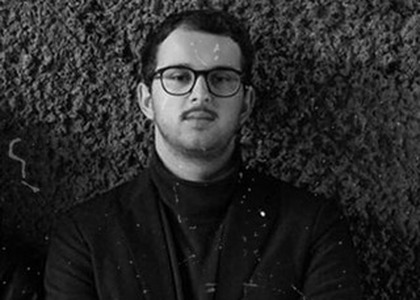
Interview with pianist David Luca
Maastricht Jazz Collective, an ensemble led by pianist David Luca, will present a series of three concerts in Bucharest at the end of this week. David Luca is a young Romanian jazz musician currently active in the Netherlands. He joins us now by phone to share more details. David, welcome to Radio România Muzical.
Thank you. I'd like to thank you for the invitation and for the opportunity to take part in this interview.
Where will you be performing over the next few days? There are three appearances in three different venues in Bucharest.
Our first concert will be on the 27th, this Friday, at The Pub Universității, as part of the Urban Blues Festival. The next concert will be on Saturday at Green Hours, and the final one will take place on Sunday at JazzBook.
You're coming with Maastricht Jazz Collective, a project of yours that includes fellow students and even professors. It's an international-even intercontinental-project.
I formed this project last November, when we were invited to take part in the Transilvania Jazz Festival. I called it a "Collective" because each member is a leader in their own right, and I didn't want to create any hierarchy within the group, that was the concept behind the project. We come from all over the world. On saxophone we have Paul Saumets from Estonia, Selim Aydin on trombone and trumpet, I'm on piano, on bass we have Alex Chavez from Central America, and on drums Mario Calzada, who is one of my professors at the Conservatory.
Could you briefly describe your artistic concept?
First of all, we are lovers of traditional jazz, and we have great respect for the jazz tradition: by that I mean standards from the American repertoire. At the same time, because of the strong connection we have as a group, we felt it was our turn to bring something new to the world and to music. So we decided to compose in our own style, drawing from where each of us comes from and adding our own personal voice.
Let's talk a bit about your musical training.
I completed high school in Cluj, and at the same time I studied at the Gheorghe Dima National Academy of Music in Cluj-Napoca, in the pedagogy department. In the Netherlands, I'm currently in my second year at the Conservatory in Maastricht.
From what I understand, the Netherlands offers many opportunities to young musicians from all over the world. I also heard that you studied with Aaron Parks there, an extremely important pianist today.
Yes, I met Aaron Parks two years ago at a workshop at the Amsterdam Conservatory. I got to know him and had the chance to take a few lessons with him. The conservatory environment is a very important hub and has opened many doors for me. As I mentioned, being able to play with professors, and for them to be open and even willing to come all the way to Bucharest to perform with me, has meant a lot to me, and I'm very grateful for that. Indeed, the scene is much more open to young musicians.
What other projects do you have, aside from Maastricht Jazz Collective?
First of all, there's my own project, David Luca, which can take the form of a trio or a quartet, though it's usually a trio. I'm also involved in all the projects of the other members of Maastricht Jazz Collective. In a way, this band is made up of leaders of other bands, that's why it's a collective.
While looking into your work, I found out that you've been preparing an album for some time. Could you tell us more about its current stage?
Yes, it's been a long process. I actually started composing for this album about two years ago, but naturally, over time, my perspective on certain pieces has changed. I've met new musicians, had the chance to perform with different people, including my professors, and the concept has evolved along the way. It's been a long journey, but this year I hope to complete it. At the moment, it's in the mastering stage.
Until then, let's listen to a live recording by Maastricht Jazz Collective. The piece is titled Tagura, but I understand it can also be written with diacritics. Could you explain the meaning behind the title?
The main source of inspiration was a folk legend from Maramureș, actually called Țâgura. It's a myth about the moon: why it appears full and why it becomes a crescent.
Translated by Oana-Elena Dragnea,
University of Bucharest, Faculty of Foreign Languages and Literatures, MTTLC, year II
Corrected by Silvia Petrescu


