



> Interviews
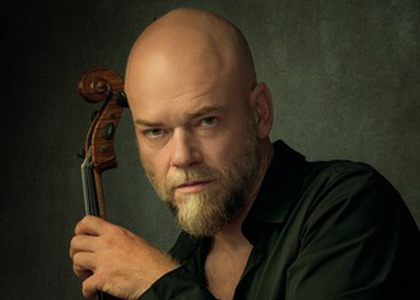
Interview with violist Traian Boală, member of the Arcadia Quartet
The acclaimed Arcadia Quartet returns tomorrow, April 21st, 2026, for a recital on the stage of the Romanian Athenaeum. The program includes the String Quartets Op. 51 No. 1 and No. 2 by Johannes Brahms. The recital begins at 7:00 PM and will be broadcast live on our station; it will also be included, at the proposal of Radio România Muzical, in the Euroradio Premium Season, thus becoming available for broadcast across Europe. Thoughts about this event, as well as about the ensemble's 20-year history and its future plans, are shared by Traian Boală, violist of the Arcadia Quartet.
On April 21st, on the stage of the Romanian Athenaeum, you will perform the String Quartets Op. 51 Nos. 1 and 2 by Johannes Brahms. What is your perspective on these works?
For us, our connection with the Quartet in A minor, Op. 51 No. 2, is a deeply emotional one, as it is among the very first quartets we performed together. It is a quartet with which we took part in the Hamburg competition in 2009, where we won first prize and, among other distinctions, the special Brahms Prize with this very work.
Now, revisiting it for the concert on April 21st has rekindled a certain nostalgia for the past. It is truly beautiful music, romantic in the purest sense of expression, and we are very excited to present this program.
Moreover, the String Quartet Op. 51 No. 2 in A minor was also included on the Arcadia Quartet's first album, released in 2009. How has your interpretation of this score evolved since then?
Whenever we truly delve into a work-when we first perform it, when we begin to study and understand it-we arrive at various conclusions regarding interpretation, style, and, of course, details. What is interesting, however, is that as time passes and we return to a piece after several years, certain ideas settle and become more solid, more profound, while others actually change here and there. We arrive at new conclusions, as has happened now as well, but all these changes are relatively minor and concern details. Our overall vision of the work has not changed.
Brahms's music, one might say, plays itself. It has a certain naturalness, expressiveness, and dramatic quality that emerge even without deliberate intention.
What does the Arcadia Quartet's working process look like?
We prefer to read through a piece at the final tempo right from the very beginning. Even if certain passages or technical elements do not come together in the most successful way at the first reading, it is very important to form an overall vision of the work-and that image begins to take shape from the very first run-through.
Then, of course, follows the period of refining the details and working on ensemble coordination. We shape and develop our interpretative concept of the piece. Naturally, before any reading session, each of us studies our part individually - otherwise it wouldn't be possible - but this is, broadly speaking, our working process.
You have just completed an extremely ambitious project - the recording of the complete string quartets by Mieczysław Weinberg, and you are now set to focus on another segment of the repertoire for this ensemble, namely the works of George Enescu. How did this initiative come about?
Initially, we had proposed to the record label that we record the complete chamber works for string instruments by Brahms. When the label's management changed, this project became less of a priority, due to the strong competition on the market when it comes to recordings of Brahms's works.
We were asked to come up with another idea, and after lengthy reflection and discussions, we reached the conclusion that we would like to record the complete chamber works for string instruments by Enescu. We are now very pleased that things developed in this way. We consider it important to make our own contribution to the interpretation and dissemination of Enescu's music.
What attracts you to George Enescu's music?
I will share my own opinion. I consider that Enescu is still not a fully understood composer. It seems to me that his music, and the way he conceived his scores, slightly exceed our current capacity to grasp certain things. It is very complex, and everything is written in great detail in the score, especially in his more mature works, such as the Second String Quartet, where the musical notation looks almost like poetry. Each note has a specific marking or indication. In the end, his music is meant to sound natural, effortless, and accessible to anyone, because that is how it is written, but the process of getting there is extremely complex and demanding. And I think it requires a long period of time to reach that point, which today we can hardly afford anymore. Things tend to be done in a hurry.
Enescu's music needs more time to be studied and understood in depth. It seems to me that he is certainly a genius who has not yet been, and is not currently, performed in the way he deserves.
Returning to the event at the Athenaeum, the recital on April 21st will be broadcast live by our station and is also included in the Radio România Muzical programming and in the Euroradio Premium season. What does it mean for the Arcadia Quartet that its music thus reaches listeners from all corners of Romania and Europe?
It is a great honour. When we learned that it would be broadcast throughout Europe, we were pleasantly surprised, of course, because whenever a performer receives this kind of attention, they are certainly honoured.
Moreover, confirmations of the Arcadia Quartet's artistic excellence have come over the years in many forms: awards at prestigious competitions, praise in specialized publications, multiple nominations for the International Classical Music Awards, and now their inclusion in the Euroradio season. How is this journey seen and felt from within, by the members of the Arcadia Quartet?
We see it as a bonus. From the very beginning, our intention has been-and will continue to be-to perform music of the highest quality. Our aim is to convey the thoughts, emotions, and vision of a composer to the audience as clearly as possible, in a way that can be understood by each individual listener. And the better we have achieved this, the stronger the response has been. For this reason, we see all these awards, recognitions, and distinctions as a bonus-an indication that we are doing our work as we set out to from the very beginning.
This year, if I'm not mistaken, marks 20 years of activity for the Arcadia Quartet. What do you see when you look back on this journey now?
First of all, it is a very important year for us; we are preparing a series of events towards the end of the year to mark this anniversary. It has been a journey-I could say a difficult one. I wouldn't use the word "sacrifices," because when you do something with passion, it doesn't feel like a sacrifice, but it has involved many compromises in other areas of life, which were necessary in order to follow this path… a great deal of work, a great deal of patience, and many discussions among ourselves; we strive to find harmony not only as musicians, but as individuals. One thing we have achieved is that we remain friends-and will always remain friends; we are like a family. In the end, all these efforts have brought us immense satisfaction and a deep sense of fulfillment.
What lies ahead in the Arcadia Quartet's schedule, and when will the new recordings be released?
The recordings of Enescu's works will begin next year. After completing the complete recording of Weinberg's string quartets, we felt we needed a well-deserved year-long break. It was a project that lasted six years, and we decided that this year we would take a break from recording. Starting next year, we will begin with one of the quartets, along with two smaller works, trios or duos.
However, in the meantime, this year we have quite a number of projects. One particularly large-scale project will be in collaboration with Wigmore Hall in London. We will present a series of six concerts over the course of two years, beginning next year, in which we will perform all of Weinberg's string quartets as well as all of Bartók's string quartets.
Translated by Ruxandra Ioana Șerban,
University of Bucharest, Faculty of Foreign Languages and Literatures, MTTLC, year I
Corrected by Silvia Petrescu


