



> Interviews
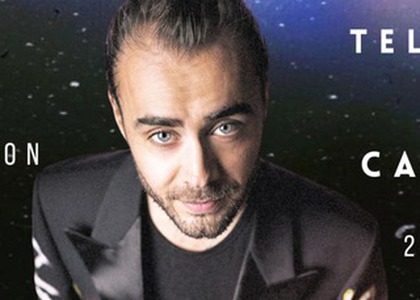
Interview with pianist Daniel Ciobanu about the “Opus Noisy” event series
On April 25th, 2026, the #SharpShifts cultural platform will be launching a series of classical music concerts titled "Opus Noisy". The events will feature the "Addixion" Orchestra and pianists Daniel Ciobanu and Omri Mor. Our colleague Cristina Cîrjan talked to the initiator of this project, pianist Daniel Ciobanu.
The "Opus Noisy" event series is defined by eclecticism and variety, bringing classical music, jazz music, film music together, combined with Arab-Andalusian influences. How did this concept come to be and what impact do you want it to have on the Romanian classical music scene?
With the "Opus Noisy" project, I was interested in seeing if there is a way for the noise of the world we live in to become, paradoxically, a workable material or even a "dialogue partner". This is where the idea for the title, which is slightly ironic, came from, given that classical music is always surrounded by a certain kind of prestige of the solemn and that nearly liturgical silence. I thought it important to bring it closer to today, somehow, bring it in contact with the tensions and vibes of the present, through a series of "slips" from the classical framework, with all sorts of interventions. For example, we'll have a piano recital constructed with an AI voice as master of ceremonies, a visual component amplified through video mapping, a mobile, catwalk-style art exhibit, as well as embracing the things you mentioned before: jazz, flamenco and contemporary dance.
You will be performing in the opening recital, which is titled "Alone All Together". What is the plot of this event and what makes it a "manifesto"?
The program brings together fragments of pieces by Beethoven, Chopin, Satie, Liszt, the usual composers, let's say. This program isn't built as an elegant "greatest hits" buffet, but rather as a gathering of souls who tended to not conform. In fact, the plot is a psychological one. We're dealing with composers who, in their own ways, refused the pre-packaged reality that was served to them. These composers invented their own system of "artistic gills". They were people that were impossible to "domesticate" and it was from this magnificent inadequacy that their great music was born. This is the leitmotif of the concept: helping the audience create their own reality, despite the noise.
Introducing an AI voice as a master of ceremonies is a surprising choice. How do you view the relationship between classical music and this technology?
Indeed, it's a pretty "exotic" element, but if we think about it, artificial intelligence has become omnipresent. So I try to give it a role in this show, one that doesn't dictate our reality, but amplifies it. It's like a good apprentice, not a master. The universe of artificial intelligence is an infinite one. It's an artifice that opens artistic possibilities, if you know how to use the technology, which actually creates- at least for the younger audience- a solid bridge between the side of classical music that's slightly lacking- the "cinematic", narrative part. People don't really read about the composers or the pieces any more before they attend shows. So, this voice, bundled in many personal metaphorical accidents that I've written, guides us through the sounds better.
The agenda includes a workshop that brings attendants on stage with their mentors, the members of the "Addixion" Orchestra. What can you tell us about this educational element?
On May 2nd, we'll be holding a concert at the school in Piscu, and even a creation workshop created by Virgil Scripcaru, where me and my orchestra will perform with the students who attended the string instrument workshop in Bucharest. For me, working with young musicians is a great pleasure, because I feel like their music hasn't yet been reinforced with career reflexes. There's still hunger, risk, a certain fertile sloppiness, so precisely the things without which music would become just a skill. I also believe that it's a very important thing and if we are to talk about the future of music, then we should actually build it. Let's not just mention it in pretty lines spoken at interviews. That's why I wanted these youths to benefit from not just an educational context, but also a real experience with the stage, with responsibility, and with interacting with the audience. I think that's when artists really start to "boil": on stage.
What can you tell us about the concert on May 3rd, at the Romanian Athenaeum?
On May 3rd, we'll make another appearance, together with the project's orchestra, the "Addixion" Orchestra, where I'll also be attending as a soloist. Sabin Penea, the violinist and concertmaster of the ensemble, will also be participating. We don't want to just polish the institution's prestige with predictable respect, but also show that tradition is, in fact, not an immutable relic, but also an energy that must be constantly challenged. Somehow, here we also have an element that's quite exotic and fiery. The experience will be all the more unique as part of our audience will have the completely unique and historical opportunity, I think, especially in Romania, to experience the concert not just from the safety of the room, but rather from the stage, from the orchestra itself, among its members, making direct contact with the fantastic tension on stage and the dizzying vibration of the musical act.
How do you see the Romanian audience in relation to this new concept? Do you think they're open to this initiative?
That's probably something we'll learn on May 3rd. The concert is called "Sound Safari", as it's an experience similar to something extreme, like skydiving. I'm sure the people who will be there with us will have an unforgettable, adrenaline-filled experience. First of all, they will be on the stage of the Athenaeum, they'll have a different perspective, they'll be like the musicians, watched by the 800 members of the audience. There will be that absolutely untamed energy that's created within an orchestra.
Translated by Alexandra Teodora Ciolacu,
University of Bucharest, Faculty of Foreign Languages and Literatures, MTTLC, year II
Corrected by Silvia Petrescu


