



> Interviews
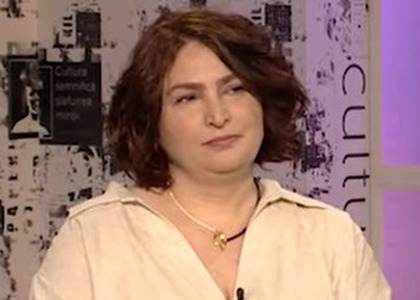
Interview with Maria-Clara Brumariu, initiator of the "Aurel Stroe" Festival
Between May 4th and 7th, Bucharest hosts ECHOES - The "Aurel Stroe" International Festival. The project, now in its 3rd edition, is dedicated to the cultural and musical legacy of composer and professor Aurel Stroe. This year's program features three concerts and an encounter with the public. Access to all events is free of charge. Maria Clara Brumariu, Aurel Stroe's granddaughter and the initiator of the festival, provides us with more details.
ECHOES - The "Aurel Stroe" International Festival has reached its third edition this year and will take place from May 4th to 7th in Bucharest. What does this edition of the festival propose?
This year's edition proposes four events, including three concerts and an evening where we will screen the documentary "The Sound Makers" by Oana Drăgulinescu, followed by a round table discussion led by Mr. Dan Dediu.
Regarding the three concerts: the opening concert on May 4th is dedicated to Aurel Stroe's generation. This program includes works by Anatol Vieru, Ștefan Niculescu, Tiberiu Olah, and, of course, a piece by my grandfather - the Third Piano Sonata.
The second concert is an anniversary event taking place right on my grandfather's birthday, May 5th. It features pieces written for and dedicated to this festival and my grandfather.
Among the composers whose work will be heard are Dan Bălan, Violeta Dinescu (who worked closely with him), and Adrian Mihai, a young composer from Constanța. Naturally, we have also programmed a work by my grandfather - Pastorale No. 1 for Piano and Flute.
The third concert, on May 6th at the Romanian Cultural Institute, has a slightly more complex program. In a way, we built this entire edition around this specific lineup because it contains two wind quintets: my grandfather's "Quintandre" and Dan Dediu's "Aurorae". We will open with Dan Dediu's piece, close with my grandfather's, and in between, we will stage a piece by Bernard Cavanna, a very close friend of Aurel's, and a piece by Mihnea Brumariu.
The festival is dedicated to the memory of Aurel Stroe. Could you paint a brief portrait of the composer, but also of Aurel Stroe the man?
To his memory, and more... I would say the primary idea I had for this festival was to carry forward the fabulous legacy he left behind. So yes, we remember him fondly, of course, but at the same time, we wish to further the work of his lifetime. As for his portrait, I met him quite late, unfortunately; I was already eight years old when I first made his acquaintance. To me, he was an extremely bohemian character. I knew he sat at his desk composing music and took his daily walks in nature... he always took a book with him and read. I saw someone different, a unique man for that moment in my life. And I think he remained that way until the end. Even as years passed and I grew up, my grandfather remained a different kind of person to me - a man with an extraordinary capacity for storytelling and for conveying information I didn't hear anywhere else. I think all his students could say the same. For me, the walks by his side will forever remain an extremely beautiful memory.
Speaking of the cultural legacy left by Aurel Stroe, what kind of reaction have you observed from the young generation of performers when they approach his work?
I would like to take this opportunity to thank the young performers who accepted the challenge of joining us for all three editions so far! I know it has been very challenging for them. They have told me many times that they struggled, at least during the first hours of study and the initial rehearsals. It wasn't easy, but they too are very grateful for this experience. For some, it was their first encounter with my grandfather's work, and many have told me they want to continue working with us. In fact, some musicians performing this year have been with us since the very first edition. For them, it is a kind of treasure they have just discovered and wish to continue studying.
What thoughts are you left with after the first two editions, and what hopes do you have as you start this new one?
My thoughts are extremely optimistic, I'd say. My grandfather was also a very optimistic person, and I would like to carry that trait forward as well. It brought me enormous joy to see people coming to the concerts. I know there is a little joke in Romania that there is no audience for contemporary music concerts. These two editions of the festival have shown me the opposite, which made me incredibly happy! The audience was very pleased to participate. I received many kind and warm words after the concerts and much encouragement for future editions, and I hope the same continues to happen.
This year has been a bit more challenging than previous years because, naturally, we have grown, and things are already at a different level. I really want to grow this festival even more. While this year we expanded from three to four evenings, for next year I would love, for example, to have an orchestral concert. So far, I've noticed that what I wish for this festival actually happens... so please, cross your fingers for us to have an orchestral concert next year!
Translated by Ioana Nicolescu,
University of Bucharest, Faculty of Foreign Languages and Literatures, MTTLC, year II
Corrected by Silvia Petrescu


