



> Interviews
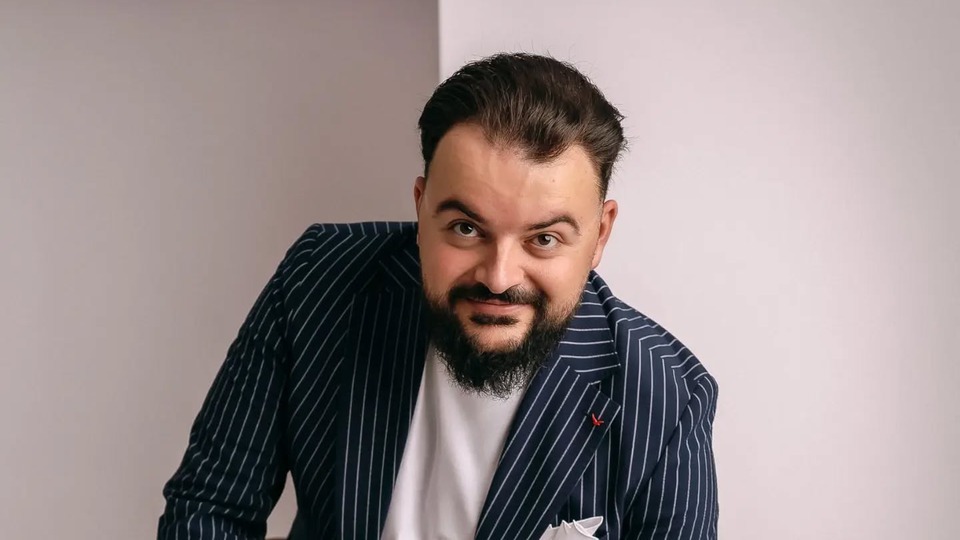
Interview with baritone Mihai Damian
Baritone Mihai Damian will take part in the Royal Concert, which will take place on the 25th October at the Romanian Athenaeum, and the gala shall be broadcast live across our channels. We would like to present to you an interview with Mihai Damian that's been made at the end of last week, when the baritone was still in the USA.
Mihai Damian, we have only a few days left until the Royal Concert will be held at the Romanian Athenaeum. What does the invitation from the Romanian Royal Family mean to you?
I was delighted and honoured to receive this invitation, because royal families have always been patrons of the arts, so I'm glad to see that this tradition goes on nowadays. And this is a charity concert, as you might know. The money that we'd raise will be used to support young artists, so I'm happy to know that I'm doing my part in the journey of these talented young people.
As far as I know, you never were a beneficiary of their scholarship, right?
I wasn't a scholarship holder. I am grateful that I had enough financial and emotional support from my family to develop in the best and most harmonious way possible.
Many talented young people without a lot of financial means have been helped over the years by the Romanian Royal Family, and it's important to have ways that will help them move ahead in their careers. Any sort of international event (auditions, competitions) puts a lot of pressure on their families.
It puts a lot of pressure due to the expenses, and we all know how high of the cost of living is. When you partake in such event, it means you will have to pay for a flight or train ticket, for accommodation for one night or more, and these expenses ado not come cheap when it comes to major European cities.
This evening of 25th of October is an important one. You will be performing alongside the soprano Georgiana Dumitru, a wonderful voice from the new generation of opera singers in Bucharest. How did you come up with the whole thing?
The program is quite diverse, as we've tried to make it as appealing as possible to the audience in order to attract new members. So it shall be a mix of opera favourites (such as The Barber of Seville) and famous choruses, but we've also tried to sprinkle pieces that are less familiar to the general public amongst them. We also had to take into account Georgiana's and my current repertoire.
If I am not mistaken, you'll be performing Figaro's Cavatina, the Toreador Song (Escamillo's aria), and two duets, won't you? The duets will be from Don Giovanni and Lucia di Lammermoor.
Exactly.
Is Enrico a role you've played before?
Not yet. In two years' time, there will be a debut within a major opera house. I can't say where. Who knows, maybe it will happen sooner, if my schedule will allow it and the circumstances are right.
You'll be heading to Cluj next, where you'll be performing the main role from The Barber of Seville at the Cluj Romanian Opera, where you're still a member. How does it feel to return to the place where your rise to fame began?
I'm always delighted whenever I get the chance to sing at home, meet up with my friends, and see everyone who supported me from the beginning.
Cluj is the city where my family and I live, and we love it very much. Everyone keeps asking me if I'd ever leave Cluj and move someplace else, and I always say no. Cluj is a city that has a lot to give, financially and culturally alike. That's what keeps me tied to the place. When I get to sing in a full house, that means that the members of that institution are doing their job well, be it the Cluj Opera or the Hungarian Opera, because people keep coming back to the opera all over again.
But this time, there is something far more important in your life that will move you beyond any words. I asssume this is the first time you'll be holding your newborn baby girl in your arms, isn't it?
Yes, that's right. On Monday evening, my wife gave birth to a wonderful baby girl. Now, I'll be able to see her and hold her in my arms, when I will finally get home. Yes, that's the less pretty side of this job, which people tend to overlook. Opera singers often get away from home for two or three months at once, and that includes places from overseas. I'm in Dallas at the moment, meaning there's a difference of eight hours between the timezones, which complicates things. However, it's a compromise that requires both sides, and things can work out very well.
I'm convinced that this is a moment the family had been looking forward for so very long, and it took place right while you were so far away, in the USA. There's no way you could have popped home between two performances. I was actually wondering what was it like to carry on with your performances, knowing that your wife was giving birth to your child in the meantime while thousands of kilometres away?
The first performance after my wife gave birth was the best performance in my career, I believe. The magic could be felt even from thousands of kilometres away.
How long will you be able to stay at home after your stop in Bucharest?
Not for long, but I'll make the most of every second.
You've had a very prolific year. The prizes from Francisco Viñas and Operalia brought you fame almost instantly, maybe even before you could've taken it all in. Looking back at this year as it's about to end, what were your most important moments?
The most important moment is the most recent one, for sure: the birth of my baby girl.
Absolutely.
And in terms of my career, I'd say that my debut at the Arena di Verona is the second most important after winning Operalia, which is a moment I'll cherish for the rest of my life.
You took part in three productions this summer: La Traviata, La Bohème, and a concert featuring Carmina Burana.
Yes.
What was it like to be so heavily involved in such an important festival from the beginning?
It's a very peculiar feeling, since filled with fear due to bearing an enormous responsibility. I was the sole performer of the cast of La Bohème, I was part of the second cast for La Traviata, sharing the role with great artists such as Amartuvshin Enkhbat and Ludovic Tézier, and I was the sole performer in the cast of Carmina yet again. I was delighted to be shown so much trust, but it's a bit daunting at the same time, like I've already said.
I've asked this question to other opera singers before: how great is the pressure, knowing that you're the sole performer in the role and the entire production, and everyone involved is hoping that there would be no event that might jeopardise the performance?
George Petean talked about this before. He said that one bad performance can be overlooked, two bad performances might raise some eyebrows, but a third would make you leave the venue for good. It's an enormous pressure.
How do you cope with it? Do you have any tricks? Every artist has their own way of managing such days in the long run, assuming that's how those weeks in the summer were like (i.e. the heatwave) at the Arena di Verona as the sole performer in two out of the three productions.
There aren't any things in particular that I do. If we're really being "superstitious", then I'm supposed to eat several hours beforehand. That's why it's just a superstition in the end. There are physiological aspects as well, of course...
...that's what I meant, that some things aren't really just superstitions.
Personally, I handle a performance day just like any other day, because otherwise I tend to put too much pressure on myself. As a result, I don't even think about the performance that I have to put on that day, focusing instead on my usual tasks, listening to music, cooking, tidying up, packing my bags, the like. It was the same today, since I'm leaving tomorrow. As a result, I manage to walk on the stage with a clear head and manage to give it my all to the performance.
Is cooking a way to relax?
It's a way to relax, and a way to nourish myself, and that relaxes me.
You were part of the cast of Umberto Giordano's first opera Marina earlier this year; it's never been published or publicly performed until 2026. The concert version, that happened to also be the world premiere, was recorded over the summer and released on CD. You might know that we've got our listeners introduced to the album, and I hope to see it make it amongst the award-winning releases soon enough. The nominations are already piling up already, of course. We didn't get a chance to talk about it back then, so I'm asking now: what was this experience like for you?
It's fascinating to perform a score that has never been interpreted before, since you have no references to fall back on like in other cases, where you have dozens of recordings and performances at your disposal. As such, it required a great deal of research, as well as having the album's editor present for every rehearsal. We've discussed potential tweaks to the score for elements that didn't make much sense or mistakes that got transferred from the original manuscript, and so on. I think we've achieved something extraordinary despite only having a week to do it all. I keep wondering what else we could have experimented with and added into the concert, if we were to have two or three extra weeks to spare, that is.
The recording will inevitably serve as a guideline for any future versions to get compared to. It's probably a different kind of the pressure from the one that you get over a production, but did felt that responsibility hang above you?
Yes, it's an enormous amount of stress, especially since I was originally meant to have the supporting baritone role of Daniele, Marina's brother. On top of that, the singer who had the lead role pulled out a week and a half before the performances were due, and I was handed the lead role instead.
So, basically, you learnt Daniele's part, and then you had to learn Lambro's in record time, too.
Yes. It's a huge risk, but it can also help you by helping you stand out from other singers or to the casting directors. For example, this was the case with Dmitri Hvorostovsky when he won at Cardiff: he knew his chances to win against Bryn Terfel were slim, so he tried to add various elements - such as singing the entirety of the middle phrase in Rodrigo's aria ("Rodrigo's Death") in a single breath. There are many examples like that one, and I like to take risks myself.
I also know you like Andrea Chenier as well, and I was wondering if you had time to analyse Giordano's operas to see what La mala vita is like, for example? That's the opera in which Giordano recycled a lot of material from Marina, which in turn is the main reason why Marina wasn't published during his lifetime. I assume that, given your background as a conductor, you'd have enough curiosity to explore a broader range, if time were to allow that.
I've had many great performances and debuts alike, and that includes the current season, but I tried to stay as close as possible to my usual repertoire by not straying too much from it. I've got the Royal Concert to do once I get back home, then I'll have a concert with Freddie de Tommaso in Paris, where we'll be performing lots arias and duets by Verdi, and verismos signed by various composers, which will include arias and duets that I've never performed before.
So that means new musical material for you.
Yes. Then I'll be off to the Metropolitan, where I'll make my debut in Maria Stuarda. I'm trying to focus on these things for the time being as much as I can, but I will get into analysing and listening to new pieces as soon as I get back to my regular roles and the season tones down.
This year you've played Ford in Falstaff and Mercutio in Gounod's Romeo and Juliet. There's been a string of great roles. Speaking of the devil, will you have time to perform as Mecutio back home in Cluj, too?
Mercutio isn't necessarily within my vocal fach. I don't know how much longer I'll be able to play his role. It's much better suited to a light baritone or perhaps a baritone Martin, why not? However, if I'm to be offered the part, I'll certainly be delighted to take it.
You've mentioned earlier about your debut at the MET. It's going to take place this winter, isn't it?
I'm off to New York around mid-November, and the last performance will be on the 22nd of December. I'll be back home on Christmas Eve, 24th of December.
And how long will you be able to stay at home?
Three days. I'm off to Berlin on the 27th of December.
Although the role you have in Maria Stuarda isn't a leading one, it will mark your debut on a very important American stage, namely the Metropolitan Opera from New York. I assume you'll be exploring new possibilities, and maybe other interesting collaborations that might happen soon?
Yes, I'm already booked at the Metropolitan for future seasons, but I can't say for which roles and plays. This is a very good role to make my debut at a place like the Metropolitan, as it bears a significant presence throughout the opera. I could say that if Paolo is a project for Iago, then Cecil is a project for Paolo strictly in terms of how the character is built and developed. It's all about development.
I'm sure about that. Speaking of development, let's go through the most important moments or the most significant debuts of 2027; I know that London will be one of them.
Yes, I'll be in a supporting role in London, too, as it's one of the first contracts that Maria Moţ had secured for me. I'll be playing Marco in Gianni Schicchi, but I'll also be the understudy for the main role at the same time, which it will be performed by Sir Bryn Terfel.
It's great that you're taking your first step within this place, and being the understudy for Bryn Terfel is also great. Do the rest of the contracts in London also consist of roles that can't be revealed just yet?
Yes.
Any other role or theatre debuts that we can look forward to for 2027?
All that I can reveal for 2027 is what I have for the current season: I'll be at the Staatsoper Berlin in January for four performances of La Traviata with Iuliana Grigorian in the main role, then London, as you've mentioned. I'll then go back to Dallas to stay for a week, where I'll be playing Masetto from Don Giovanni; the cast for it is outstanding: it will feature both Ildebrando D'Arcangelo and Luca Pisaroni, and the orchestra will be conducted by Maestro Fabio Luisi. Then I'll travel to Zurich, where I'll be making my theatre debut while playing as Marcello from La Bohème.
As for the summer of 2027, will you make yet another appearance at a major festival, or is it not yet certain?
There is, but I can't tell you about it just yet.
We'll stay in touch as things unfold, for sure!
Translated by Andrada-Teodora Ivanov,
University of Bucharest, Faculty of Foreign Languages and Literatures, MTTLC, year II
Corrected by Silvia Petrescu


