


> Interviews
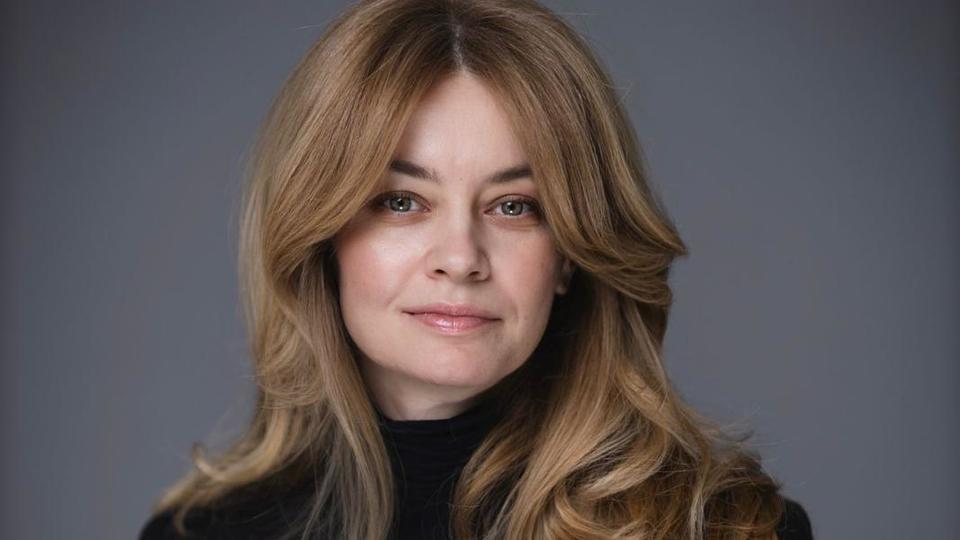
Interview with Anca Merdescu, investment director at M Core
The "Listen to 5 Minutes of Classical Music" programme, initiated by Radio România Muzical, continues from November 2nd to November 11th with a series of educational concerts given by pianist Axia Marinescu in 24 schools across Bucharest. The project is carried out with the support of several private partners, including M Core Romania. Our colleague Ioana Țintea spoke with Anca Merdescu, investment director at M Core, about the importance of music education and the role of the private sector in supporting culture.
Anca Merdescu, to begin with, what place does classical music hold in your life, and what does it offer you beyond the pleasure of listening to it?
I would say it holds an important place alongside other forms of art, such as literature, art in general and painting. Beyond the pleasure of listening to it, of course, I believe music offers a way of experiencing emotions that sometimes cannot be put into words. It brings relaxation and gives you an opportunity to take a break. If I were to sum it up, I would say it offers a way to reconnect with yourself.
What prompted you to get involved through M Core in the Listen to 5 Minutes of Classical Music project and, more specifically, to support the educational concerts given by pianist Axia Marinescu in schools across Bucharest?
I would say that, to some extent, it was pure coincidence. However, opportunities to get involved in related fields tend to arise naturally. I think it is a wonderful project. We have also brought it into our shopping centres, wherever the technical setup has allowed us to do so. We are delighted to be part of this ecosystem that creates access to music, both for people in general and for students.
Do you think such an experience can change a child's relationship with classical music and perhaps even with art in general?
It certainly opens the door to a passion or perhaps a sense of curiosity. I remember that, in my own case, the first time I consciously listened to classical music was in primary school, when our music teacher brought a record player and a record to class, and we listened to classical music together, with her guidance. So I believe that, even more so, the live experience of an artist playing the piano can leave a lasting impression and, as I said, create the conditions for something more to follow.
From your perspective, is there a connection between access to culture and the way people approach their work, their colleagues and professional challenges?
I believe there is. Culture certainly creates a common language, and a common language naturally brings us closer together. I think we have all found ourselves talking to a colleague about a book we have read and enjoyed or a concert we have attended and liked. In those moments, we build relationships based on trust and reciprocity, and as a result, we work better together. So I definitely believe culture plays a role.
If you were to send a message to a company leader wondering whether investing in culture is worthwhile, what would your main argument be?
Even if the results are not immediately visible or measurable in the short term, I believe the main argument is that it is, in fact, an investment in people and communities. Being able to create an opportunity for students or colleagues to share the same experience, whether at a concert or a cultural event, is a long-term investment whose benefits will become apparent over time.
Do you believe that supporting culture should be part of a company's responsibility towards the community?
I'm not sure whether it should necessarily be seen as a responsibility, but perhaps more as a moral obligation, as I mentioned earlier. I do believe that the private sector's involvement in culture is welcome and should be encouraged through leading by example and through successful partnerships that can inspire other companies as well. And yes, as I said, I believe there is a certain moral obligation, a responsibility to create opportunities for people to develop this common language.
Translated by Alexandru Mihail Dincă,
University of Bucharest, Faculty of Foreign Languages and Literatures, MTTLC, year I
Corrected by Silvia Petrescu


