



> Interviews
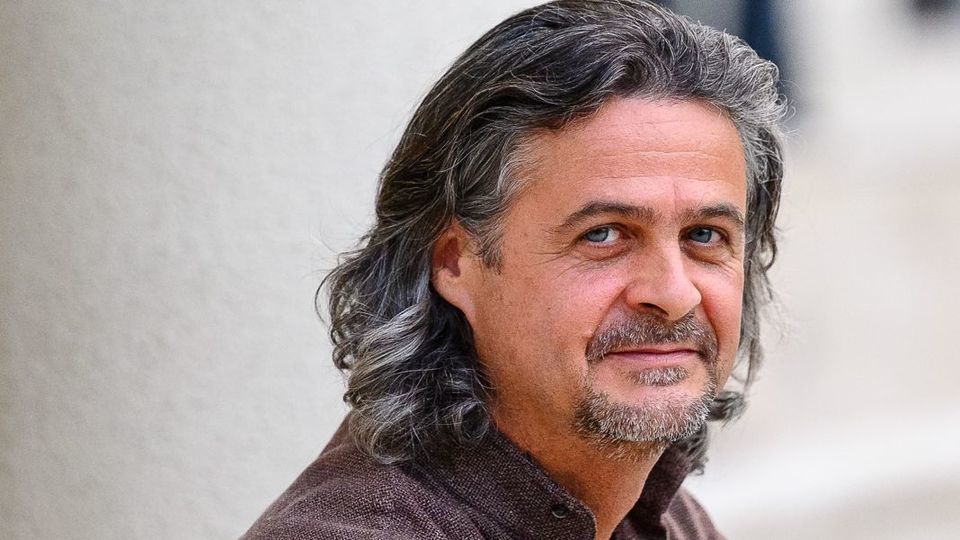
Interview with conductor Cristian Oroșanu
Friday, 6th of November 2026, a National Radio Orchestra concert takes place at the Radio Hall, organized in collaboration with the Polish Institute in Bucharest. Conductor Cristian Oroșanu talks in an interview with Ana Sireteanu about his relationship with the National Radio Orchestra and pianist Horia Mihail, but also about the musical program of the evening.
You return to the National Radio Orchestra rostrum shortly after Radio România Day, when the radio celebrates 98 years from its founding. How would you describe the National Radio Orchestra on this important anniversary?
I think the orchestra is in very good form and the working environment is very pleasant. I think the music itself is very motivating, I believe they enjoy the works we have chosen. The program was constructed around this new Stanislaw Moniuszko piece, entitled A Story, which I learned about thanks to the Polish Institute and which I didn't previously know, honestly. I knew about this composer, especially his piano concerts and some lieder I've listened to, but I'm not very familiar with his work and I'm happy to have this piece in our program. Based on it, we have chosen to remain within the national schools domain, featuring Grieg and Dvořák, two great representatives of national schools of the mid 19th century.
Dvořák and Grieg are approximately contemporaries, their creation belonging to almost the same historical period. Their work has a very pronounced national character and I would place Grieg in the first place, as he was actually "singing his country", so to speak. This aspect can be seen in this piano concert as well, a concert that I very much enjoy, and I'm very happy to collaborate with my colleague and friend Horia Mihail.
Dvořák also wrote these songs entitled Slavonic Dances. They are not necessarily Czech, even if people believe so. No, it's about Slavonic music from all Slavic countries, it's also Polish and Ukrainian music. For example, the second dance is called Dumka and has Ukrainian origin. Even the themes that have Czech origins aren't simply taken as-is and placed there, Dvořák just composed in a national style and in a Slavic style.
But Dvořák's music has a less pronounced national influence than Grieg's. And Moniuszko's work, in my opinion, has the least noticeable national character, drawing closer to classical and early romantic music. But even there we have Polish influence, and that is the thread connecting our program, namely national schools.
Could you please tell us more about your relationship with Horia Mihail?
Our relationship is a friendly one and it goes way back. We are both from Brașov and we have collaborated a lot over time. Every time I appreciate his rigor, the simplicity of his phrasing and his extraordinary musicality he brings to the stage without exaggerating anything, a sober style I very much enjoy.
Photo: Nicoleta Lungu
Translated by Anna-Maria Tudosie,
University of Bucharest, Faculty of Foreign Languages and Literatures, MTTLC, year I
Corrected by Silvia Petrescu


