



> Interviews
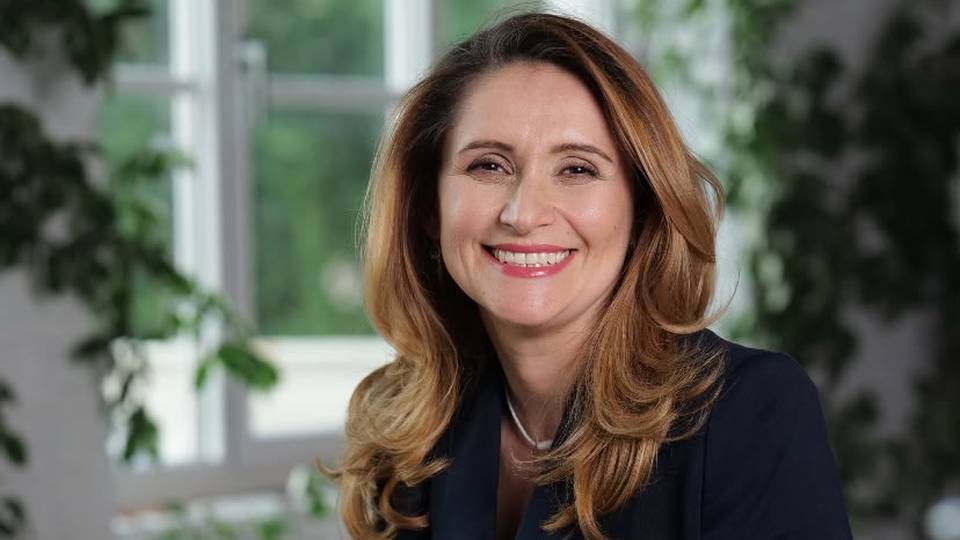
Interview with Flavia Popa, Secretary General of BRD Groupe Société Générale
The "Listen to 5 Minutes of Classical Music" programme, initiated by Radio România Muzical, continues until November 11th with a series of educational concerts presented by Axia Marinescu in 24 schools across Bucharest. This project is supported by several private-sector partners, including BRD Groupe Société Générale. Our colleague, Ioana Țintea, spoke with Flavia Popa, Secretary General of BRD Groupe Société Générale, about the importance of music education and the role of the private sector supporting culture.
Mrs. Flavia Popa, BRD Groupe Societe General has shown its support of the "Listen to 5 Minutes of Classical Music" project for a long time. What convinced you at the very beginning, and what kept you close to this project?
For many years, BRD has been supportive regarding culture in most of its forms. We find that, in Romania, it is the priority area of development for each and every one of us, and for our society as a whole. Indeed, education, sport and culture are the three main pillars in which we invest as much as possible, with the aim of fostering the growth of the younger generation, while also championing excellence and the creative power that distinguishes a nation striving to grow and develop from one that remains stagnant.
BRD also supports the new series of educational concerts as part of the "Listen to 5 Minutes of Classical Music" project. How important is it to introduce children and young people to classical music from an early age?
I believe that music, in general, is a key to opening up, to development, and to freedom. Consequently, we support music in many of its forms. Classical music has always been the foundation that contributed to the development of all other types of music. In this context, we support classical music, but in a democratized form. To give you an example: for the past ten years, we have supported the "Stradivarius" tour by the wonderful Alexandru Tomescu. Alexandru travels to unique locations both in Romania and elsewhere, places where we can reach young people. We find ways to explain, in detail, what we are listening to and why. We discuss how a piece was composed and the historical context of the time. These are things that enrich our minds, expand our knowledge, foster critical thinking, and provide relaxation. After all, we are all human and we all need to relax. Young people and children, in particular, are often looking for relaxation, but they also discover the pleasure of understanding a piece of music that might, at first glance, seem to mean nothing to them. Yet, when explained in a way that speaks to their natural curiosity, it has the potential to change their day, and perhaps even their entire life.
What place does classical music hold in your life?
Given the nature of my work, it holds an important place, I am honored to be in contact with artists from Romania and with people who appreciate classical music. But, ultimately, it's really about our children. Little by little, and I wouldn't say it was easy right from the start, my own children learned to discover classical music through cartoon soundtracks, then to enjoy concerts (even if, at first, they might not have felt like staying until the end), and now I sometimes find that while they're doing their homework, they might be listening to, though it's certainly not a requirement, an engaging classical music soundtrack.
I would also like to highlight something very important: BRD supports another project that originates from the concept of classical music but extends much further within the current context. BeatAgora (a project we support alongside Zoli Toth) is, I would say, working wonders in schools across Romania. We provide musical instruments, and there are already over 35 ensembles playing various genres of music. As the students learn to play these instruments, they also become open to exploring elements related to classical music, such as gaining an understanding of harmony. My point is simply that there are various ways to approach classical music: directly or indirectly. Our collaboration with you is, once again, an extraordinary project. It has the potential to scale and reach as many schools as possible throughout Romania. It is heartening to see that young people are very open to listening, especially when we bring an actual instrument on-site, one that produces the very sounds they learn about in their school curriculum.
In any case, we thank the teachers who make this happen, because we know it's not easy, young people may not have that initial curiosity or patience, or perhaps the timing just isn't right. So, we need to exercise patience ourselves and find various other methods to reach them. I believe it is essential to do this; in this way, we are actually granting them freedom, rather than imposing things upon them.
Translated by Ioana-Cristina Bolbose,
University of Bucharest, Faculty of Foreign Languages and Literatures, MTTLC, year I
Corrected by Silvia Petrescu


