


> Interviews
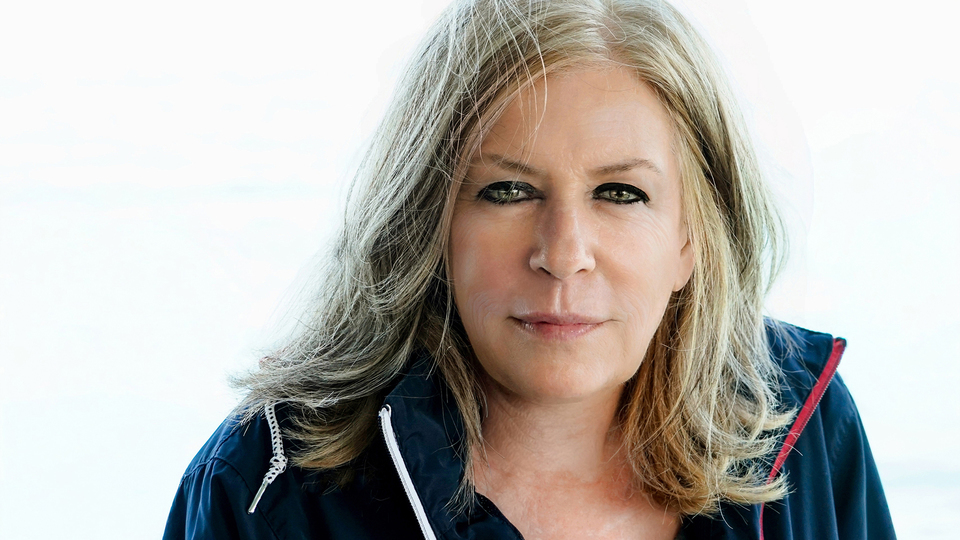
Interview with Dimitra Stasinopoulou, manager of Imedica
The pharmaceutics company Imedica sponsors our new programs and projects at Radio România Muzical. Ana Sireteanu spoke with Dimitra Stasinopoulou, Imedica manager, discussion from which we learned more about her relationship with Romania and about her opinion on the importance of culture and music in education.
How would you describe the importance of supporting cultural projects, including those of Radio România Muzical?
When I had the pleasure of meeting Mrs. Cristina Comandașu, I was, first and foremost, impressed by her qualities and knowledge in music, and when she told me about the "Listen to 5 minutes of classical music" project, I realized that these people are literally writing history through these educational concerts organized in schools and that it is a cultural intervention through which a person's development starts right inside the schools, which I believe is very necessary.
As for us, Imedica, we are a company established in Romania 35 years ago - this pharmaceutical company is not big, but we are truly very close to everyone that works for us, who are, of course, Romanian. We wish to bring a small contribution, to give back to Romania, by sharing that which truly matters - we believe that we cannot live without music, and that the great world music is the basis of modern music and that it can endure through the centuries, and humanity's values should be kept and passed on to the younger generation.
I believe that everyone, and I mean everyone, needs culture in order to have the strength and the confidence to choose what is right, to understand humanity's real values, as this is what actually defines us as human beings. I think that, especially in classical music's case, it is much like an exercise of finding yourself, of finding peace and fulfillment; you can find out who you are and what brings you happiness, because we cannot live without emotions and feelings. I mean that we cannot live without music, culture and art, and many of these children may have not had the chance to listen to classical music, which is so very special, and even if one of them - and I am sure there will be many - but even if only one of them changes his opinion and starts to be interested in music, it will be an extraordinary achievement. I am truly impressed by the work done by those involved in the project.
I will tell you a story about something that left a deep impression on me. I am 72 years old and, as I was saying, I've been coming to Romania for the past 35 years, and back then your country was in a very difficult situation… I will tell you about music and about one of my first impressions of Romania: I was driving my car - there were very few cars back then - and it was very cold and, being from Greece, I was not used to the cold, the snow and everything winter. I noticed an elderly man outside, in the afternoon, holding two little children, it was very cold, and they were waiting in line outside in order to buy cheap tickets to a concert. This is something that I will indeed never forget, and I also told my friends many times, because this is how the values that formed this country look and I hope these values will continue to exist. I have never seen anything like this in my country: an old man waiting in line only so that he could offer his grandchildren the chance to go somewhere very special, such as the Romanian Atheneum, and to listen to classical music.
I think that what really matters is what these people are doing, the idea they had and the way in which they put the "Listen to 5 minutes of classical music" project into practice - this is important; the rest not so much, but I am truly thankful that they gave us the chance to contribute to something so important and that, in my opinion, changes lives.
I strongly believe that music and art have the power to beautify the world we live in, and I hope this will be the case. I have always admired - as I was saying - throughout the years I've been coming here, that the Romanian people still have values that have been long forgotten in so many other countries. I hope with all my heart that the younger generation will keep their grandparents' values - because Romania is a wonderful country, with a wonderful culture, and you can see it in music, acting, opera, architecture and so many other things.
You write books and capture moments from your travels, and you have dedicated the book "Romania of My Heart", which received a UNESCO award and several photo albums, to Romania. How did your interest in Romania appear and what drew you to our country?
I was 50 years old and had never held a camera in my hand, I had never taken a photo. I had no clue about photography, but Romania was the country that inspired me to pick up a camera for the first time, and I am forever grateful, because my life changed in 2005, when my first book, "Romania of My Heart" was published. I started taking photos out of necessity. Many years ago, my Greek compatriots were worried about me and kept asking when I was going back, because I live in Greece and I would stay a few days a month in Romania. They asked: "Ah, you're going to Romania?" and they were bewildered, they couldn't picture it. I was trying to tell them: "No, it's not like that, Romania is… " because I started to love this country, make friends and see new things; I was trying to explain that it is a very special country, that fights to change for the better. Because they weren't able to understand this, I bought the camera and took pictures, without thinking that it would change my life. It's a long story how this first book came to be, but… I figured this would be the first and the last, because, you see, I do not sell the books, I just offer them for free, so I gave away 2000 copies in Romania and 2000 in Greece, but then something changed in me, and I owe it to Romania.
I decided to travel, but not in Europe; I go to the farthest corners of the world and photograph people most of the times, but also places, and this passion is the most important thing for me, after my kids and my job, of course. This is what keeps me alive and this is why I want to show the world just how important Romania is to me - by the way, I have donated all my archives to the Romanian Academy because I felt that they should have them, because I am convinced that they belong to Romania, they are not mine alone, but are for you, the Romanian people.
So, Romania is like a second home to me, as I have formed lifelong friendships here, and what I set out to do from the beginning - especially during these very difficult years - was to capture the heart and soul of the Romanian people, because in these day-to-day moments, and in the people's eyes you see the traditional Romania, with its full potential. These people I am talking about were, years ago and in spite of their problems and concerns, open and generous people, that still kept their dignity, their rights, and their pride. I was surprised by the hospitality and the spirit of these people, of this dignified approach to life - and I tried to capture them in photographs. I now sincerely believe that through photography we cannot change the world, but we can sometimes change mentalities, we can reach hearts and can give a voice to those silenced.
I went to extraordinary places all over the world: Papua New Guinea, Asia, Africa; I photographed everything: tribes, faraway places, and when I came back to Romania I visited every corner, so I have a huge archive on Romania and, aside from my first book - that I talked about earlier, entitled "Romania of My Heart" - I made electronic books about Transylvania and made clips about Romania and the Danube Delta, as well as many photos. This is my story about Romania and my love for Romanian photography. Of course, I also love Greece very much and am really proud to be Greek, but Romania is my second home, my second country after Greece.
And, by the way, another book of mine is about the Greek Revolution, that started in IaȘi. I followed Alexandru Ipsilanti's route, but this proved to be a very difficult task for me, because I am not a historian, but I did it. The Greeks granted me the highest distinction in Greece, the Academy of Athens Award, because they knew that our revolution started in Romania, but they did not know much, and now they had a book with 850 images in their hands. First of all, they were surprised by the riches of this country, because Romania was and still is a very rich country. In Greece, in 1821, we were very poor, while the Turks in Romania did nothing but collect taxes. You don't even have one mosque in Romania; in Greece, after 1453, we were allowed to build only very, very small churches, much unlike the fantastic churches that are everywhere around Romania, because, as you know, after the fall of the Byzantine Empire, everyone, educated or not, that did not go to Italy went to Romania, because Romania was, first and foremost, an orthodox country, and because they offered us Greeks hospitality.
We have a long common history and, actually, us Greeks believe we owe you something. Your country offered us hospitality throughout the centuries, even Pericles, who built the Pantheon in 500 B.C., came to Romania to secure the grain route to Greece, so our common history begins back then, with the Greeks on the Danube, and many, many more, but even so, we have never fought. We do not share a border, and I am sure Romanians also love Greece because I see them visiting often. We share a lot of values, and this is why I feel at home in Romania.
Translated by Cătălina Badea,
University of Bucharest, Faculty of Foreign Languages and Literatures, MTTLC, year I
Corrected by Silvia Petrescu


