


> Interviews
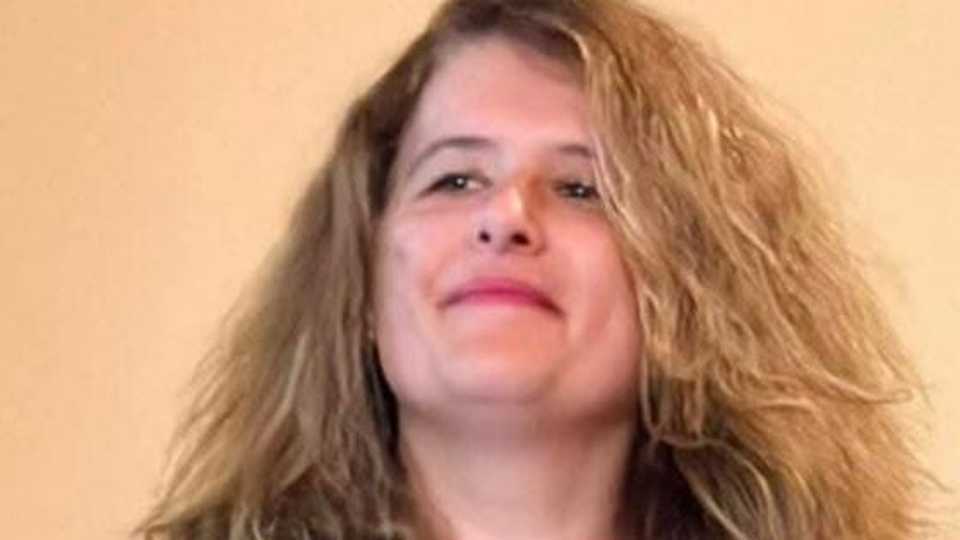
Interview with pianist Corina Răducanu
The 10th edition of Klavier Art Duo Festival will take place from the 19th to the 22nd of November in Rădăuți. We will find out more details about this program and the artists invited from pianist Corina Răducanu, in an interview conducted by Teodora Ion:
Klavier Duo Festival brings the world of four-hand piano to the forefront. Firstly, could you tell us how the idea of this project came to life?
It has been 25 years since the duo I am forming with pianist Eugen Dumitrescu exists on the country's musical stage. At one point we felt the need to create a festival, and we thought about creating one dedicated to the piano duet. Piano duo, specifically four hand piano, because Romania's infrastructure did not allow or at least was not allowing at that time, tackling a festival dedicated for piano duets with two different pianos, so we had to choose the four-hand piano. We chose Rădăuți because it is a historical, multicultural place, and because it was not well developed culturally when it came to classical music, so we thought that everything had to unfold in a balanced manner, the balance being the key characteristic of the events we provide, create, develop and build.
This year the festival has reached its 10th edition, and the chosen theme is time, explored in different musical phases, from jazz to sacred music to the universe of childhood. How did you create the program for this edition and what were the artistic criteria that guided the repertoire selection?
We somehow created a bridge across time because in our first edition we had titles and programs with a similar theme. I chose jazz because this time we explored an entire recital dedicated to jazz, featuring four-hands piano in a jazz formula accompanied by vocals, saxophone and percussion. This program consists of works belonging to contemporary composers that have been created this year and presented in another project as well, but it is something new for this instrumental concept and for the four-hand piano in a jazz formula being presented like this. And we have compositions by Sabina Ulubeanu, Andrei Petrache and Marius Sireteanu, among those other works that span across 100 years of jazz in a formula that was adapted by Marius Sireteanu. Then we have something new: we will present Gabriel Faure's Requiem and Cantique by Jean Racine in a four-hand piano version, with the orchestral part arranged by Marius Sireteanu, alongside the Ricercare choir of the National University of Music in Bucharest. We also have vocal soloist guests from Ukraine, we have tenor Volodymyr Fisiuk with whom we will give the Rădăuți premiere of "7 Chansons" by Clement Marot and "Morgangebet" with lyrics by Carmen Sylva. Moreover, the soloists for the Requiem will be bass singer Mihai Scarlat and soprano Irina Ionescu. Then we moved to the dance part of the program, where Ivan Shemchuk and Alina Andriuti Shemchuk will have the Rhapsodies' part, a famous and talented duo that will perform the Romanian Rhapsody by George Enescu in an arrangement by Marius Sireteanu. Over the 10 editions, I believe that this rhapsody was performed in every single one of them. Furthermore, Marius Sireteanu was the composer-in-residence of the festival for multiple editions, and this time he is also the conductor for the Ricecare choir. On the final night, our guests are Dana Ciocârlie and Josu Okinena that will explore the universe of childhood through a French and Basque musical program. The concert will feature the premiere performance of "Infantin" by Basque composer Aitei Donostia, who is a friend of Ravel, alongside works that belong to Ravel, Debussy and Faure. Together, all these musical elements created a bridge across time that transformed in jazz, sacred, story and rhapsody.
As you mentioned earlier, the piano duo you form with Eugen Dumitrescu started its activity in 2005 and has had numerous recitals, tours and projects dedicated to the promoting the four-hand piano repertoire. How did you lay the foundation for this ensemble and how has its artistic journey taken shape over time?
We laid the foundation for this ensemble with Johann Sebastian Bach's three concertos for two harpsichords that we performed during our master's degree in the harpsichord program at the National University of Music in Bucharest and ever since then we have had a journey that helped us explore multiple aspects of the piano duo. We covered a diverse repertoire during the concerts we performed in the country and overseas, including at St Martin-in-the-Fields and on the Romanian Atheneum's stage, where we were full of versatility. Beyond the prestigious venues where we performed, we also brought music to less accessible spaces. Here I am referring to all the projects we carried out in the countries, villages, communes, just like this four-hand piano festival in Rădăuți. We wanted classical music to be accessible to everyone, including the people that do not have a philharmonic, a theatre or maybe a Cultural House near them that can hold such events. And besides all of these, we also had bold projects where we took four-hand piano and classical musical (for example our most recent one, the project from last year) from Bucura Lake to 2040 meters altitude, caves, salt mines and everywhere there was an openness to classical music presented in this way, namely four-hands piano. We have been doing this since 2005. We are grateful that we can do things like this one, that can reach the informed and knowledgeable audience of the classical music phenomenon, but also the curious audience that wants to discover this side of music.
Translated by Maria Alexandra Pletea,
University of Bucharest, Faculty of Foreign Languages and Literatures, MTTLC, year I
Corrected by Silvia Petrescu


